The Hydrogen Stream: AEM electrolysis could deliver hydrogen at $3.27/kg, say Repsol, P2HP

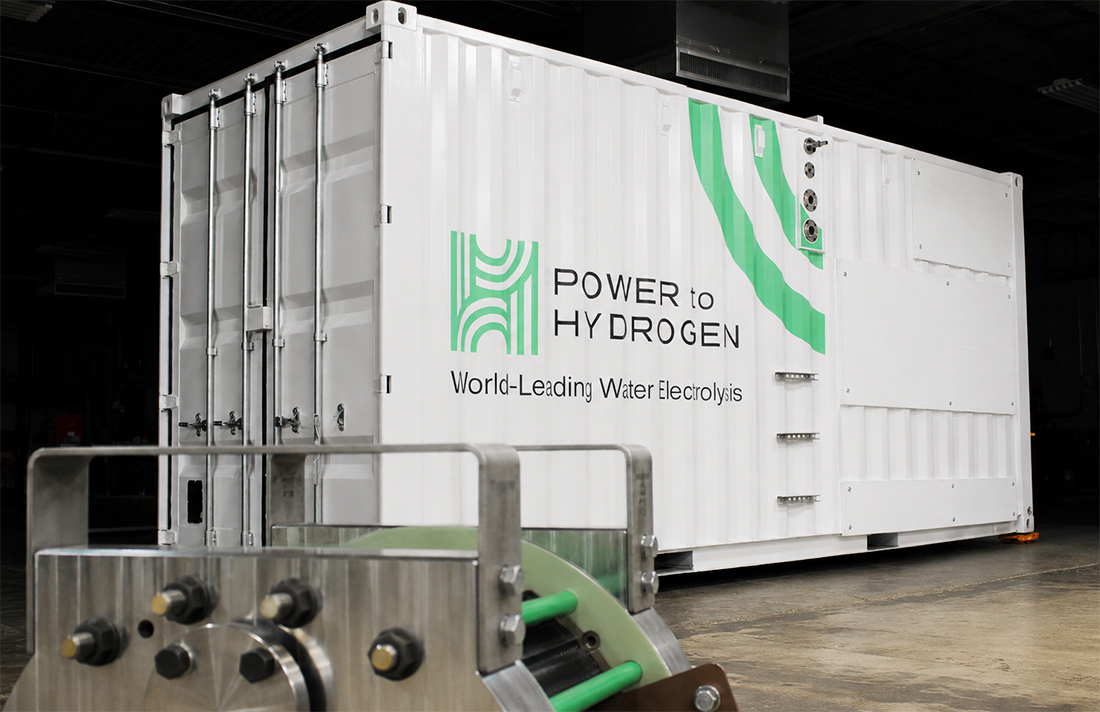
Power to Hydrogen (P2H2), a developer of anion exchange membrane (AEM) electrolyzer systems, and Spanish energy company Repsol completed a pilot validating P2H2’s hybrid AEM electrolysis technology for large-scale green hydrogen production. Conducted through Repsol’s All4Zero industrial innovation hub, the program accumulated more than 1,250 hours of parametric and durability testing on a five-cell short stack incorporating commercial-scale cells, including extensive operation under simulated renewable-energy load profiles. Testing covered operation from approximately 40% to 100% load and at pressures ranging from 2 to 30 bar, with hydrogen purity reaching up to 99.9% at 30 bar. According to the companies, the stack met or exceeded key targets for efficiency, dynamic flexibility and durability, while demonstrating an irreversible degradation rate of approximately 2 mV per 1,000 operating hours, which P2H2 says supports a projected stack lifetime of more than 50,000 hours. The company argues that its hybrid AEM architecture can provide PEM-like performance and responsiveness while using a fundamentally lower-cost materials platform, including reduced reliance on scarce platinum-group metals such as iridium. Based on Repsol-specific operating assumptions and the U.S. Department of Energy’s H2A-Lite cost-modeling framework, P2H2 projects a levelized cost of hydrogen (LCOH) of approximately €3.86 ($4.47)/kg, around 16% below incumbent electrolyzer technologies, with the potential to fall to approximately €2.82 ($3.27)/kg under optimized renewable-energy scenarios using hybrid power purchase agreements. Importantly, these LCOH figures are modeled projections rather than costs directly demonstrated during the 1,250-hour pilot. Following the results, P2H2 and Repsol are exploring a potential 500 kW-to-MW-scale demonstration as a next step toward commercial deployment.
Two Indian researchers have highlighted the importance of elements such as cerium, lanthanum, neodymium and praseodymium in the hydrogen sector, saying their distinctive redox, electronic and oxygen-storage properties can improve catalytic activity, reaction kinetics, stability and hydrogen yields. They said that recycling, recovery and reuse of rare earth elements (REEs) within a circular-economy framework are essential to ensure their use in green hydrogen is sustainable. The researchers from Alagappa University published their results in Scientific Reviews.
Researchers led by University of Oregon chemist Paul Kempler have identified dissolved iron impurities as a key factor controlling the degradation of alkaline water electrolyzers during power interruptions. “These findings show that anode degradation during reverse polarization is strongly dependent on the shutdown duration and the retention of iron in the catalyst. When minimizing the shutdown time is impractical, electrolyte engineering through tuning the dissolved metal content may offer a solution,” the researchers said in “Reverse polarization degradation of nickel iron oxyhydroxide anodes in alkaline water electrolysis,” published in Chem Catalysis.
A team at the Massachusetts Institute of Technology (MIT) has demonstrated an electrochemical method to extract pure hydrogen gas from hydrogen carrier molecules, which the researchers said could improve process efficiency. The system couples a palladium-based separation membrane with a hydrogen-generating electrode via a molten hydroxide electrolyte. “The separation membrane selectively transports hydrogen while preventing other components of the reaction mixture from passing through,” the researchers said. Ammonia is first dehydrogenated using a catalyst containing ruthenium and cesium. The resulting hydrogen then reaches the separation membrane, with its opposite side in contact with the molten hydroxide electrolyte. “The electrochemical gradient across this membrane effectively creates a ‘vacuum’ for hydrogen, providing a strong driving force for its transport across the membrane. It also converts the hydrogen into protons and electrons, which travel separately through the molten electrolyte and external circuit, respectively, before recombining at a second electrode to form hydrogen gas,” the researchers said. They added that the approach eliminates the need for a separate downstream hydrogen purification process.
China Hydrogen Alliance reported that a recent Chinese study identified a natural hydrogen deposit in southern Chengdu in the Sichuan Basin. The organization said the discovered hydrogen has a mole fraction comparable to some of the world’s highest-purity natural hydrogen reservoirs, setting a new record for natural hydrogen content in China. The mole fraction – the ratio of the number of moles of hydrogen to the total number of moles of all substances in a mixture – ranges from 97.33% to 98.24% in the Sichuan Basin deposit. According to China Hydrogen Alliance, the natural hydrogen is of “deep inorganic origin.”
Siltrax has launched a commercialization initiative in the Americas, with plans to develop a network of demonstration units to showcase its technology. The Boston-based hydrogen technology company specializes in PEM fuel cells and electrolyzers based on its proprietary silicon bipolar plate technology. “Silicon bipolar plate technology represents a major step forward for the hydrogen industry. It provides a path to lighter, more efficient and more scalable fuel cells and electrolyzers without compromising performance,” said Roberto Iriti, the company’s new commercial director.
Romania has approved its hydrogen code, establishing principles, requirements and regulatory rules for activities across the hydrogen value chain. The code does not introduce new technical requirements for equipment or installations and does not create new investment obligations. “The new framework establishes the general regulatory principles and requirements applicable to each activity,” said the Romanian Energy Regulatory Authority (ANRE).
This content is protected by copyright and may not be reused. If you want to cooperate with us and would like to reuse some of our content, please contact: [email protected].

Please login to comment