Grids, grids, grids, and more: EUPVSEC 2026

Speaking in the first session of the morning, Koen Kok of Technical University Eindhoven pointed out that the Netherlands, this year’s EUPVSEC host country, has the highest per capita PV capacity in Europe (and the second highest in the world), and that with this come the growing challenges of grid congestion and PV curtailment.
Many would expect this key conference for solar researchers and industry professionals to maintain its focus inward on cell technology, system performance and other topics inherent to solar energy. But the topics chosen for the opening sessions and the program for the rest of the week-long conference at Rotterdam’s World Trade Center point to a much broader focus reflecting an industry recognizing that many of solar’s biggest challenges today come down to its rapid growth encroaching on other sectors, and focusing on the need to carefully manage these many interfaces.
Grids, grids, grids
Koen Kok of TU Eindhoven set the scene early on the first morning, discussing congestion and overvoltage events on the Netherlands grid, and their relationship to peak solar generation period. The discussion carried on in this vein later in the morning, with TU Delft’s Peter Palensky describing the inherent unreliability of electricity systems. He noted that solutions to balancing grids with high levels of variable renewable energy are sometimes hidden within the massive complexity of such systems, and that recent developments with AI and modelling technologies mean we now have the tools to deal with that complexity.
He further told the audience that the market alone is not solving grid congestion quickly enough, and that implementing solutions would require a change in the way we look at energy systems, and recognition that “every billion not invested in grids adds to up €10 billion in lost investment.”
Energy’s many interfaces
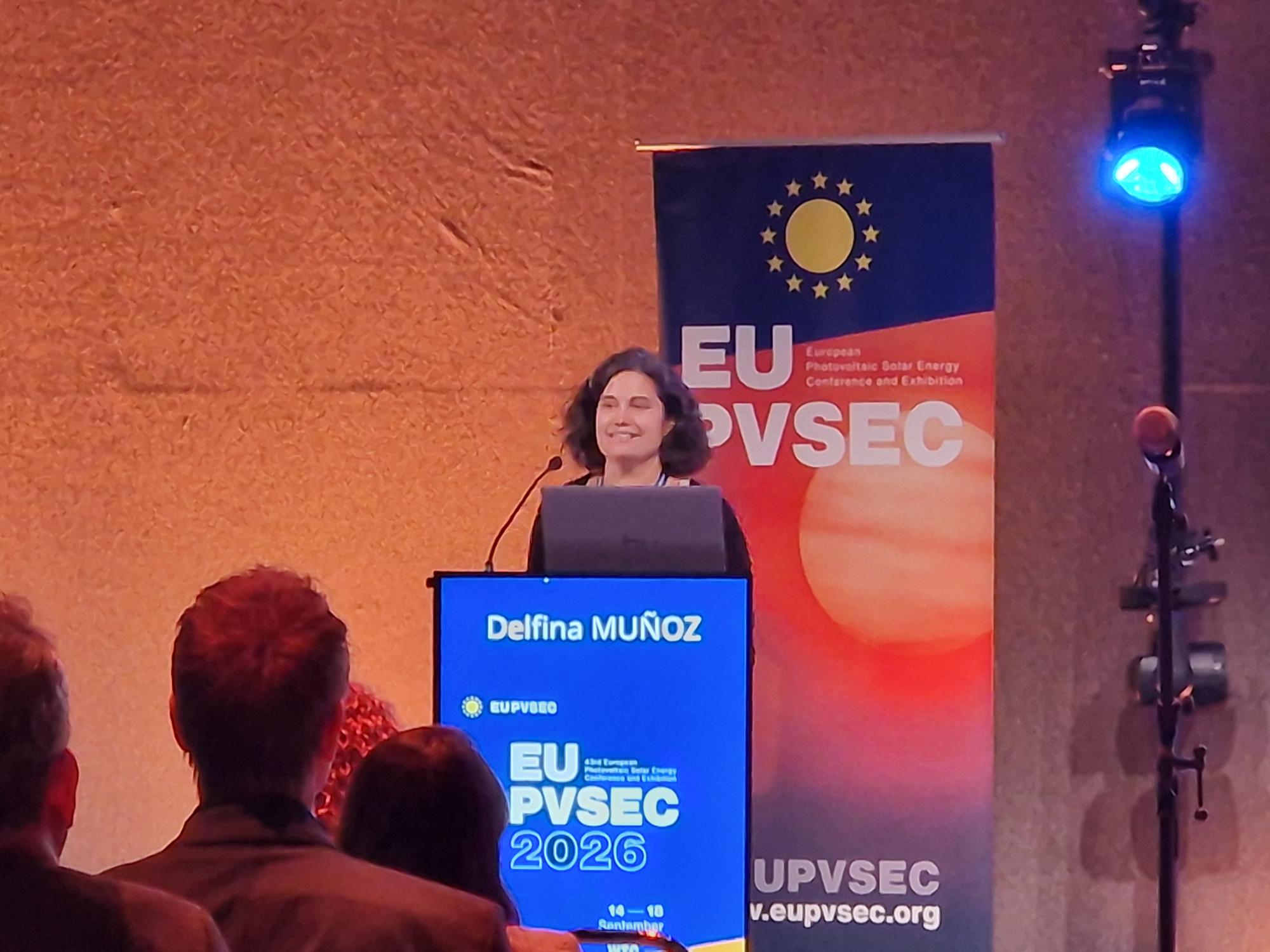
Accepting the Becquerel Prize for her work on high efficiency and reliable industrial PV technologies, CEA Liten’s Delfina Muñoz spoke of the management of many ‘interfaces’ that working in solar entails – whether between two layers in a solar cell, or between two entirely different industries beginning to work together. She neatly described these interfaces as the place “where competition stops and collaboration begins.”
And growth in the number of interfaces was on show throughout the week-long conference. The solar industry’s interfaces with the grid emerged as the most important one right now, but talks on integrating solar’s activities with agriculture, the built environment, recycling and waste disposal, along with the potential for new materials and device designs, and even earning and maintaining trust from the public.
AI has landed
In her acceptance speech, Muñoz also told the crowd that she had first turned to AI for some guidance on what to talk about. And AI remained a theme throughout the week, with entire sessions dedicated to its use in operating PV projects – from analyzing masses of inverter data to quickly spot faults, to teaching software how to identify and analyze individual modules in a drone image of a whole project or string.
The other side of this is the infrastructure needed to power AI, and solar’s role in that was much discussed. Representatives of Solaris, an EU funded project supporting resource efficiency and sustainability in the solar industry, also brought up the need for better access and management of the huge amounts of data generated by PV inverters, sensors and other applications – which can provide valuable insights, provided it has a suitable framework for anyone to find them.
This content is protected by copyright and may not be reused. If you want to cooperate with us and would like to reuse some of our content, please contact: [email protected].

Please login to comment