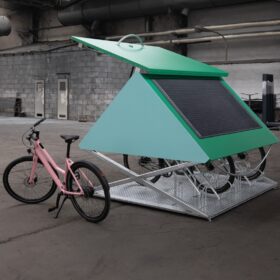
German startup unveils PV charging-parking system for e-scooters, bikes
German startup Domum has developed PV charging-parking systems for e-scooters and e-bikes. They use up to 660 W of solar panels.
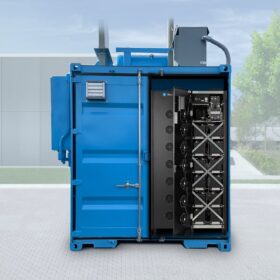
Who maintains the chargers?
While much of the focus on electric vehicle (EV) charging infrastructure focuses on volume, what about quality? And who is going to maintain a multi-million strong fleet of EV chargers?

Weekend Read: Hanging in the balance
Battery storage revenues in Britain are well below historic highs but an appetite for storage capacity remains. Electricity system-operator modernization, increased competition, and new opportunities could all shape the future of British battery energy storage systems (BESS’).
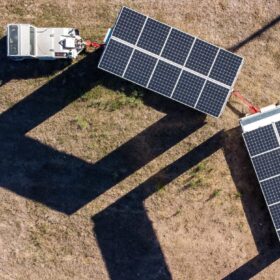
Vehicle-integrated photovoltaics for electric ground transport
Canadian custom module manufacturer Capsolar developed a vehicle integrated PV system (VIPV) for an electric material towing application, reportedly enabling 30% to 40% range increase per battery charge.

Energy sharing in multi-microgrid systems with V2G
Researchers in Australia have developed a reconfigurable structure of a multi-microgrid to enhance the penetration of distributed energy resources in the presence of vehicle to grid technology (V2G) and found that both technical and economic aspects of the system have improved significantly.
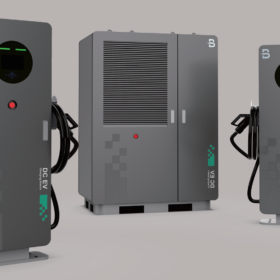
Beny launches PV-ready EV charging station
Beny New Energy says its new charger can deliver power at a range of 360 kW—600 kW. It supports various connection standards.
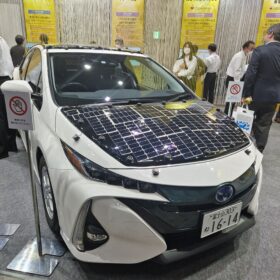
PV-powered cars and the parking dilemma
Researchers in Portugal have addressed the so-called ‘parking dilemma’ of electric cars incorporating photovoltaic modules. They looked into the tradeoff between charging the car and raising its inside temperature. They calculated the critical time as a function of the car’s solar capacity.
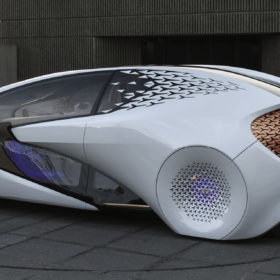
Battery heavyweights reaffirm commitment to solid-state technology
Only weeks after Chinese battery and car manufacturers united as part of a government-led initiative to commercialize solid-state battery technology, South Korea’s Samsung SDI has confirmed its readiness to start mass production of its all-solid-state battery technology with an energy density of 900 Wh/L.

U.S. startup offers solar kit for VIPV applications
Worksport, a U.S. technology company, has announced a protective cover for pickup trucks fitted with solar PV modules. The kit includes a battery and an inverter and is meant to be a portable power source for leisure activities, such as camping, or as a temporary backup to recharge electronics or small appliances during power outages.
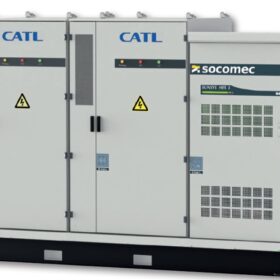
Socomec releases new modular energy storage system
Socomec says its new modular energy storage system includes a converter and up to six battery cabinets. At maximum capacity, it can store 1,116 kWh.
