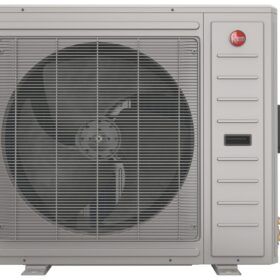
Rheem presents residential heat pump
The heat pump uses R-410a as a refrigerant and has a size ranging from 2 tons to 5 tons or 7.0 kW to 17.6 kW. It also has a cooling capacity spanning from 6.7 kW to 15.5 kW.
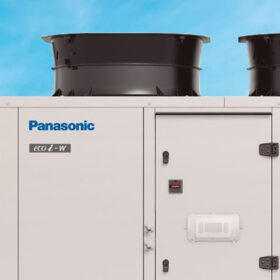
Panasonic presents air-to-water reversible heat pumps
The Japanese electronics manufacturer said its new heat pumps are suitable for commercial, industrial, and multi-dwelling residential applications. The new products feature a rated power ranging from 50 kW to 80 kW and a coefficient of performance spanning from 3.2 to 3.4.
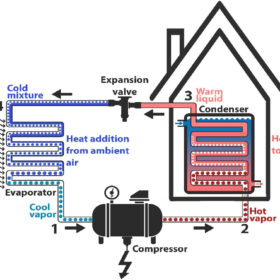
Simulation model to determine coefficient of performance of air-source heat pumps
A Dutch research team has outlined a new method to assess the coefficient of performance of air-to-water heat pumps by considering ambient temperature and relative humidity. The model is based on the equalization of the so-called logarithmic mean temperature difference (LMTD), which determines the temperature driving force for heat transfer in flow systems such as heat exchangers.
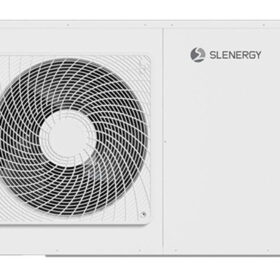
Slenergy releases residential PV system package with heat pump
Slenergy has introduced a new residential PV system package featuring 425 W solar panels, a hybrid inverter, a high-voltage battery, and a Slenergy-branded heat pump. The package incorporates Internet-of-Things hardware for real-time data collection and intelligent control strategies.
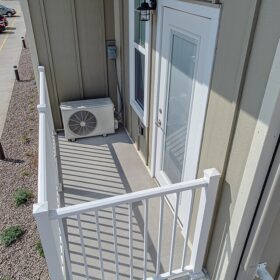
NREL outlines feasibility of heat pumps in US market
The National Renewable Energy Laboratory (NREL) has outlined the feasibility of heat pumps in the US market in a new report. It says installation costs and energy savings prices have changed in relation to climate, heating sources, and types of homes. It says policymakers should further reduce the costs of installing heat pumps to benefit more US households.
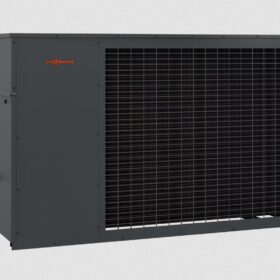
Viessmann unveils air source heat pump for residential, commercial applications
German manufacturer Viessmann says its new heat pumps have a coefficient of performance (COP) of up to 4.57 and a seasonal coefficient of performance (SCOP) of up to 4.4. The pumps have a heating output ranging from 32 kW to 128 kW, and a cooling capacity of 34 kW to 139 kW.

New approach to integrate PV-powered heat pumps into greenhouses
Scientists have proposed to use PV energy and heat pump-driven HVAC system in greenhouses conceived to grow tomatoes in the Mediterranean area. The system was found to have a payback time of only 2.9 years in southern Spain.

Weekend Read. COP: A solar flop?
Tripling clean energy generation capacity to 11 TW by 2030 was a leading pledge from the United Nations’ (UN) climate change conference in Dubai. With few details about infrastructure and energy storage and no clear PV targets, however, it is hard to judge the effectiveness of the 28th global Conference of the Parties (COP) meeting. Angela Skujins considers possible impacts for the solar industry.
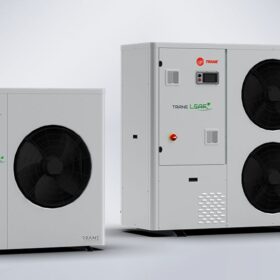
Trane debuts air-to-water heat pumps
The new products use propane (R290) as a refrigerant and have heating and cooling capacities ranging from 8 kW to 30 kW.
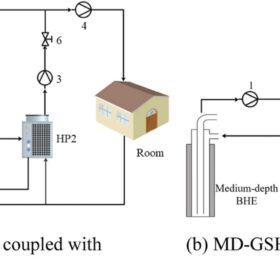
Coupling ground-source heat pumps with heat storage, borehole heat exchangers
Scientists from China have developed a novel optimization method for medium-depth ground source heat pumps, using an improved chaos particle swarm optimization. They coupled it with either a heat storage tank or a shallow borehole heat exchanger and found that both system typologies increase the heat pump’s coefficient of performance.
