Fujiyama Power to set up 1.2 GW TOPCon solar cell manufacturing facility in India
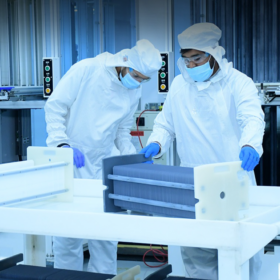
Fujiyama Power Systems, which currently operates a 1 GW mono PERC solar cell manufacturing facility in Uttar Pradesh, plans to set up an additional 1.2 GW TOPCon solar cell manufacturing facility in Madhya Pradesh as part of its strategy to expand its presence in the on-grid rooftop solar segment.
China invalidates First Solar TOPCon patent in major win for JinkoSolar
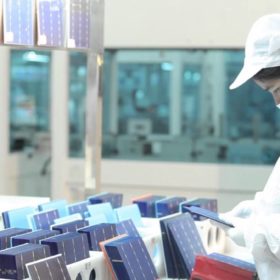
JinkoSolar has won a key patent invalidation in China against First Solar’s TOPCon-related patent, with the China National Intellectual Property Administration ruling it fully invalid.
Chinese PV Industry Brief: Polysilicon prices remain flat amid supply-demand rebalancing signals
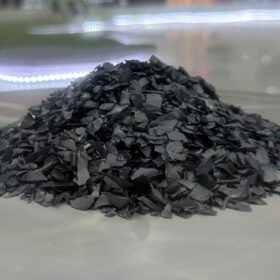
Polysilicon prices stayed flat in China as production and demand moved closer into balance, easing recent supply–demand pressures.
Singapore team builds 19.7%-efficient ultrathin ‘biPoly’ TOPCon solar cell
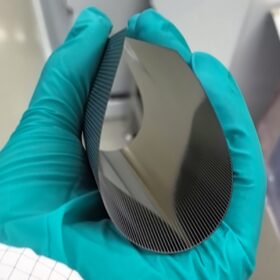
The ultra-thin TOPCon solar cell uses dual-sided polysilicon passivated contacts formed by low-pressure chemical vapor deposition. The champion device, with a thickness of only 80 μm, achieved 19.7% efficiency with 719 mV open-circuit voltage and demonstrated strong passivation, optical performance, and mechanical flexibility.
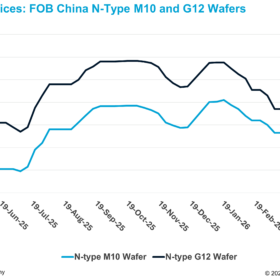
Chinese wafer producers build inventory ahead of expected Q3 demand recovery
In a new weekly update for pv magazine, OPIS, a Dow Jones company, provides a quick look at the main price trends in the global PV industry.
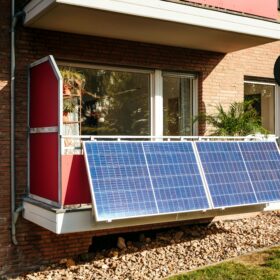
California Senate passes plug-in solar bill
The Plug and Play Solar Act, which passed on a 35-1 vote, would allow portable solar generation devices with up to 1,200 W of output to connect to a building through a standard outlet. The bill now moves to the state Assembly, which has until August 31 to pass it during the current session.
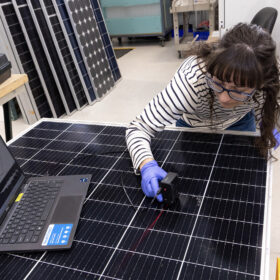
Solar industry cost-cutting sparks record wave of spontaneous glass breakage
Instances of cracks in PV module glass started appearing about five years ago. Spontaneous glass breakage is now one of the solar industry’s top issues, but manufacturing pressures and a lack of standards are hindering solutions.
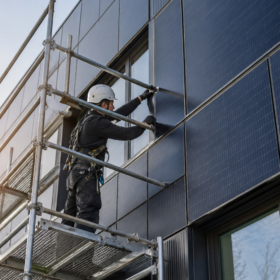
Meeting the challenges of long life time PV on buildings
As Europe’s first generations of integrated PV systems age, researchers and industry actors are only beginning to explore the long-term realities of maintenance, compatibility and repair.
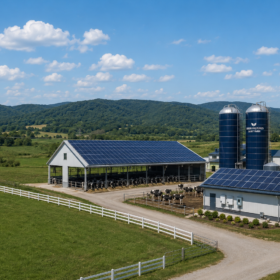
How to prevent stray voltage from harming livestock in PV-equipped dairy farms
Stray voltage is unwanted electrical potential differences in barns that can cause small shocks to livestock, especially dairy cows, through damp floors, metal equipment, and water systems, leading to stress and reduced productivity, and in some cases even to death. While PV systems are sometimes blamed, experts told pv magazine that the real causes are faulty or poorly designed grounding and electrical infrastructure, and that proper equipotential bonding is key to prevention. With attentive design, these risks to animal health can be avoided.
TCL SunPower launches new shingled TOPCon module series
The new modules feature bifaciality of 85%, an efficiency of up to 24.8%, annual degradation of 0.35%, and a 30-year performance warranty,
