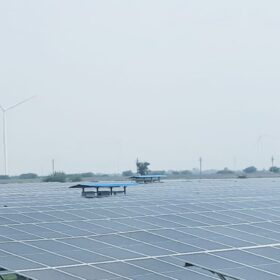
India’s ITC commissions 9.45 MW offsite solar plant for self-consumption
ITC Ltd. says it aims to meet 100% of its electricity needs from renewable sources by 2030 as part of its Sustainability 2.0 Vision. Its new solar project in the Indian state of Karnataka is the company’s fourth offsite solar plant in the country.

Optimal tilt angle for bifacial PV deployed on white-painted ground surfaces
Scientists in India have analyzed the performance of a bifacial PV module installed on a white-painted ground surface and have found a 30-degree tilt angle outperforms all other inclinations angles in terms of power output.

Fraunhofer ISE, TMU build ‘aquavoltaic’ system for microalgae production
The system can reportedly reduce electricity costs in aquaculture. It consists of an open raceway pond, a mechanical paddle wheel, a motor and power transmission system, a motor speed control circuit, a 100 W photovoltaic module, and 12-V battery with a capacity of 60 Ah, an inverter, and a 10-A charge controller.

Sungrow plans listing on Frankfurt Stock Exchange
Sungrow says it is planning a listing on the Frankfurt Stock Exchange to support its inverter and energy storage manufacturing operations beyond China.
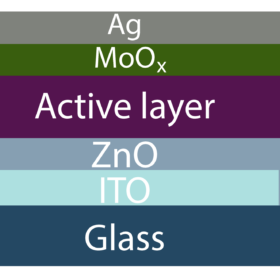
Organic PV module based on ultra-narrow interconnections achieves record-breaking efficiency of 16.1%
New research from China shows that ultra-narrow interconnections may considerably improve organic PV performance. The scientists built a 11.08 cm2 panel with an impressive geometric fill factor of 98%.
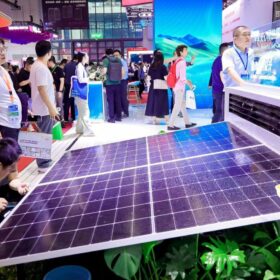
France’s Carbon involved in patent case with JA Solar
France-based PV manufacturer Carbon is currently involved in patent proceedings with JA Solar over tunneling silicon oxide (SiO2) layers, doped polysilicon layers, and electrodes in tunnel oxide passivated contact (TOPCon) solar products.

PV fault detection method based on deep learning of aerial images
Conceived an international research group, the proposed model uses the convolutional neural network (CNN) architecture U-Net for image segmentation and the the CNN architecture InceptionV3-Net for fault classification.
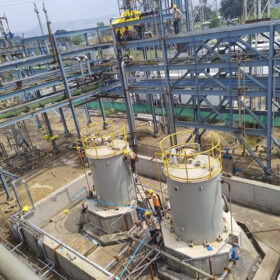
Shoots of growth for Indian green hydrogen
India is laying the foundations of a hydrogen economy with huge governmental support. pv magazine spoke to Jakson Green CEO Bikesh Ogra about the company’s manufacturing and production activities in light of India’s ambitious hydrogen plans and the central role electrolyzer manufacturing is set to play.

Chinese PV Industry Brief: China Resources finalizes PV module tender
China Resources Power has finalized its 1 GW module procurement for 2024 with Astronergy, while China Power Construction has secured 1.5 GW of n-type heterojunction (HJT) modules through a separate tender.

Japan’s oldest PV system gets refurbished
Tokyo-based startup Girasol Energy and the enterprise bureau of Japan’s Yamanashi prefecture have repowered Japan’s oldest PV system, a 100 kW array built in 1993. The project aimed to partially replace the original 13.3% efficient solar modules, offering an alternative to dismantling and recycling the system’s components.
