
EMPA develops biodegradable fungi battery
A team from the Swiss Federal Laboratories for Materials Science and Technology (Empa) has developed a 3D-printed battery. Fungi are used as anode and cathode with one releasing electrons during metabolism and the other able to absorb them.

The Hydrogen Stream: 41 hydrogen projects to start in Africa by 2029
The Energy Industries Council (EIC) says 41 hydrogen projects are set to begin development across Africa in the next five years, led by North African nations like Egypt, Algeria, and Morocco.
UK government approves almost 1 GW of solar across two projects
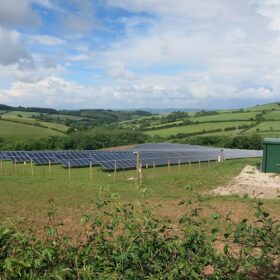
West Burton and Heckington Fen solar and storage projects secure development consent orders from UK government. The two plants are latest in a line of major solar projects approved since the Labour government took office in July 2024.
Scandinavia’s largest rooftop PV plant goes online
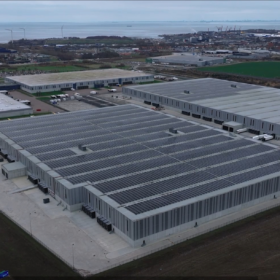
Scandinavia’s largest rooftop PV plant, a 14 MW array in Landskrona, Sweden, has gone online. The system, consisting of 24,000 JinkoSolar modules, was installed on a warehouse roof by Danish transport company DSV.
Wondrwall debuts residential AI-based battery
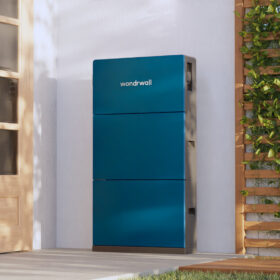
UK startup Wondrwall has developed a hybrid battery-inverter system for homes, offering up to 25.6 kWh of energy storage capacity.
European consortium reuses second life PV panels, EV batteries in agrivoltaics, plug-in solar, low-budget projects
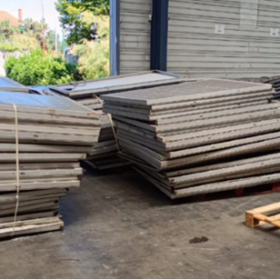
A European team is developing technologies and processes to show how end of life PV panels and electric vehicle (EV) batteries can be used in three distributed energy market segments: agrivoltaics, plug-in PV for households, and low-budget solutions. It will also demonstrate efficient recycling processes for critical raw materials recovered from panels and batteries that cannot be reused.

Spain’s rooftop PV installations hit 1.18 GW in 2024
UNEF, Spain’s PV association, says developers installed 674 MW of industrial PV in 2024, alongside 207 MW in the commercial sector and 275 MW of residential solar installations.
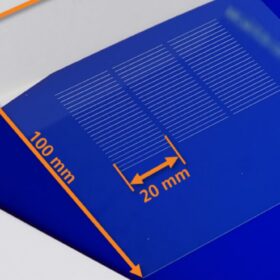
Improving solar cell performance with narrower contact fingers
Fraunhofer ISE researchers have developed a new metallization process that can produce ultra-fine line contacts for solar cells. The proposed technique is based on the so-called LIDE technology and can reportedly help increase overall PV device efficiency.
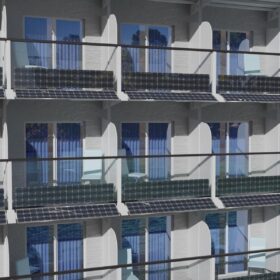
Balcony PV systems for cruise ships
Scientists have simulated the installment of PV modules on the balconies of cruise ship cabins. They tested the systems with three DC configurations and simulated them while cruising in the Caribbean and along the Norwegian and Danish coasts.
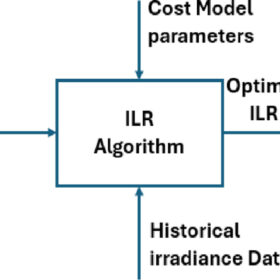
Improving PV plant performance via optimized inverter loading ratio
Researchers in Ireland have proposed, for the first time, a deterministic approach for designing inverter loading ratio (ILR) in utility-scale PV projects. The novel methodology is claimed to simplify the design process and reduce performance variability, while enhancing investment certainty.
