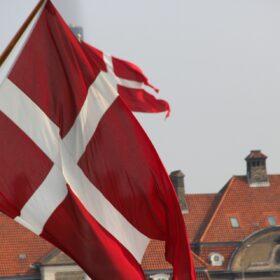
Denmark’s solar capacity surpasses 4 GW
Denmark installed 545 MW of solar in 2024, with utility-scale projects driving market growth, according to Danish solar association Dansk Solcelleforening.

The best tilt angle to improve PV module performance in world’s worst soiling accumulation zone
Scientists have measured the performance of PV modules under strong soiling conditions in Saudi Arabia and have identified the most suitable tilt angles for improving power generation. They have also found that a key role is played by rain intensity, dust, sandstorms, and cloud cover.
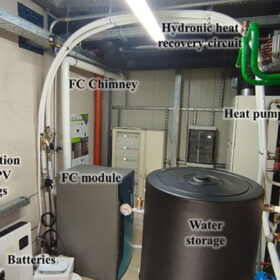
Italian scientists show technical feasibility of solid oxide fuel cells in PV-driven residential buildings
The researchers conducted a case study on a solid oxide fuel cell system deployed in a nearly zero-energy single-floor villa with a size of 80 m2 located in southern Italy. They found that, in particular conditions of photovoltaic production, the system is not only able to meet the home electric loads, but also to inject surplus energy into the network.
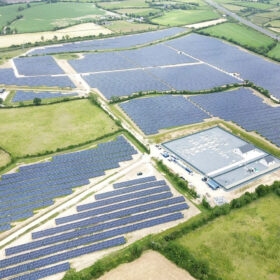
Pioneers in Irish solar energy
From modest beginnings in 2011, Power Capital Renewable Energy (PCRE) has become one of Ireland’s foremost independent power producers (IPPs). Joint CEO and co-founder Justin Brown told pv magazine that despite Ireland’s challenging environment for solar, the company sees a lot of opportunity and is taking full advantage.
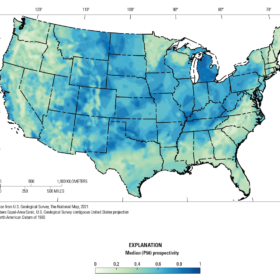
The Hydrogen Stream: USGS unveils map of US geologic hydrogen resources
The US Geological Survey (USGS) has released its first map of potential geologic hydrogen reserves in the United States, while Plug Power has secured a $1.66 billion US government loan guarantee to scale low-carbon hydrogen production nationwide.

All renewables PPA structures at a glance
German scientists have identified 18 typologies of power purchase agreements for the renewable energy market. Their research is intended to support policymakers, scientists and investors in implementing their own PPA analysis and choices.

Construction begins on 12 MW Swiss alpine PV project
Work has begun on the Swiss Madrisa Solar project, a 12 MW alpine PV installation located at an elevation of 2,000 m near a ski resort of the village of Klosters. It is part of the Solar Express initiative designed to boost domestic winter energy production.

Advansor launches CO2 plug-and-play heat pumps
The Danish manufacturer said its novel CO2 heat pumps can reach a water inlet temperature of 40 C and a water outlet temperature of 95 C. The systems have purportedly a combined coefficient of performance of up to 5.56.

Researchers in Spain test energy-community and battery storage electricity market model
The proposed distributed-asset network model involves energy communities and battery energy storage systems (BESS) that would eliminate the need for expensive facilities.
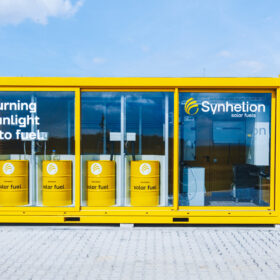
Swiss company Synhelion to start producing solar fuels in Spain in 2027
The company has signed a long-term purchase agreement for solar gasoline with AMAG Group, which will purchase 50,000 liters of solar gasoline per year from Synhelion’s RISE plant in Spain starting in 2027.
