
Italy allocates 278.5 MW of PV in latest renewables auction
In the country’s 16th renewable energy procurement exercise, the lowest bid came in at €0.07199/kWh and was offered for a 2.7 MW solar facility in the province of Ancona, central Italy.
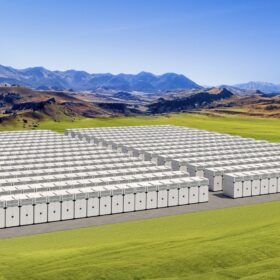
US energy storage installations grow 33% year-over-year
Storage deployment in the United States grew across all segments and is forecast to grow another 25% in 2025, according to Wood Mackenzie.
I, Photovoltaics
New research from Germany has investigated for the first time the idea of building a photovoltaic Dyson sphere, a theoretical megastructure that could provide vast amounts of energy for interstellar space travel and large-scale technological endeavors. Despite its highly theoretical and science-fiction inspiration, the study explains what consequences a similar construct would have on life on Earth.
Australia’s only silicon manufacturer bags $25 million in federal funding
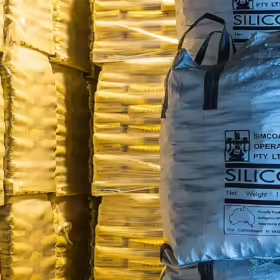
Western Australia silicon manufacturer Simcoa Operations has received an AUD 39.8 million ($25 million) investment from the Australian government to boost the country’s silicon manufacturing capabilities.

Alumina oxide nanoparticles extend perovskite solar cell lifetime
Scientists in the U.K. have used alumina oxide in perovskite solar cells to achieve lifetimes exceeding 1,300 h under standards-based heat and humidity testing. Their analysis showed that a reference cell based on conjugated polyelectrolytes degraded in one-tenth the time.
Home batteries vs. power generators
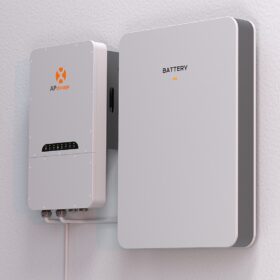
Assessing the difference in cost, functionality and operations of fueled generators versus home batteries.
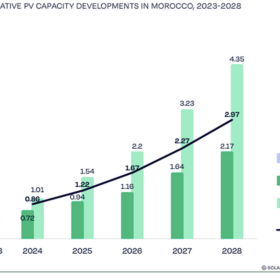
Morocco could hit almost 3 GW of solar by 2028, says SolarPower Europe
Morocco could reach 2.97 GW of solar capacity by 2028 under a medium-case scenario, with potential to hit 4.35 GW in a high-growth outlook, according to a new report by SolarPower Europe.

Tanzania launches off-grid solar tender
A tender is open for the supply, installation, operation and maintenance of an off-grid solar project in the Kasulu district of western Tanzania. The deadline for applications is April 11.

Triple Solar unveils PVT-assisted heat pump using waste heat from PV
Triple Solar BV has developed a residential photovoltaic-thermal (PVT) heat pump that uses waste heat from PV modules, eliminating the need for an outdoor unit.
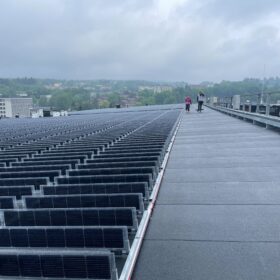
At high latitudes, vertical PV is more profitable in February than horizontal panels in June
A 248 kWp solar system deployed on the roof of Oslo’s Ullevaal Stadium was found to be more profitable in February than a comparative horizontal array in June. The vertical panels’ ability to generate more energy in winter months than horizontal equivalents helped save more money against Norway’s typically high electricity prices in winter.
