
pv magazine video: New tech not without teething pain
pv magazine’s Quality Roundtable this year brought together experts from a broad range of applications relevant in the solar industry. The overarching theme this year was quality concerns with new technologies. Experts from companies and research institutes held that the failures that the industry has observed with technologies such as 2P single-axis trackers are not inherent in the technology but can be addressed.
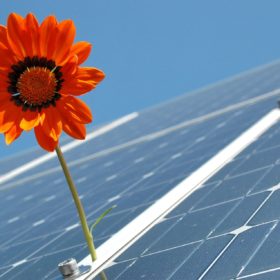
New method for life cycle assessment of PV technologies
Researchers in Australia have conducted a ‘cradle to grave’ life cycle assessment (LCA) of the four most widely used PV technologies. The academics say that cadmium telluride solar modules have the lowest life cycle impact, followed by amorphous, multi and monocrystalline silicon products.
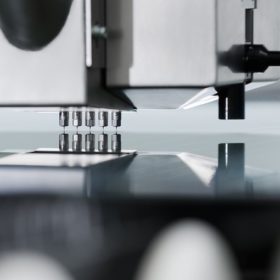
Hard times for German PV equipment providers
German engineering association the VDMA expects a difficult year because of the Covid-19 crisis. Sales had already dropped considerably last year and the current order intake level offers no glimpse of hope. However, the public health crisis may offer business in new markets determined to break a dependence on Chinese panels.
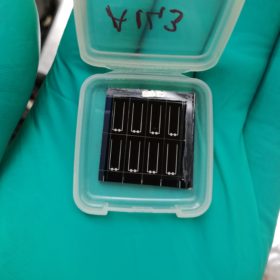
New process for kesterite solar cells with 10% efficiency
German scientists have developed a new process for the formation of a phase pure kesterite Cu2ZnSnSe4 (CZTSe), which they claim can improve the material homogeneity and suppress the well-known issue of tin losses. The new technique is based on stacked elemental and alloyed precursors with a Zn/Cu-Sn/Zn precursor structure.
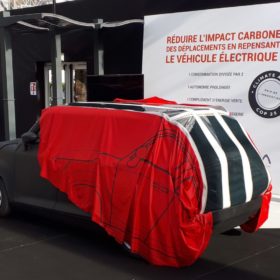
Solar car tarp to recharge EV batteries
French solar thin-film specialist Armor has designed a retractable automotive solar cover. It has deployed an initial prototype on a Gazelle electric car, but it said that the cover can be used on any kind of electric vehicle.
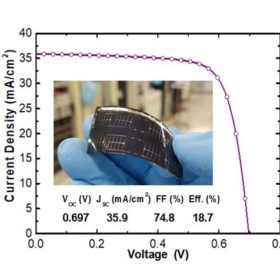
Korean researchers announce flexible CIGS solar cell with 20.4% efficiency
The thin-film cell was manufactured through a low-temperature process and doping with alkali elements.
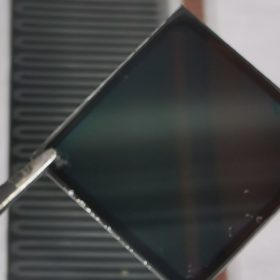
International consortium claims 25% efficiency for perovskite CIGS solar cell
Researchers led by Belgian institute imec claim to have achieved the result with a 1cm² perovskite tandem solar cell. The result tops the 24.6% efficiency the consortium announced in September 2018. The cell’s developers are now aiming for 30%.

Is thin-film best for offshore PV?
Superior hydrodynamic properties, more robustness in high seas and a much reduced logistics requirement support the case for thin-film over crystalline silicon, pontoon-mounted alternatives, according to an Indo-Italian research group.

Imec: Perovskite cells can pass the IEC tests in 2020
In 2020, perovskite cells could pass the IEC tests intended for the standardization of solar modules, and in 2022, they could even be mass-produced. In an interview with pv magazine, Tom Aernouts explains the status of work on the new PV technology. He is a research and development manager for thin film photovoltaics at the Belgian research institute Imec.
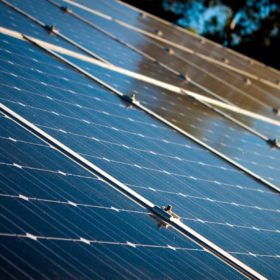
The best way to predict the I-V profile of PV panels
A study has considered the best mathematical models for predicting solar module performance under varying conditions.
