Beyond kWh: What Europe’s Next Generation of C&I Storage Must Deliver

For years, the commercial and industrial energy storage conversation has revolved around a familiar set of metrics: kilowatt-hours, power output, round-trip efficiency, cycle life and return on investment.
Those questions still matter. But for many European businesses considering battery storage today, another set of questions is moving rapidly up the procurement agenda.
Where is operational data stored? Who owns it? Who can access the battery remotely? Can the owner connect the system to a third-party energy management platform? How can its actual state of health be verified five or ten years after commissioning? And if the battery eventually changes hands, is repurposed or enters recycling, can its history follow it?
For the next generation of commercial and industrial storage, these are no longer peripheral IT or compliance questions. They are increasingly part of the product itself.
From a battery cabinet to a digital energy asset
Europe’s regulatory framework is accelerating that transition.
The EU Batteries Regulation introduces a much stronger focus on lifecycle transparency. For stationary battery energy storage systems, battery management systems are expected to maintain information relevant to state of health and expected lifetime, with access provisions for legitimate users. From February 2027, industrial batteries above 2 kWh will also fall within the EU battery passport regime, creating a digital record that accompanies the battery through its lifecycle.
The direction is clear: battery value is gradually moving from claimed performance towards verifiable performance.
A manufacturer may state that a battery is designed for thousands of cycles or more than a decade of operation. Increasingly, customers, asset owners, financiers and service providers will also want access to the information that allows those claims to be assessed against the battery’s actual operating history.
At the same time, the EU Data Act is reshaping the relationship between equipment manufacturers and the users of connected products. Its provisions are intended to give users greater access to data generated by connected equipment and, under defined conditions, the ability to make that data available to third parties.
For C&I storage, the implications are practical. An industrial site may want its battery to communicate with a third-party EMS. A commercial building may change its energy service provider. A distributed portfolio could eventually participate through an aggregator, demand-response programme or virtual power plant.
Data portability, however, cannot come at the expense of data security. Equally, cybersecurity should not become an excuse for locking an asset owner into a closed ecosystem.
Europe’s Cyber Resilience Act adds another dimension. As batteries become permanently connected energy assets, security can no longer stop at preventing electrical faults or thermal runaway. Manufacturers increasingly need to consider who can connect to a system, how users are authenticated, how remote commands are controlled, how software is updated and how vulnerabilities are handled over the product’s operating life.
These all together promoted an improved definition of storage safety.
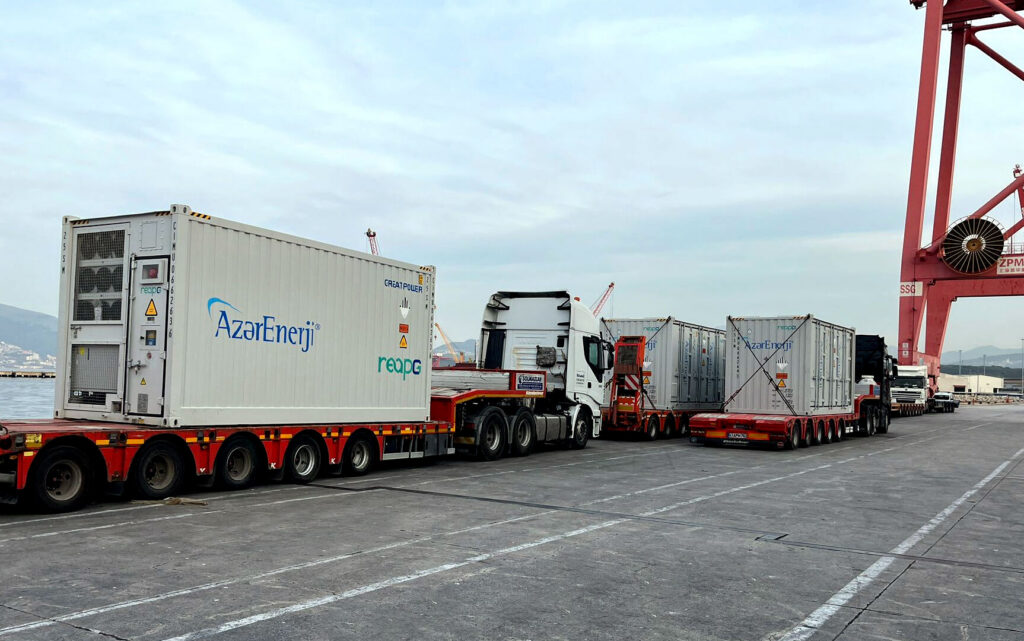
Safety, transparency and control
Great Power thus understands the next phase of C&I storage development through three principles: safety, transparency and control.
The first is Safety by Design.
Battery safety still begins with electrochemistry. Cell selection, manufacturing consistency, thermal management, electrical protection and system architecture remain fundamental. But as the system becomes more connected, physical and digital safety increasingly have to be considered together.
A secure C&I storage platform therefore needs protection from the cell level through the pack, cabinet and control system, while also establishing clear boundaries for software access, communications and remote operation.
The second principle is Transparency by Design.
A battery expected to remain in service for a decade or more should not become a black box once it leaves the factory. Its operating history, state of health and relevant lifecycle information should progressively become part of the way the asset is managed.
This requires more than creating a battery passport at the point when regulation makes one mandatory. It means building traceability and data capability into the battery from the beginning — from manufacturing records and battery identification to BMS data, operating history and end-of-life information.
For customers, better transparency can support maintenance planning, performance evaluation, warranty management and eventually second-life or recycling decisions.
The third principle is Control by Design.
The owner of an energy storage asset should have clear visibility over how its data is used and how external parties interact with the equipment. At the same time, a modern C&I battery must be able to participate in an increasingly interconnected energy environment.
That means finding a workable balance between openness and security: enabling legitimate integration with EMS platforms, energy service providers or aggregators without weakening access control or operational security.
For Great Power, compliance with regulation is therefore a baseline rather than the final objective. The larger challenge is translating the direction of regulation into practical product architecture.
Turning regulation into product design
That starts with the battery management system.
Accurate monitoring of cell behaviour and state of health provides the foundation for both safe operation and lifecycle transparency. Data generated at battery level can support fault detection, predictive maintenance and long-term performance assessment while creating the information foundation required by increasingly sophisticated asset management systems.
System design matters as well. European C&I customers are often working with constrained sites, existing electrical infrastructure and increasingly complex energy-management requirements. A storage cabinet therefore needs to combine energy density and efficiency with straightforward installation, maintenance accessibility and flexible system integration.
Cybersecurity must also move earlier in the product-development process. Authentication, access rights, communications architecture, software updating and data interfaces can no longer be treated simply as software features added after the hardware platform has been completed.
The same is true for battery passport readiness. A passport is ultimately only as useful as the data architecture behind it. Unique battery identification, traceability, health information and lifecycle records all need to originate from reliable data generated and maintained throughout the product’s life.
This is the environment in which Great Power has developed its next-generation Magna-520 platform for the European C&I market.
Magna-520: bringing philosophy into a new C&I platform
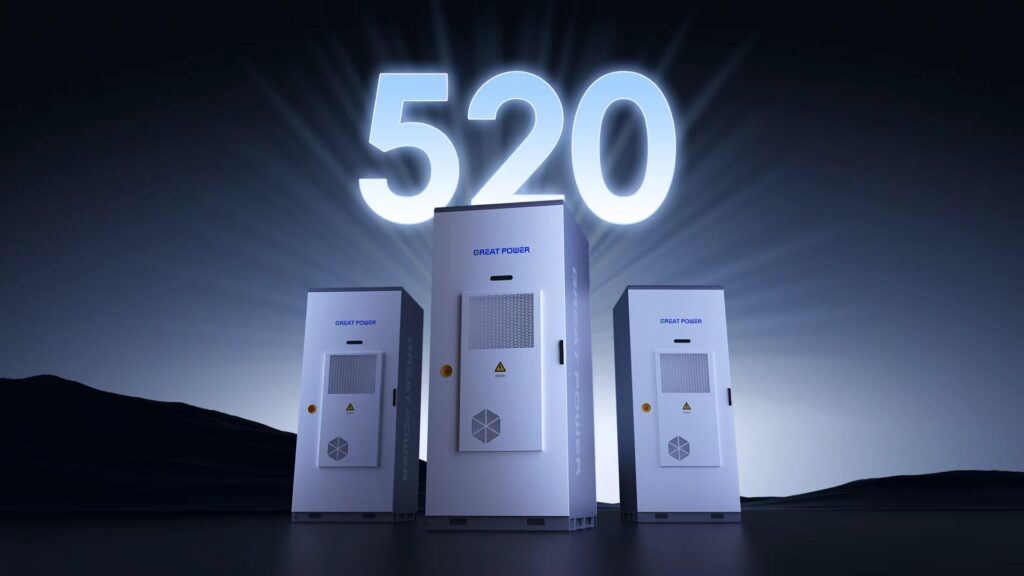
Rather than treating safety, digitalisation, lifecycle transparency and conventional battery performance as separate requirements, Magna-520 brings them together within a single C&I storage platform.
Designed for the evolving needs of European commercial and industrial customers, Magna-520 combines a compact, high-energy-density architecture with system-level safety, intelligent battery management and lifecycle data capabilities. Its design also takes into account secure integration with external energy-management environments, as well as the growing requirements around battery traceability, data access and long-term asset management.
For Great Power, the significance of Magna-520 lies less in responding to any single regulation than in preparing C&I storage for a market in which safety, transparency, interoperability and data governance are increasingly becoming part of the value of the asset itself. The platform reflects an approach in which regulatory readiness and customer needs are considered from the product-design stage rather than addressed as separate compliance requirements later in the lifecycle.
The final specifications will matter. Capacity, efficiency, cycle life and footprint remain central to every investment decision.
But Magna-520 is being developed around a broader proposition: a C&I battery should not only store more energy in less space. It should also give its owner greater confidence in how that asset performs, how it is managed and how its value can be maintained throughout its lifetime
From storage equipment to a trusted energy asset
Europe’s C&I storage market is entering a period in which hardware performance, regulation and digital infrastructure are increasingly converging.
For customers, that changes the definition of a good battery system.
The next generation of storage will still need to be safe, efficient and economically competitive. But it will also need to be transparent enough to demonstrate how it is performing, secure enough to operate as a connected energy asset and flexible enough to give owners meaningful control over their own systems and data.
This is the direction Great Power sees for C&I storage in Europe — and the thinking behind Magna-520.
The objective is ultimately straightforward: to move from supplying a battery cabinet to providing an energy asset that customers can understand, verify, control and trust throughout it2s lifetime.