Research & Development

Solar R&D is focused on improving efficiency, reducing production costs, and extending system longevity. Key areas include tandem and perovskite cell development, advanced materials for encapsulation and contacts, and new concepts in system integration.
Simulation tools, AI-driven design, and accelerated testing methods are expanding research capabilities. Sustainability and circularity targets are increasingly embedded in innovation strategies.
Advertisement
Latest News

Advertisement

The race for space solar
The space economy could be worth as much at $2 trillion by 2040 – according to a recent report by professional services provider PwC. The cisLunar orbit, between the earth and the moon, is particularly promising. But all of it requires power and, as it has for decades, that means PV – and both the technology and supplier landscape for orbital solar is diversifying. Eternal Sun | WAVELABS‘ Pepijn Veling reports from a series of events the company has attended across the country, on what is a fast-evolving technology and business landscape.
U.S. DOE seeks ‘mass, radiation tolerance, and durability’ in space solar cell manufacturing
Pursuing “space superiority” and critical supply chain risk mitigation, the DOE is providing grants seven to eleven research projects to advance space solar cell technologies, from III-V cells to standard terrestrial silicon and perovskites.
IoT-controlled jute cooling reduces PV module temperature by 21.4 C
Tunisian researchers have developed an IoT-controlled jute-fabric cooling system that reduced PV module temperature by up to 21.4 C and increased power output by 40.44% in desert conditions. The system uses 86% less water than previous natural-fiber cooling approaches while achieving an 81.3% water recovery rate.
Chinese scientists achieve record-breaking 27.35% efficiency for perovskite-organic tandem solar cell
Nanjing University researchers developed a perovskite-organic tandem solar cell using a novel low-bandgap acceptor to boost near-infrared light harvesting and improve photocurrent matching. The device achieved a 27.35% efficiency, while retaining 80% of its initial performance after 744 hours of continuous illumination.
Iron-mediated cathode enables 206 Wh/kg sodium-ion pouch cell
Chinese researchers have developed an iron-mediated strategy that improves the reversibility and stability of lattice-oxygen redox reactions in sodium-ion battery cathodes. A 15.8 Ah pouch cell using the cathode achieved an energy density of 206 Wh/kg, with lattice-oxygen redox reversibility reaching 99%.
Two-step process turns end-of-life PV backsheets into supercapacitor electrodes
Chinese researchers have developed a two-step process to recycle waste TPT solar backsheets into hierarchical porous carbon for supercapacitor electrodes. The resulting material achieved a specific capacitance of 469 F/g and retained 92.4% of its initial capacitance after 10,000 cycles.
Advertisement
Advertisement
All Research & Development news
The race for space solar
The space economy could be worth as much at $2 trillion by 2040 – according to a recent report by professional services provider PwC. The cisLunar orbit, between the earth and the moon, is particularly promising. But all of it requires power and, as it has for decades, that means PV – and both the technology and supplier landscape for orbital solar is diversifying. Eternal Sun | WAVELABS‘ Pepijn Veling reports from a series of events the company has attended across the country, on what is a fast-evolving technology and business landscape.
U.S. DOE seeks ‘mass, radiation tolerance, and durability’ in space solar cell manufacturing
Pursuing “space superiority” and critical supply chain risk mitigation, the DOE is providing grants seven to eleven research projects to advance space solar cell technologies, from III-V cells to standard terrestrial silicon and perovskites.
IoT-controlled jute cooling reduces PV module temperature by 21.4 C
Tunisian researchers have developed an IoT-controlled jute-fabric cooling system that reduced PV module temperature by up to 21.4 C and increased power output by 40.44% in desert conditions. The system uses 86% less water than previous natural-fiber cooling approaches while achieving an 81.3% water recovery rate.
Advertisement
Chinese scientists achieve record-breaking 27.35% efficiency for perovskite-organic tandem solar cell
Nanjing University researchers developed a perovskite-organic tandem solar cell using a novel low-bandgap acceptor to boost near-infrared light harvesting and improve photocurrent matching. The device achieved a 27.35% efficiency, while retaining 80% of its initial performance after 744 hours of continuous illumination.
Iron-mediated cathode enables 206 Wh/kg sodium-ion pouch cell
Chinese researchers have developed an iron-mediated strategy that improves the reversibility and stability of lattice-oxygen redox reactions in sodium-ion battery cathodes. A 15.8 Ah pouch cell using the cathode achieved an energy density of 206 Wh/kg, with lattice-oxygen redox reversibility reaching 99%.
Two-step process turns end-of-life PV backsheets into supercapacitor electrodes
Chinese researchers have developed a two-step process to recycle waste TPT solar backsheets into hierarchical porous carbon for supercapacitor electrodes. The resulting material achieved a specific capacitance of 469 F/g and retained 92.4% of its initial capacitance after 10,000 cycles.
Advertisement

New electrode design increases battery energy density by up to 15%
Fraunhofer ISE and its partners have developed thicker electrodes that could increase battery cell energy density by 10% to 15% without adding weight. The PFAS-free, solvent-free concept has been demonstrated in lithium-ion, sodium-ion, and zinc-ion cells and is designed for cost-effective mass production.

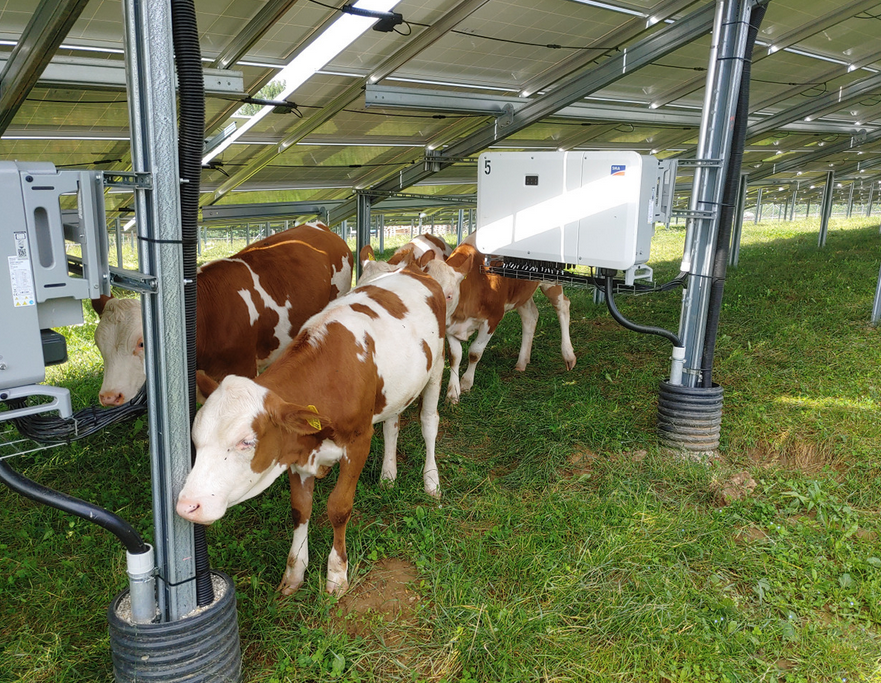
Reliability risks emerge across BIPV, floating PV and agrivoltaics
A new IEA PVPS Task 13 report identifies distinct reliability risks across BIPV, floating PV and agrivoltaics, from heat and partial shading to wave loads, ammonia exposure and soiling. It argues that existing PV qualification standards do not fully capture these application-specific stresses, requiring adapted testing, design practices and performance metrics.
Advertisement
Advertisement