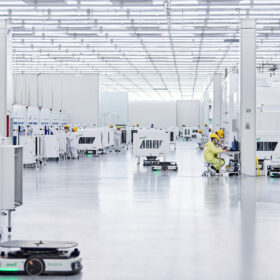
JinkoSolar claims 26.89% efficiency rating for new N-type solar cell
JinkoSolar claims that its new 182 mm n-type monocrystalline silicon solar cell has reached a maximum solar conversion efficiency of 26.89%. It says the achievement has been independently verified by a third party.
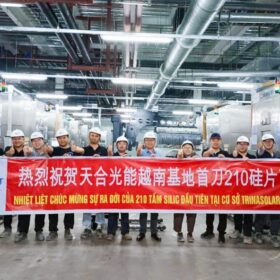
Trina Solar begins producing 210 mm wafers at 6.5 GW Vietnam facility
In addition to the new factory’s wafer production capacity of 6.5 GW, it has a cell capacity of 4 GW and a module capacity of 5 GW.
Meyer Burger shifting focus to US market
Meyer Burger is now prioritizing the establishment of new module and cell production facilities in the United States, driven by favorable market conditions in the country.
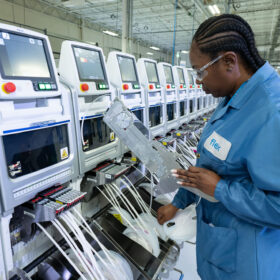
US solar market reshores energy supply chain following passage of IRA
The US solar market has started to reshore its energy supply chain, just one year after the passage of the US Inflation Reduction Act (IRA).
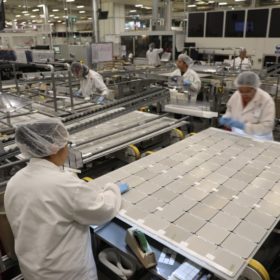
Chinese PV Industry Brief: JinkoSolar reports strong H1 earnings
JinkoSolar has reported a net profit of CNY 3.8 billion ($526.6 million) for the first half of 2023, while Maxeon has revealed plans to open a 3 GW TopCON cell and module factory in the United States.
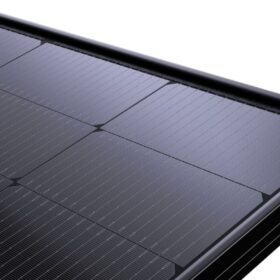
Winaico launches new 430 W n-type TOPCon solar module series
The compact bifacial glass-glass modules are to be delivered from the third quarter. They are available in two different variants with an efficiency of 22.02 and 21.76%.
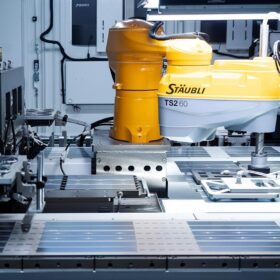
Tongwei Solar launches new breakthrough TNC and THC modules
Dedicated to its “green production concept,” Tongwei Solar presented its latest modules at the 16th SNEC PV POWER EXPO held in Shanghai, China.

Aiko sets trends in European solar industry
Initially known as a PERC cell manufacturer, Aiko has moved to the top of the rankings for global PV cell shipments and has turned its focus on all back contact (ABC) technology. With a research institute and logistics center in Europe, the company is quickly becoming a top player for ABC modules in the industry.
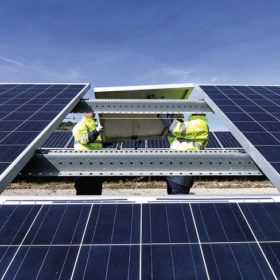
The weekend read: Mining for gold in legacy PPAs
As the pace of solar installations quickens, developers are racing to find the best remaining sites and optimize their position in interconnection queues. But what if the best investment opportunity is hidden in a site built a decade or more ago? Time gets the better of us all, and many early solar sites no longer perform as expected. Yet those sites generally sell power at prices today’s developers can only dream of. Chris Chappell and Stephen Shirey of Clean Energy Associates examine what can be done to unlock the value in these legacy sites.
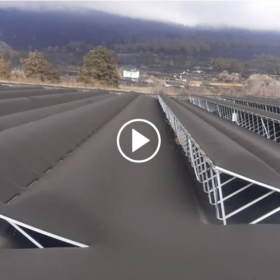
Volcano proof PV
Panels being covered in volcanic ash can cause several problems – as has been seen recently with ongoing eruption in the Canary Islands. The weight of the ash may be too much for the structure to bear, sharp ash particles or small stones within the ash can scratch module glass, and acids or sulfur compounds contained in the ash can cause corrosion on the backsheet.
