Between the lines
Earlier this year, The Nissan Motor Company began European delivery of its extended-range electric van, the e-NV200. The updated vehicle’s larger, 40 kWh battery will bring its range up to 200 km, making the all-electric van attractive for urban delivery fleets. But the feature that has technologists excited is not to be found in a simple upsizing of the battery pack. Rather, it’s the built-in V2G (vehicle-to-grid) charging capability that offers a long dreamed-of solution in energy storage, achieving bi-directional energy flows between fleets of EVs and the powergrid.
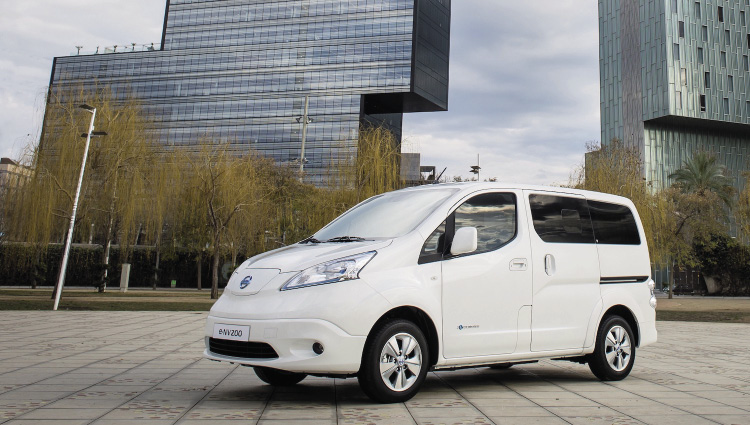
Vehicle to grid capability, or to be more specific, interoperability, does indeed offer a tantalizing solution, one that’s both effective and economical. If EV fleets can be used as a collective battery, not only can they smooth out peaks and valleys of demand in the power grid, they can do so as an unexepected form …

Advertisement
Advertisement
Advertisement
Advertisement