Gravitricity launches gravity energy storage pilot in India

From pv magazine India
Gravitricity, a Scottish energy storage specialist, has launched a project to demonstrate the feasibility of its gravity energy storage technology for grid balancing in India, as the nation has a growing share of renewables in its power mix.
The company has secured GBP 194,000 ($232,750) from the UK government’s Ayrton Fund to find a demonstration site in India for its gravity energy storage technology. The Ayrton Fund, which is part of the UK’s International Climate Finance commitment, aims to give developing countries access to the latest cutting-edge tech to help reduce their emissions and meet global climate change targets.
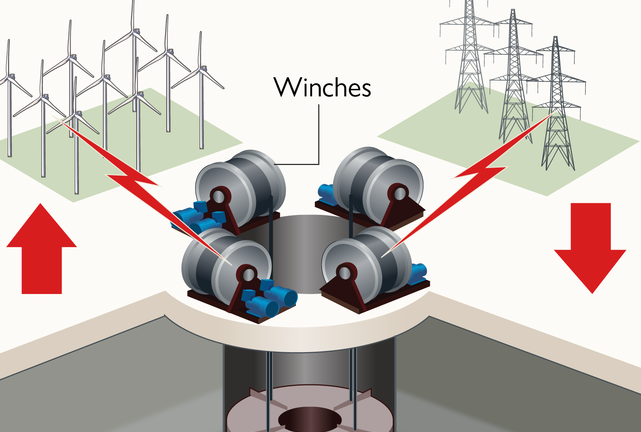
Gravitricity has developed a gravity-based energy storage system that works by raising heavy weights (up to 12,000 tons) in a deep shaft and then releasing them when energy is required. The gravity storage technology could be ideal for India, which aims to install more than 500 GW of renewables by 2030, up from 100 GW in 2021. This rapid increase in variable renewables generation – much of it solar – will bring with it a need for energy storage.
Gravitricity claims its system can operate for up to 50 years and store energy at half the cost of lithium-ion batteries. In India, it has partnered with Panitek Power on the 12-month project, which aims to identify and shortlist sites for a demonstration scheme.
Gravity storage is a relatively simple technology. It doesn’t rely on any rare earth metals, and has a very long lifespan, so it can be manufactured and deployed locally, said Chris Yendell, project development manager at Gravitricity.
This content is protected by copyright and may not be reused. If you want to cooperate with us and would like to reuse some of our content, please contact: [email protected].

Please login to comment

[…] up to 1,000 tonnes of compressed hydrogen per shaft. Image: Gravitricity From pv magazine Global Gravitricity, a Scottish energy storage specialist, has signed a memorandum of understanding with structural […]
[…] the pipeline is broad, starting from Gravitricity’s gravity-based system that’s being piloted in India, to sand-based heat storage ‘batteries’ in operation in Finland. For smaller-scale purposes of […]
[…] Источник […]

This seems like a very expensive way to store energy. The motor-generators, winches, pulleys, and cables need to be maintained. Pumped hydro seems simpler and solves water-storage issues at the same time.

Ehhhh, pumped hydro has its own mechanical complexity. I doubt this would be any more difficult to maintain. And pumped hydro can be difficult to site. You can’t just plop one anywhere.
In the case of one of these “gravity batteries”, there are thousands and thousands of deep mines all over the world with shafts that could accommodate something like this.

Agree
[…] Source link […]
[…] Source link […]
[…] in the pipeline is broad, ranging from Gravitricity’s gravity-based system that is being piloted in India, to sand-based heat storage ‘batteries’ in operation in Finland. For smaller-scale applications […]