The inaugural Solar Manufacturing USA 2026 took place in Austin on September 22–23, bringing together more than 400 participants for two days of discussion, insights and networking focused on the future of U.S. solar manufacturing.
Register your interest below to be among the first to receive updates about Solar Manufacturing USA 2027, taking place in Austin, Texas, on September 21–22, 2027.
Why this conference:
US solar manufacturing is moving into a more demanding phase today. The first wave of announcements focused on capacity plans, factory openings and job creation potential. The next phase focuses on how production lines are specified, how factories are built and run, how technologies are selected, and how the sector defines a credible long-term roadmap.
Solar Manufacturing USA 2026 has been designed specifically for the manufacturing side of the industry, bringing together the companies building domestic production, the suppliers enabling factory ramp-up, the experts benchmarking quality and performance, and the technology voices shaping what-comes-next.
This is not a downstream solar event, and it is not a general policy forum. It is a focused meeting point for the people making decisions on factory execution, equipment, materials, process flows, technology ownership and long-term manufacturing strategy in the United States.
Who attends:
Where buyers, manufacturers and suppliers meet
Solar Manufacturing USA 2026 brings the full U.S. solar manufacturing ecosystem into one room, with particular emphasis on the buyers, investors and third-party entities whose participation helps define the commercial relevance of the event. Held in Austin, Texas, the event also gives delegates access to the state where solar manufacturing activity is becoming most concentrated, with opportunities for follow-on meetings and factory visits beyond the two-day programme.
- Buyers, developers and investors: Module buyers, procurement teams, and investors looking to understand what is really being produced in the U.S., how supply chains are evolving across polysilicon, wafers, cells and modules, and which manufacturers are emerging as credible long-term partners.
- Manufacturers and fab developers: Existing manufacturers across polysilicon, ingots, wafers, cells, modules and thin film, alongside companies with fabs under construction and those planning new domestic production over the next few years.
- Equipment, materials and turnkey suppliers: Equipment suppliers, materials companies, EPCs, turnkey factory and line providers, infrastructure specialists and adjacent industrial players seeking to support or expand within the U.S. solar manufacturing base.
- Third-party validation and due diligence: Factory auditors, testing and inspection firms, independent engineers and due-diligence specialists supporting lenders, buyers and manufacturers with benchmarking, performance validation and quality assurance.
- Industry bodies and R&D partners: Domestic labs, R&D institutions, manufacturing coalitions and industry bodies seeking partnerships, technology pathways and stronger links between U.S. innovation and commercial production.
Austin is the gateway to a state where U.S. solar manufacturing is becoming increasingly localized, scaled and visible. For many delegates, the value of attending will extend beyond the conference itself to include follow-on meetings and factory visits in Texas.
Attendees are expected to include CTOs, heads of R&D, manufacturing and operations leaders, procurement teams, commercial and strategy executives, and specialists involved in supply-chain, quality and market-entry decisions.
Organizers: pv magazine · Finlay Colville
Event Host: Ryan Kennedy; Senior Editor, pv magazine USA
Introducing the inaugural Solar Manufacturing USA event, Senior Editor at pv magazine USA, Ryan Kennedy will outline the structure of the two-day agenda, the topics included, and the various networking activities planned.

Ryan joined pv magazine in 2021, bringing experience from a top residential solar installer and a U.S.-based inverter manufacturer. He holds a Master of Energy and Environmental Management degree at the University of Connecticut and a degree in Management with a certification in Sustainable Business Practices from the Isenberg School of Management at the University of Massachusetts, Amherst.
Keynote Speaker: Charlie Gay; Founder, Greenstar Foundation
Conference Chair Keynote: Finlay Colville; Founder, Terawatt PV Research
Guest Moderator: Markus Beck; Head of Business Development North America, RCT Solutions
The event starts with the first of four special sessions dedicated to U.S. and global PV manufacturing dynamics, delivered by some of the most accomplished and well-known experts in the industry.

Charles F. Gay, Ph.D., is a pioneer and global leader in solar technology with more than 50 years in the field. He earned his B.S. in Chemistry (1968) and Ph.D. in Physical Chemistry (1978) from UC Riverside. He has led world-first manufacturing milestones at ARCO Solar, Siemens Solar, ASE Americas, and Applied Materials, and served as Director of the U.S. Department of Energy’s Solar Energy Technologies Office (2016–2019) and Director of the National Renewable Energy Laboratory (1994–1997). He was elected to the U.S. National Academy of Engineering in 2013 and is an inventor on more than 15 issued U.S. patents.
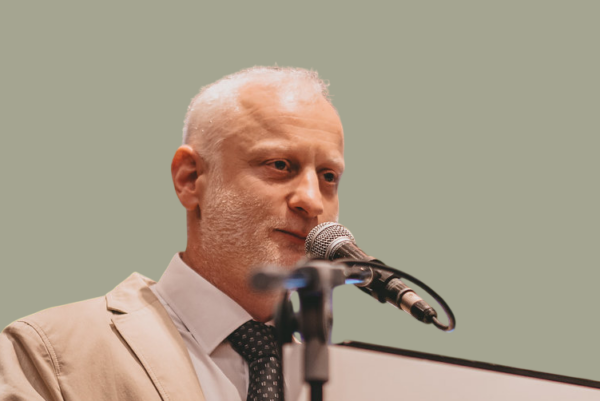
Finlay Colville has been actively engaged with the solar industry for more than 20 years and is recognised as a leading analyst in the sector. For 15 years, Finlay managed market research business units at Solarbuzz and PV-Tech. He established Terawatt PV Research in 2025 as the working platform for his activities going forward.

Dr. Beck is an innovator and strategist with over 3 decades of senior and executive RD&D, project & operations management expertise in the photovoltaic industry. He served as Chief Technologist at First Solar in the United States and Vice President of the PV Development Team at Samsung in Korea, as well as in other leadership positions at 3 PV startups and has advised several global companies in the renewable energy sector on technology and business-related aspects. In his role as the Program Manger for the Manufacturing and Competitiveness sub-program at the U.S. Department of Energy’s Solar Energy Technologies Office Dr. Beck focused on private-public partnerships through strategy and program development supporting industry-lead innovation and new product development and demonstration across the full PV value chain. He recently joined RCT Solutions, a global owner’s and lender’s engineering firm successfully executing over 100GW of projects to date. Dr. Beck will focus on supporting PV manufacturing activities in the North American market.
Dr. Beck holds a PhD in physical chemistry and has been awarded over a dozen scholarships and awards in the field of PV research and manufacturing. He is the primary inventor on 22 patents. As a subject-matter expert of ANSI US-TAG and IEC TC82 WG2, for two decades he has been actively engaged in global PV-standards activities. Dr. Beck has served on numerous DOE PV review boards and chaired the IEEE Santa Clara Valley PV Chapter from 2013–2015. He is a subject-matter expert for the peer-reviewed journals Thin Solid Films and Solar Energy Materials and Solar Cells, and in 2012 was appointed to the editorial board of the latter.
Keynote Speaker: Dan Barcelo; Founder & CEO, T1 Energy
Session Speaker: Adam Tesanovich; Co-Founder & CEO, TALON PV
Session Speaker: Matt Card; President & COO, Suniva
Moderator: Philip Shen; Managing Director, Roth Capital Partners
This session features companies that are pivotal to the build-out of new solar cell and module factories in the United States over the next 5-10 years.

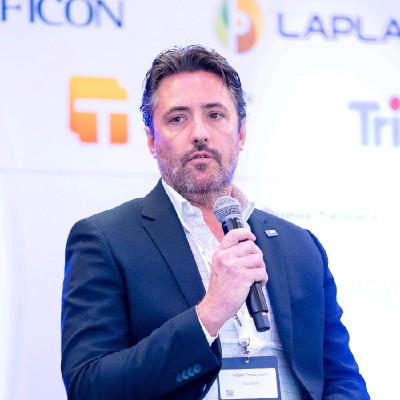
Adam Tesanovich brings over two decades of expertise in entrepreneurship, operations management, supply chain efficiency, financial management, regulatory compliance, risk management, and commercial strategy. Mr. Tesanovich is Co-Founder and CEO of TALON PV, a Texas based manufacture of 4.8 GW of TOPCon Solar Cells. Mr. Tesanovich leads the the company’s strategy growth and operational excellence. His decorated career spans two decades in management, business development, marketing, supply chain, product development, operations, and strategy. His big picture vision and strategic implementation has expanded Eagle Group to over a billion-dollar revenue business operating globally. Mr. Tesanovich has helped lead Eagle Group to award winning success being three times awarded to the Inc. 5000 Fastest Growing Private Companies in America, Houston Business Journals Fastest 50 Middle Market Companies, Inc. 5000 Best Places to Work among additional awards.
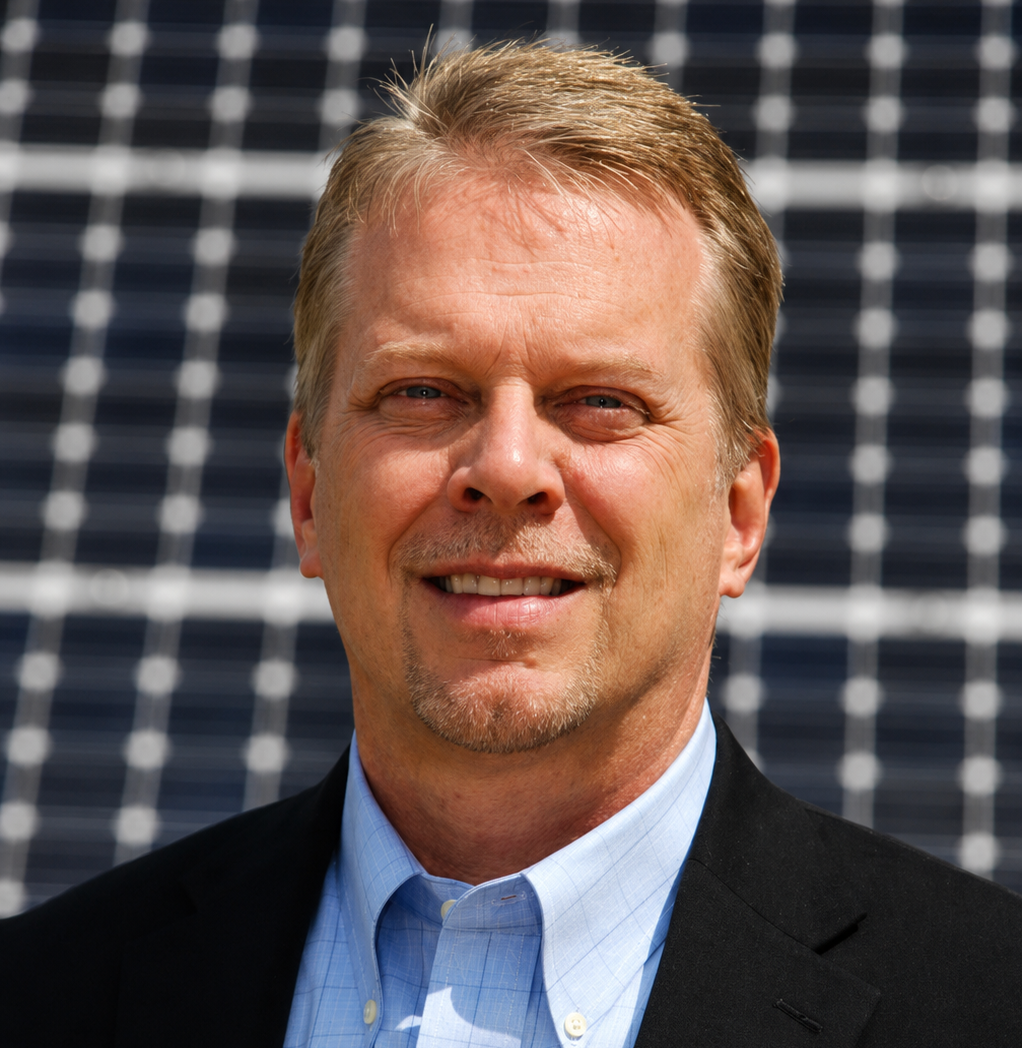
Matt Card is the President and Chief Operating Officer of Suniva, America’s oldest and largest producer of photovoltaic solar cells. One of Suniva’s first dozen employees, Matt has been instrumental in building Suniva’s worldwide presence since 2008, having led or managed the development of many of the company’s key customer relationships, and has been deeply involved in the ongoing evolution of U.S. solar trade policy and domestic manufacturing regulations. During his tenure as President and Chief Operating Officer, Suniva grew to become the largest merchant manufacturer of photovoltaic cells in the United States – culminating in 2024, as Suniva rebuilt and relaunched its Norcross, Georgia, manufacturing facility, becoming the first expansion of U.S. solar cell manufacturing in almost a decade. The company now looks to expand further, as it has announced I’st second U.S. factory – a 4.5GW facility in Laurens, South Carolina, planned to open in Q2 202,7 bringing Suniva to approximately 5.5GW of domestic merchant cell capacity.

Keynote Speaker: Jim Wood; CEO, SEG Solar
Moderator: Finlay Colville; Founder, Terawatt PV Research
A chance to hear the progress and updated plans from SEG Solar, a Texas-based PV module producer whose recent capacity expansion plans are set to propel the company to one of top producers of silicon-based modules in the United States from 2027 onwards.

Jim Wood is the President and Chief Executive Officer of SEG Solar Inc., a Houston, Texas–based, 100% U.S.-owned solar module manufacturer headquartered in Houston, widely recognized as the energy capital of the United States, where he resides. He is a co-founder of the company and is responsible for overall corporate strategy, operations, and commercial activities.
Mr. Wood has over 20 years of experience in the solar industry. Prior to founding SEG Solar, he held senior sales and commercial leadership roles at two Tier 1 solar module manufacturers, with experience spanning utility-scale, commercial, and distributed generation markets. He began his career on the installation side of the industry and was previously a NABCEP-certified solar installer, providing practical experience across both project development and manufacturing.
Finlay Colville has been actively engaged with the solar industry for more than 20 years and is recognised as a leading analyst in the sector. For 15 years, Finlay managed market research business units at Solarbuzz and PV-Tech. He established Terawatt PV Research in 2025 as the working platform for his activities going forward.
Keynote Speaker: Paul Basore; Formerly, DOE Chief Scientist for Solar Energy Technologies
Global Technology Leadership Speaker: Guoqiang Xing; CTO, Tongwei
Moderator: Finlay Colville; Founder, Terawatt PV Research
A further two presentations in the special U.S. and global PV manufacturing dynamics series.

Extensive career in solar power spanning university, government and industrial positions across three continents. Managed the establishment and operation of five solar R&D facilities and developed software tools that are widely used for silicon photovoltaic solar cell characterization and manufacturing cost modeling. Advisor to federal, city, and university solar programs.

Finlay Colville has been actively engaged with the solar industry for more than 20 years and is recognised as a leading analyst in the sector. For 15 years, Finlay managed market research business units at Solarbuzz and PV-Tech. He established Terawatt PV Research in 2025 as the working platform for his activities going forward.
Keynote Speaker: Cherif Kedir; CEO and President, RETC, part of the VDE Group
Guest Moderator: John Smirnow; Principal, Smirnow Law
Keynote presentation from RETC, a leading U.S. based company focused on test protocols for domestic manufactured PV products.

Cherif is a solar industry veteran of 15+ years with experience extending from product development, product engineering, yield enhancement, performance enhancement, test site development, redurability testing, bankability, to certification testing. He also has an extensive 11-year background in Semiconductors, specifically with product engineering, testing, and failure analysis. He leads a team dedicated to helping the renewable energy industry thrive.

Session Speaker: Nathan Kii Miller; Chief Strategy Officer, Nextnova
Guest Moderator: John Smirnow; Principal, Smirnow Law
An opportunity to hear from Nextnova, one of the first major pure-play solar cell makers in the United States following the introduction of the Inflation Reduction Act in 2022.

Nathan Kii Miller holds over 20 years of senior leadership experience at leading PV manufacturers and EPC players such as First Solar and LONGi Solar, with expertise in multi-GW key account oversight, utility sales, EPC delivery and renewable energy M&A. He now acts as Chief Strategy Officer for NEXTNOVA, a newly launched U.S.-based solar manufacturing company, crafting core strategies to advance its domestic solar cell production footprint in America.
Invited Keynote Speaker: Terry Jester; Chairman, Highland Materials
Moderator: Finlay Colville; Founder, Terawatt PV Research
The third session specific to U.S. and global PV manufacturing trends, featuring Terry Jester.

Ms. Jester is one of the world’s longest tenured solar engineering and operations executives. Ms. Jester has been focused on solar PV for the last 45+ years. She recently retired after serving as Managing Director of North American operations for Kiwa PI Berlin, a leading risk management and quality assurance service provider for solar power plant equipment. She has held executive management positions at several solar manufacturing companies and other renewable energy industries around the globe-including board positions with numerous companies, particularly with Highland Materials where she serves as Chairman of the Board, and Next Energies Technologies where she serves as an Independent Director.
Finlay Colville has been actively engaged with the solar industry for more than 20 years and is recognised as a leading analyst in the sector. For 15 years, Finlay managed market research business units at Solarbuzz and PV-Tech. He established Terawatt PV Research in 2025 as the working platform for his activities going forward.
Session Speaker: Ken Johnston; Vice President, ES Foundry
Moderator: Finlay Colville; Founder, Terawatt PV Research
The third presentation of the day on the pure-play solar cell companies in the United States that are set to play a major role in the domestic silicon-based sector.

Finlay Colville has been actively engaged with the solar industry for more than 20 years and is recognised as a leading analyst in the sector. For 15 years, Finlay managed market research business units at Solarbuzz and PV-Tech. He established Terawatt PV Research in 2025 as the working platform for his activities going forward.
Opening Session Speaker: Kamel Ounadjela; General Manager, International Business Unit, LAPLACE Renewable Energy Technology
Session Speaker: Rusty Schmit; President, CS PowerTech
Moderator: Finlay Colville; Founder, Terawatt PV Research
A special session focusing on how to set up new U.S.-based cell and module production lines in the United States, including the key raw materials and their accompanying supply-chains.

Dr. Kamel Ounadjela is the General Manager of LAPLACE Renewable Energy Technology Co., Ltd., leading the company’s activities in the USA, Europe, and Turkey. He brings over two decades of experience in the solar industry, driving breakthroughs from advanced technology innovation to opening new global markets. In 2006, he founded and operated Calisolar/Silicor, one of the first solar cell manufacturing facilities in the United States. Dr. Ounadjela is an inventor with several patents in solar and semiconductor technologies, and the author of more than 200 technical publications.

Russell “Rusty” Schmit is a veteran of the solar industry and a globally recognized leader with extensive experience across multinational energy companies and start-ups. Prior to joining Canadian Solar, Mr. Schmit led the growth of numerous renewable energy efficiency firms and founded start-ups focused on advanced manufacturing and finance that were subsequently acquired by Électricité de France. He has also been active in public policy advisory roles, working closely with U.S. Congress members and Senators on renewable energy initiatives.
Finlay Colville has been actively engaged with the solar industry for more than 20 years and is recognised as a leading analyst in the sector. For 15 years, Finlay managed market research business units at Solarbuzz and PV-Tech. He established Terawatt PV Research in 2025 as the working platform for his activities going forward.
Panelist: Tim Crane; Senior Director, Supply Chain, Palmetto
Panelist: Kevin Graves; Senior Director of Engineering and Procurement, Oriden
Panelist: Tom McNulty; Director, Supply Chain and Quality, OneEnergy
Panelist: Angad Sachdeva; Director of Solar Technology, Apex Clean Energy
Guest Moderator: Mike Carr; Executive Director, SEMA Coalition
The first of two special panel sessions on Day One, featuring some of the key procurement decision-makers for solar products in the United States today.
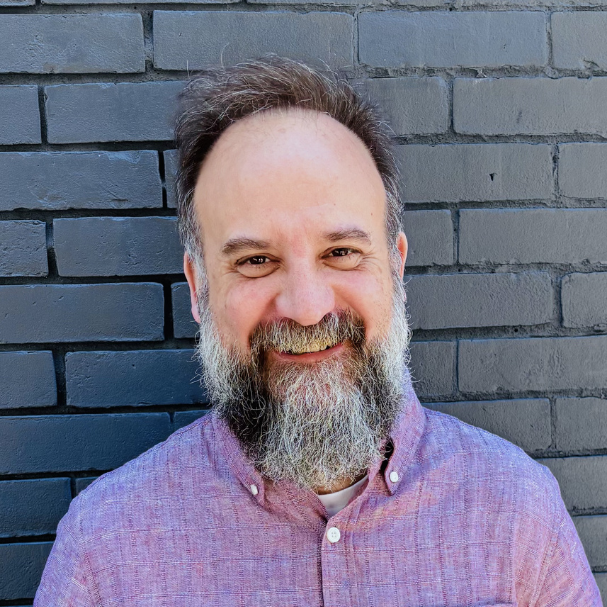
Tim Crane is Senior Director of Supply Chain at Palmetto, where he leads sourcing, planning, and procurement across the company’s hardware portfolio, with direct accountability for approved vendor and product management and compliance with FEOC, UFLPA, and Domestic Content requirements.
Tim brings two decades of solar procurement leadership to the panel, having built and directed sourcing organizations at Sunrun, Tesla/SolarCity, and Mainstream Energy (parent of REC Solar and AEE Solar). Across these roles he has led global hardware sourcing strategy covering modules, inverters, batteries, and mounting systems — consistently delivering material cost reductions while maintaining the service and quality standards that large residential and commercial portfolios demand.
Throughout his career, Tim has operated at the intersection of two competing imperatives that define serious procurement leadership: the relentless pressure to reduce cost of acquisition, and the equally real obligation to ensure that what gets specified and purchased will perform bankably over a 25-year asset life. His work has consistently required reconciling those demands while navigating supply chain traceability, ethical sourcing, and third-party quality assurance — the same issues now at the center of the U.S. manufacturing conversation.

Kevin has 18 years of solar deployment experience across a range of sectors and geographies, including 15 years of engineering management. He cut his teeth in the industry at REC Solar, Prospect Solar, and Direct Energy Solar / Centrica Business Solutions. In his 7 years at Oriden, he has overseen the engineering team supporting projects in all stages of development and procurement of modules, BESS, EPC services, and long lead HV equipment. Kevin has an M.S. in Engineering Management from Robert Morris University and a B.S. in Engineering Science from Pennsylvania State University. When he’s not procuring for clean energy projects, Kevin might be playing with his kids, cycling, playing ice hockey, practicing yoga, or taking on projects around the house.


Angad has been with Apex Clean Energy for four years leading PV technology review and module procurement for its solar project pipeline. He draws on 12 years of industry experience in solar resource assessment and design, with previous roles at Avangrid and Borrego (now New Leaf Energy).

Mike has worked for 30 years designing policies and building consensus to advance clean energy technologies.
He specializes in finding innovative approaches to solving the unique problems of emerging, disruptive technologies that can transcend our current difficult political environment.
Working with U.S. industry leaders over the last 5 years, Mike launched and serves as Executive Director of the Solar Energy Manufacturers for America Coalition (SEMA). SEMA achieved an early policy win by developing, with allied interests in Congress, the 45X Advanced Manufacturing Production Tax Credit and the Domestic Content Bonus Incentive enacted into law in 2022. SEMA then continued to work to improve implementation guidance for the following 2 years and successfully defended the credit in the most recent tax bill passed in July of 2025. Under Mike’s leadership SEMA has built strong, bipartisan ties in Congress as well as the Administration, becoming a leading voice in continuing manufacturing reshoring efforts.
His federal government experience – spanning the U.S. Department of the Interior, the Senate Energy Committee, and the U.S. Department Energy – has been focused on creating policy incentives and frameworks to enable the U.S. clean energy industry to flourish and deliver its benefits both in affordable energy and quality jobs to Americans.
His most recent federal service was as the Principal Deputy Assistant Secretary for the Office of Energy Efficiency and Renewable Energy and the Senior Advisor to the Director of Energy Policy and Systems Analysis at the US Department of Energy from 2012 to 2015. He was a member of the leadership team advising the Secretary on clean energy policy, in addition to being a guiding force on the R&D and deployment agenda within EERE.
Prior to DOE, Mike served as Senior Counsel to the Senate Committee on Energy and Natural Resources from 2004 to June 2012. In that influential role, he conceived of, drafted, and guided through Congress a number of incentive programs and laws that now direct major Department of Energy programs. Prominent examples include the Advanced Technology Vehicle Manufacturing Program (used by Tesla, Ford, and Nissan to significantly expand US manufacturing of cutting-edge vehicles), and the L-Prize (which helped catalyze the commercial introduction of consumer LED light bulbs). All of these policies enjoyed broad bipartisan support.
He holds a law degree, with a Certificate of Specialization in Environmental and Natural Resources Law, from Lewis and Clark College and a Bachelor’s from the University of Colorado – Boulder.
Session Speaker: Sriram Das; Executive Chairman, DYCM Power
Session Speaker: Peter Fath; Founder & CEO, RCT Solutions
Guest Moderator: Jochen Rentsch; Managing Director, Nexus GreenTech
This session hears from companies at the centre of new c-Si factory design in the United States.


Peter Fath is the CEO of RCT Solutions, which works closely with global investors, governments, and factories to establish integrated solar manufacturing facilities by providing extensive engineering services. He is chairman of the Solar Equipment Machine Maker Group at VDMA, a German engineering federation, and holds a managing director position at RCT Hydrogen.

Jochen Rentsch holds a PhD in physics from Albert-Ludwigs-Universität Freiburg and worked at Fraunhofer ISE from 2001 to 2026, focusing on silicon solar cell and production technology development. Over this period, he led both research and large-scale industrial transfer projects, building strong links between cutting-edge R&D and industry implementation. At Fraunhofer ISE, he headed a group and later a department dedicated to advancing silicon solar cell technologies and their manufacturing processes. In the last five years of his tenure, he served as Head of Technology Transfer, driving the commercialization of research results and supporting industry partners in adopting innovative renewable energy solutions. In early 2026, he became co-founder and CEO of Nexus GreenTech, a company specializing in business consultancy for renewable energy technologies. Nexus GreenTech supports companies and investors in developing, scaling, and industrializing sustainable energy technologies and value chains.
Opening Session Speaker: Paul Gillespie; VP of Business Development – US, TT VISION Technologies
Session Speaker: Tony Hui; Americas Key Account Manager & General Manager Assistant, Autowell Technology
Guest Moderator: Jochen Rentsch; Managing Director, Nexus GreenTech
The second of two sessions focusing on the optimization of production equipment in the new silicon-based factories.

Paul D. Gillespie is a strategic technical sales and operations leader with 30+ years of hands on experience launching, selling, deploying, and servicing capital equipment and inspection systems across semiconductor, PV/solar, LED, and industrial automation markets. He combines executive-level go to market strategy and channel development with deep process engineering and field integration experience

Tony Hui serves as Assistant General Manager for the Americas Market and is part of the North America and South Asia Sales Team. He has extensive experience managing key accounts and delivering turnkey solutions for major clients.
Jochen Rentsch holds a PhD in physics from Albert-Ludwigs-Universität Freiburg and worked at Fraunhofer ISE from 2001 to 2026, focusing on silicon solar cell and production technology development. Over this period, he led both research and large-scale industrial transfer projects, building strong links between cutting-edge R&D and industry implementation. At Fraunhofer ISE, he headed a group and later a department dedicated to advancing silicon solar cell technologies and their manufacturing processes. In the last five years of his tenure, he served as Head of Technology Transfer, driving the commercialization of research results and supporting industry partners in adopting innovative renewable energy solutions. In early 2026, he became co-founder and CEO of Nexus GreenTech, a company specializing in business consultancy for renewable energy technologies. Nexus GreenTech supports companies and investors in developing, scaling, and industrializing sustainable energy technologies and value chains.
Panelist: Whitney Loomis; Senior Director, Strategic Procurement (Solar & BESS), Clearway Energy
Panelist: Xavier Quniet; VP Procurement, Treaty Oak Clean Energy
Panelist: Juan Carlos Rosa; Director of Procurement, Lightsource bp
Panelist: Nick de Vries; CTO, Silicon Ranch
Guest Moderator: Greg Brabec; Chief Legal Officer, Silfab Solar
The second of two special panel sessions on Day One, hearing from more procurement decision-makers for U.S.-made solar products.

A veteran of both the US Army and the renewable energy sector with nearly a quarter of a century of experience bringing the solar industry to scale, and making PV plants more capable. As CTO, Nick is responsible the technological and ecological vison of the company, as well as the cultivation of domestic sources of supply. Silicon Ranch owns and operates–projects that Nick designed over a decade ago, including the first transmission interconnected PV plant in the Southeast. Prior to Silicon Ranch he held positions at Applied Materials and Tesla manufacturing both crystalline and thin film cells and modules.
Nick holds 5 patents in both PV module manufacturing and design, and a degree in Mechanical Engineering from Lehigh University. He serves as an industry advisor, and reviewer for the Department of Energy’s PACT and DuraMAT consortiums. As well as the Principal Investigator of a DOE funded program exploring the appropriate co-location of solar projects with regenerative cattle ranching.

Juan Carlos currently leads the procurement of PV modules and other equipment categories in the U.S. for Lightsource bp. Previously, Juan Carlos held a similar position at RWE and also sold wind turbines at Goldwind. Prior to that, Juan Carlos obtained his Master’s degree in Industrial Technology and Management from the Illinois Institute of Technology and a Bacherlor’s of Science in Electromechanical Engineering from the Universidad Politecnica de Madrid.

Xavier Quinet is a procurement executive with over 25 years of experience in industrial and renewable energy sectors. He currently serves as VP of Procurement at Treaty Oak Clean Energy in Austin, Texas and leads strategic sourcing for utility-scale solar and BESS projects. Previously, he held senior roles at BayWa r.e. Americas and ENGIE Solar, overseeing procurement and EPC construction of hundreds of megawatts across North America and internationally.

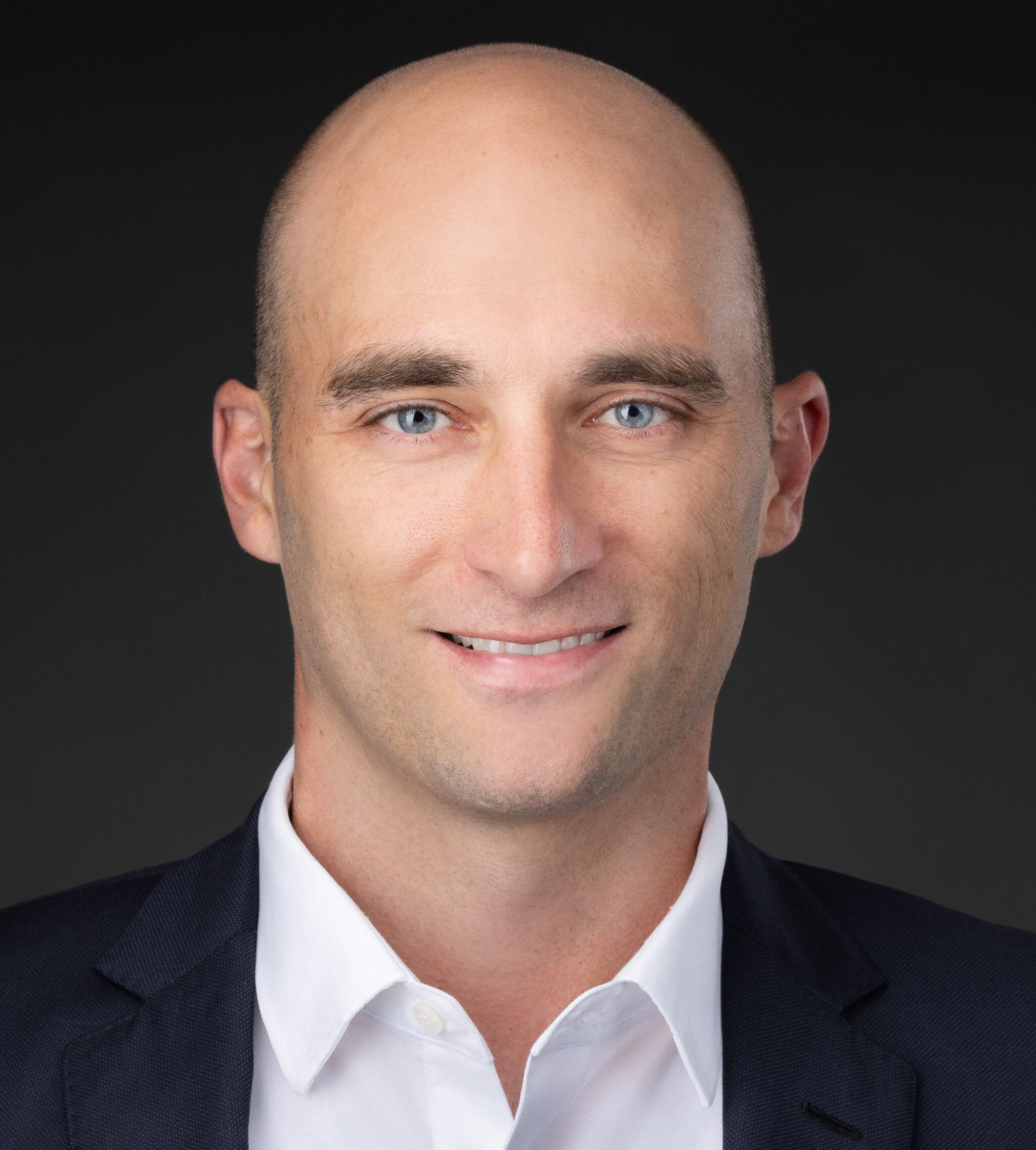
Legal and Business Executive with 20+ years professional experience, 10+ years of experience in the Semiconductor and Solar Industry. Expert in solar supply chain. Uniquely have represented all manufacturing steps in the United States, including manufacturers of (i) Silicon Metal, (ii) Semiconductor and Solar Polysilicon, (iii) Solar Ingot/Wafer, (iv) U.S. Cell and (v) Module manufacturer. Served as chair of Dept of Commerce Subcommittee on Energy Manufacturer Supply Chain, coordinated training of CBP for UFLPA development and compliance, guidance on Inflation Reduction Act and other relevant litigation, origination of Polysilicon 232 with industry partner.
Panelist: Tom Beline; Partner, Cassidy Levy Kent
Panelist: Nate Picarsic; Founder, Horizon Advisory
Panelist: Angela Santos; Partner and Customs Practice Leader, ArentFox Schiff
Panelist: John Smirnow; Principal, Smirnow Law
Guest Moderator: Greg Brabec; Chief Legal Officer, Silfab Solar
Closing out Day One is a stellar group of experts tasked with simplifying all those legal documents we’ve been hearing about in recent months – and conveying how these help or otherwise the long-term goal of domestic U.S. solar manufacturing.

Nate Picarsic is the founder of Horizon Advisory, a leading supply chain and geopolitical risk data firm. He holds affiliations as a Senior Fellow at the Foundation for the Defense of Democracies and a Visiting Senior Fellow at the Krach Institute. His commentaries on supply chains, investment, and technology have been published in outlets ranging from Bloomberg to TechCrunch. He holds a BA from Harvard College and has completed executive education at Harvard Business School and the Defense Acquisition University.

Legal and Business Executive with 20+ years professional experience, 10+ years of experience in the Semiconductor and Solar Industry. Expert in solar supply chain. Uniquely have represented all manufacturing steps in the United States, including manufacturers of (i) Silicon Metal, (ii) Semiconductor and Solar Polysilicon, (iii) Solar Ingot/Wafer, (iv) U.S. Cell and (v) Module manufacturer. Served as chair of Dept of Commerce Subcommittee on Energy Manufacturer Supply Chain, coordinated training of CBP for UFLPA development and compliance, guidance on Inflation Reduction Act and other relevant litigation, origination of Polysilicon 232 with industry partner.
Session Speaker: Dirk Bräunlich; Director Sales Solar, ASYS Group
Session Speaker: Kirkland Requejo; Commercial Manager & U.S. Policy Analyst, Mondragon Assembly
Session Speaker: Eckhard Schaefer; Senior VP Solar Products, Photonics Systems USA
Session Speaker: Dennis Seibert; Managing Director, PVA Crystal Growing Systems
Session Speaker: Michael Taschuk; CTO, G2V Optics
Session Speaker: Tom Thieme; Business Unit Manager Solar, ISRA VISION, Part of Atlas Copco Group
Session Speaker: Michael Vees; Sales Director, RENA Technologies
Session Speaker: Jake Veloza; Sales Manager, Americas, Iberia, & UK, Eternal Sun WAVELABS
Session Speaker: Marian Breitenbücher; CCO, HighLine Technology
Guest Moderator: Raymond De Munnik; Chief Strategic Advisor; Vikram Solar
One of the highlights of Solar Manufacturing USA 2026, this session features leading ‘Western’ equipment suppliers behind the production tools used inside ingot, wafer, cell and module factories. Understand how solar PV components are manufactured today, where the products are inspected through the production lines and the tools used to test the performance and quality of the yields.


Dr. Gang Xiong has more than 20 years of experience in solar industry including 19 years at First Solar. He has successfully led multiple projects from early-stage R&D to high-volume manufacturing. Dr. Xiong’s team have established multiple cell and module efficiency records on CdTe solar cells. He is also one of the pioneers of perovskite industrial research and scaling. Dr. Xiong is currently the SVP of Vital Materials, a global leader in materials technology that can supply BOM and manufacture equipment in high quality to PV industry. He is also an adjunct professor at UNSW School of PV and Renewable Energy Engineering.



Dirk Bräunlich is Director Sales Solar at EKRA Automatisierungssysteme, Germany, part of the ASYS Group, where he is responsible for global sales activities and strategic business development in the photovoltaic industry.
Prior to joining EKRA in July 2026, he held several international leadership and management positions at VON ARDENNE, one of Europe’s leading suppliers of vacuum coating equipment and technologies for photovoltaic manufacturing. From 2018 to 2021, he served as General Manager of VON ARDENNE China, leading the successful transformation of the Shanghai subsidiary into a fully operational manufacturing and delivery site for advanced coating systems. He subsequently took responsibility for strategic sales and business development activities within VON ARDENNE’s global photovoltaic business.
Throughout his career, he has worked closely with leading solar manufacturers, research institutes, and technology partners across Asia, Europe, and India. His experience spans photovoltaic manufacturing technologies, vacuum coating processes, industrial automation, business development, and international market expansion.
Dirk is particularly passionate about bridging innovative technologies and industrial-scale production to accelerate the global energy transition. He regularly engages with industry leaders, research organizations, and strategic partners to support the commercialization of next-generation solar technologies. Drawing on more than a decade of international management and sales experience, he provides practical insights into market trends, manufacturing challenges, and emerging opportunities in the photovoltaic industry.

Dennis Seibert started his career at Pfeiffer Vacuum with a dual studying programm for a bachelor’s and master’s degree. There he started in the Service Department and had his first larger stretch abroad, spending 3 months in Korea. Later, he held different positions in Marketing and Business Development before taking over his first responsibility as General Manager / President of one of the Pfeiffer Vacuum Subsidiaries in the US in Indianapolis. After a short additional stay at Pfeiffer Vacuum in Germany, he became the General Manager of the PVA Crystal Growing Systems Unit at PVA in 2022. Besides his role at PVA he is also Co-Chair of the VDMA working group for Photovoltaic Equipment.

Michael Taschuk (’00 B.Sc. Engineering Physics, ’06 Ph.D. Electrical Engineering) is the Founder and Chief Technical Officer of G2V Optics, Inc. a global lighting company that delivers ‘engineered sunlight’ to the world’s leading innovators of solar renewables, machine vision, and aerospace systems. G2V’s customers include leading research institutions, Fortune 500 companies, and national aerospace and renewable energy organizations. Dr. Michael Taschuk is a named inventor on several patents, co-author of a textbook, has published over 50 peer-reviewed journal articles, and winner of an ASTech Award of Distinction.


Raymond de Munnik is a global executive and recognized expert in the semiconductor and photovoltaic industries, with over 20 years of experience in technology innovation, manufacturing, and commercialization. He has successfully led high-tech process and product development from concept through industrialization and market adoption. Raymond is known as an early pioneer in the implementation of passivated contact solar cell technology in mass production and continues to support the advancement of next-generation PV manufacturing through strategic leadership and industry collaboration.
Session Speaker: Mike Scott; Senior Manager, QA, Intertek CEA
Session Speaker: Jenya Meydbray; VP & General Manager, Nextpower
Guest Moderator: Teresa Barnes; Multi-Institutional Research Leader; National Laboratory of the Rockies
This session bridges the gap between compliance and field reliability by exploring how to effectively scale domestic U.S. manufacturing. Nextpower will break down the scaling of materials for trackers and modules, while Intertek CEA will detail factory quality assurance audits required to secure bankable supply.


Session Speaker: Jason May; Executive Chairman, QSM Group
Session Speaker: Dana Hankey; Senior Executive Fellow & Board Member, ACI Materials
Session Speaker: Thad Druffel; CEO, Bert Thin Films
Session Speaker: Gang Xiong; Senior VP of Thin Film Technology, Vital Materials
Guest Moderator: Teresa Barnes; Multi-Institutional Research Leader; National Laboratory of the Rockies
This session features presentations from suppliers establishing domestic production to serve new cell factories (with wafers, metallization paste and processing consumables) and the materials needed for module assembly.

Dr. Gang Xiong has more than 20 years of experience in solar industry including 19 years at First Solar. He has successfully led multiple projects from early-stage R&D to high-volume manufacturing. Dr. Xiong’s team have established multiple cell and module efficiency records on CdTe solar cells. He is also one of the pioneers of perovskite industrial research and scaling. Dr. Xiong is currently the SVP of Vital Materials, a global leader in materials technology that can supply BOM and manufacture equipment in high quality to PV industry. He is also an adjunct professor at UNSW School of PV and Renewable Energy Engineering.

Jason May is a seasoned executive with deep expertise in high-purity industrial minerals, solar supply chains and advanced manufacturing. With over 20 years of experience, he has led mineral projects from identification to production, focusing on materials critical to solar and semiconductor manufacturing.

A founding member of ACI Materials, Dana led the company as CEO from its inception in 2013 through December 2025, when he stepped into a new role as Senior Executive Fellow to return to the work that first drew him into materials science: formulating and processing silver pastes for solar cells. The timing is deliberate. As solar cell and module manufacturing re-shores to the United States, the industry needs a domestic silver paste supplier for gridlines and busbars — and Dana intends for ACI to be it. Before founding ACI, Dana built a career at the intersection of materials science and photovoltaics: CEO of Superior MicroPowders, General Manager of Ferro Corporation’s Electronic Materials Division, R&D Director at Heraeus, and a member of the technical staff at Sandia National Laboratories. Over 30 years, that path has produced an extensive body of publications and patents in solar materials.

Thad Druffel is the founder of Bert Thin Films, Inc., which has developed a copper metallization pastes that are direct drop-in replacements for silver pastes on the market. Thad has extensive experience in materials and process development over several markets and has focused solar industry for the past 16 years. His background includes research and development topics in both Mechanical and Chemical Engineering, and he has been involved in projects ranging from solar and water facilities in Africa to corporate research and development of cutting-edge technologies. His work has also led to a startup related to materials for perovskite solar cells.
Panelist: Rob Foree; Project Manager, Black & Veatch
Panelist: Henry Hieslmair; Principal Engineer, Solar Technology, DNV Energy USA
Panelist: Jordan Nicholson; Director, Client Services, Luminate
Panelist: Jon Previtali; Founder & CEO, New Energy Diligence
Moderator: Finlay Colville; Founder, Terawatt PV Research
This session features leading Independent Engineers (IEs) discussing their role in evaluating and qualifying new domestic U.S. PV operations. Panellists will explain how technical audits, factory acceptance testing, and supply chain assessments directly influence project bankability. The discussion will outline the specific engineering benchmarks used to verify domestic production quality and facilitate project financing.

Mr. Rob Foree is a Project Manager with over 12 years of energy industry experience and lead’s Black & Veatch’s independent assessment and bankability practice for new and novel energy generating technologies with the goal of providing insight and detailed review of the product’s design, performance, reliability, manufacturing and quality. Mr. Foree specializes in independent technical assessments and due diligence for solar PV modules (PERC, TOPCon, HJT, and Perovskites), all types of solar racking systems (fixed, single-axis tracker, rooftop, floating, and dual-axis), and various battery energy storage (BESS) technologies. He has led and performed numerous assessments for well known PV module, racking, and battery providers across the globe and is knowlegable about the best practices and risks assocciated with these technologies.

Dr. Henry Hieslmair joined DNV in 2017 and has been focused on various module topics including photovoltaic system degradation, PV module useful life assessments, PV module waste volume, toxicity and circularity (Nature Physics 19.10 (2023)), module O&M modeling, utility plant construction automation, and emerging module technologies. Henry Hieslmair has worked in the PV solar industry since 1993 when he began his PV career at Siemens Solar Industries in Camarillo CA (previously ARCO Solar). Subsequently, he pursued his graduate and post-graduate work at U.C. Berkeley and Lawrence Berkeley Laboratories where he focused on process improvements for multi and monocrystalline PV silicon. After his studies, he cofounded a start-up where he designed and developed a thin multicrystalline interdigitated-back-contact PV cell and module. In 2010, as an early employee at another start-up, he helped pioneer the first high productivity (>3000 wafer per hour) ion implantation tools for the PV industry for phosphorous and boron doping (was utilized for early TOPCon manufacturing). Subsequently, at SunEdison, he worked to commercialize their Continuous Czochralski silicon growth method, performed cell-to-module loss analyses, developed module testing procedures, and performed extensive analysis on boron-oxygen light induced degradation. Over the course of his career, Henry has also consulted for many firms involved in silicon PV including DOE Sunshot program, Solexel, Kleiner Perkins, and Crystal Solar. He has 7 patents and has authored or co-authored over 50 conference and journal articles on PV materials science, device operation, and manufacturing.

Mr. Nicholson has over 20 years of experience in the power and energy industry, with a focus in independent engineering and execution of EPC portfolios in both the renewable power and oil and gas industry. His background includes direct leadership and management of over $1.5 billion in power and energy infrastructure projects comprising of major utility-scale EPC contracts, PV module and other equipment supply agreements as well as managing the full project life cycle from feasibility through commissioning and operations. Prior to joining Luminate, Mr. Nicholson held leadership positions in project development, supply chain management and project management of PV solar, BESS and other energy infrastructure that have included concept development, interconnection management, EPC contracting and negotiation, and managing large multi-discipline project teams.

Finlay Colville has been actively engaged with the solar industry for more than 20 years and is recognised as a leading analyst in the sector. For 15 years, Finlay managed market research business units at Solarbuzz and PV-Tech. He established Terawatt PV Research in 2025 as the working platform for his activities going forward.
Global Technology Leadership Speaker: Adam Detrick, Director of Product Management & Technical Services, JinkoSolar
Moderator: Finlay Colville; Founder, Terawatt PV Research
The final part of the special focus on U.S. & global manufacturing trends, this session will examine how a silicon-based ecosystem, spanning ingot to module production and related materials supply, can come to fruition. Specific attention and analysis will be presented related to Jinko’s leading global status in realizing a fully-integrated 56 GW facility – the world’s largest silicon-based manufacturing plant.

Finlay Colville has been actively engaged with the solar industry for more than 20 years and is recognised as a leading analyst in the sector. For 15 years, Finlay managed market research business units at Solarbuzz and PV-Tech. He established Terawatt PV Research in 2025 as the working platform for his activities going forward.
Session Speaker: Jamie Wang; Director of R&D Institute, SC Solar
Panelist: Frank Faller; Chief Technology Officer, ELITE Solar
Panelist: Harsh Galia; Director of PV Solutions Engineering, Qcells
Panelist: Art Fletcher; Chief Executive Officer, Illuminate USA
Panelist: Ashok Nair; Chief Executive Officer – Americas, Inox Solar Americas
Moderator: Ben Norris; Vice President, Regulatory Affairs, SEIA
This hybrid session will capture the domestic PV manufacturing plans from a range of leading companies at the heart of U.S. supply-chains today.

Frank Faller is the Chief Technology Officer of ELITE Solar, where he leads the company’s technical strategy and innovation roadmap for utility-scale solar project development across Europe.
With over three decades of experience in the solar PV industry, Dr. Faller brings deep expertise spanning R&D, manufacturing, system design, and technology commercialization. His career has bridged leading roles in both research institutions and industry, enabling him to drive technical excellence from lab to large-scale deployment.
Prior to joining ELITE Solar, Dr. Faller held senior positions across the global solar sector, overseeing advancements in solar cell and module technologies, scaling production lines, and improving system performance. His work has played a pivotal role in shaping efficient, bankable solutions for large-scale PV projects.
Dr. Faller earned his Ph.D. from the University of Freiburg, in collaboration with the Fraunhofer Institute for Solar Energy Systems (ISE)—a globally renowned center for solar research and innovation.

Harsh Galia is a product management and engineering leader with expertise in photovoltaic (PV) technologies, product strategy, and commercialization, bringing extensive experience in developing innovative solar products from concept to market. He has led cross-functional initiatives across engineering, manufacturing, quality, certification, supply chain, and commercial organizations to deliver differentiated products that balance performance, reliability, manufacturability, and cost. His technical expertise includes PV module design, reliability engineering, technology evaluation, product roadmaps, warranty strategy, competitive benchmarking, and product positioning. Harsh holds a Master of Industrial and Systems Engineering from Auburn University and is a Lean Six Sigma Black Belt, applying systems thinking and data-driven decision-making to solve complex technical and business challenges. He is recognized for bridging engineering innovation with commercial strategy to create products that deliver measurable customer value. Passionate about advancing renewable energy, Harsh is committed to accelerating the adoption of high-performance solar technologies through innovation, collaboration, and continuous improvement.

Finlay Colville has been actively engaged with the solar industry for more than 20 years and is recognised as a leading analyst in the sector. For 15 years, Finlay managed market research business units at Solarbuzz and PV-Tech. He established Terawatt PV Research in 2025 as the working platform for his activities going forward.
Global Technology Leadership Speaker: Ralf Preu; Director Photovoltaics, Fraunhofer Institute for Solar Energy Systems ISE
Session Speaker: Aaron Thurlow; Chief Commercial Officer, Caelux
Session Speaker: Joel Jean; CEO and Co Founder, Swift Solar
Session Speaker: Laureen Sanderson; CCO, CubicPV
Session Speaker: Laura Miranda; Chief Strategy Officer, Oxford PV
Session Speaker: Colin Bailie; Co-founder & CTO, Tandem PV
Moderator: Ralph Romero; Senior Managing Director, Black & Veatch
This session will provide the audience with a detailed understanding of how perovskite-based tandem architectures offer significant performance advantages compared to the solar industry’s mainstream single-junction solar cells.

Entering the Fraunhofer Institute for Solar Energy Systems (ISE) in 1993, PD Dr. Ralf Preu is director of the Division Photovoltaics with a focus on production technology and industry transfer. He studied physics at the Universities of Freiburg and Toronto and economy at the University of Hagen; he received his PhD in Electrical Engineering and Electronics from the University of Hagen in 2000. He has been teaching photovoltaics at the University of Freiburg since 2008 and habilitated in 2023. He has published more than 300 papers at scientific journals and international conferences and has been a contributor and chair for committees in the field of PV Research & Development (2026: ETIP Chair of WG PV Technology, FNEE PV Spokesman WG Production, EU PVSEC Topic Chair PV Module). He is a co-inventor of 30 patent families. Ralf Preu received the Meyer-Struckmann Award in 2003, the Innovation Award in Laser Technology in 2014 and Joseph von Fraunhofer Prize in 2016 for his work in the PV technology field.

Tomas Leijtens is CTO and Co-Founder of Swift Solar, a leading developer of perovskite tandem solar technology. A globally recognized expert in perovskite photovoltaics, Leijtens has spent more than a decade advancing next-generation solar cells, with a particular focus on improving stability, efficiency, and commercial scalability. Prior to co-founding Swift Solar, he served as a research scientist at the National Renewable Energy Laboratory (NREL) and conducted research at Stanford University and the University of Oxford. His work includes pioneering contributions to the development of the first perovskite-silicon and all-perovskite tandem solar cells, helping lay the foundation for the emerging tandem solar industry. Leijtens holds a Ph.D. in Physics from Oxford and a B.S. in Chemical Engineering from Stanford University. He has authored hundreds of scientific publications and patents and has been recognized as a Forbes 30 Under 30 Fellow and a Clarivate Highly Cited Researcher.

Laureen is CCO of CubicPV, which is creating a solar future defined by more powerful perovskite tandem solar modules. She is a renewable energy executive with nearly 25 years’ of experience in business development, corporate strategy, and marketing and communications.

Laura Miranda Perez leads Oxford PV’s global communications and sustainability strategy, overseeing marketing, public affairs, and ESG implementation across the company’s operations and products. In over a decade at Oxford PV, she has held key leadership roles including head of sustainability and government affairs, head of materials research, and IP management.



Dr. Romero is a Senior Managing Director of Black & Veatch Management Consulting. He leads the Bankability and Technology Advisory practice. Dr. Romero specializes in the assessment of risks of new technologies and the development of strategies to mitigate the risks. His team performs bankability studies of new technologies and provides technology advisory services tailored to meet clients’ needs in areas of technology validation, design, performance, reliability, manufacturing, and others. Dr. Romero is a renowned photovoltaics specialist.
Conference Chair: Finlay Colville; Founder, Terawatt PV Research
Final comments and takeaways from Finlay, with some of the key topics that will dominate investments and technology decisions across the domestic U.S. PV sector during the 2027-2030 period.
Finlay Colville has been actively engaged with the solar industry for more than 20 years and is recognised as a leading analyst in the sector. For 15 years, Finlay managed market research business units at Solarbuzz and PV-Tech. He established Terawatt PV Research in 2025 as the working platform for his activities going forward.
Agenda
Moderators
Ryan joined pv magazine in 2021, bringing experience from a top residential solar installer and a U.S.-based inverter manufacturer. He holds a Master of Energy and Environmental Management degree at the University of Connecticut and a degree in Management with a certification in Sustainable Business Practices from the Isenberg School of Management at the University of Massachusetts, Amherst.
Finlay Colville has been actively engaged with the solar industry for more than 20 years and is recognised as a leading analyst in the sector. For 15 years, Finlay managed market research business units at Solarbuzz and PV-Tech. He established Terawatt PV Research in 2025 as the working platform for his activities going forward.
Speakers
Extensive career in solar power spanning university, government and industrial positions across three continents. Managed the establishment and operation of five solar R&D facilities and developed software tools that are widely used for silicon photovoltaic solar cell characterization and manufacturing cost modeling. Advisor to federal, city, and university solar programs.
Dr. Beck is an innovator and strategist with over 3 decades of senior and executive RD&D, project & operations management expertise in the photovoltaic industry. He served as Chief Technologist at First Solar in the United States and Vice President of the PV Development Team at Samsung in Korea, as well as in other leadership positions at 3 PV startups and has advised several global companies in the renewable energy sector on technology and business-related aspects. In his role as the Program Manger for the Manufacturing and Competitiveness sub-program at the U.S. Department of Energy’s Solar Energy Technologies Office Dr. Beck focused on private-public partnerships through strategy and program development supporting industry-lead innovation and new product development and demonstration across the full PV value chain. He recently joined RCT Solutions, a global owner’s and lender’s engineering firm successfully executing over 100GW of projects to date. Dr. Beck will focus on supporting PV manufacturing activities in the North American market.
Dr. Beck holds a PhD in physical chemistry and has been awarded over a dozen scholarships and awards in the field of PV research and manufacturing. He is the primary inventor on 22 patents. As a subject-matter expert of ANSI US-TAG and IEC TC82 WG2, for two decades he has been actively engaged in global PV-standards activities. Dr. Beck has served on numerous DOE PV review boards and chaired the IEEE Santa Clara Valley PV Chapter from 2013–2015. He is a subject-matter expert for the peer-reviewed journals Thin Solid Films and Solar Energy Materials and Solar Cells, and in 2012 was appointed to the editorial board of the latter.
Matt Card is the President and Chief Operating Officer of Suniva, America’s oldest and largest producer of photovoltaic solar cells. One of Suniva’s first dozen employees, Matt has been instrumental in building Suniva’s worldwide presence since 2008, having led or managed the development of many of the company’s key customer relationships, and has been deeply involved in the ongoing evolution of U.S. solar trade policy and domestic manufacturing regulations. During his tenure as President and Chief Operating Officer, Suniva grew to become the largest merchant manufacturer of photovoltaic cells in the United States – culminating in 2024, as Suniva rebuilt and relaunched its Norcross, Georgia, manufacturing facility, becoming the first expansion of U.S. solar cell manufacturing in almost a decade. The company now looks to expand further, as it has announced I’st second U.S. factory – a 4.5GW facility in Laurens, South Carolina, planned to open in Q2 202,7 bringing Suniva to approximately 5.5GW of domestic merchant cell capacity.
Mike has worked for 30 years designing policies and building consensus to advance clean energy technologies.
He specializes in finding innovative approaches to solving the unique problems of emerging, disruptive technologies that can transcend our current difficult political environment.
Working with U.S. industry leaders over the last 5 years, Mike launched and serves as Executive Director of the Solar Energy Manufacturers for America Coalition (SEMA). SEMA achieved an early policy win by developing, with allied interests in Congress, the 45X Advanced Manufacturing Production Tax Credit and the Domestic Content Bonus Incentive enacted into law in 2022. SEMA then continued to work to improve implementation guidance for the following 2 years and successfully defended the credit in the most recent tax bill passed in July of 2025. Under Mike’s leadership SEMA has built strong, bipartisan ties in Congress as well as the Administration, becoming a leading voice in continuing manufacturing reshoring efforts.
His federal government experience – spanning the U.S. Department of the Interior, the Senate Energy Committee, and the U.S. Department Energy – has been focused on creating policy incentives and frameworks to enable the U.S. clean energy industry to flourish and deliver its benefits both in affordable energy and quality jobs to Americans.
His most recent federal service was as the Principal Deputy Assistant Secretary for the Office of Energy Efficiency and Renewable Energy and the Senior Advisor to the Director of Energy Policy and Systems Analysis at the US Department of Energy from 2012 to 2015. He was a member of the leadership team advising the Secretary on clean energy policy, in addition to being a guiding force on the R&D and deployment agenda within EERE.
Prior to DOE, Mike served as Senior Counsel to the Senate Committee on Energy and Natural Resources from 2004 to June 2012. In that influential role, he conceived of, drafted, and guided through Congress a number of incentive programs and laws that now direct major Department of Energy programs. Prominent examples include the Advanced Technology Vehicle Manufacturing Program (used by Tesla, Ford, and Nissan to significantly expand US manufacturing of cutting-edge vehicles), and the L-Prize (which helped catalyze the commercial introduction of consumer LED light bulbs). All of these policies enjoyed broad bipartisan support.
He holds a law degree, with a Certificate of Specialization in Environmental and Natural Resources Law, from Lewis and Clark College and a Bachelor’s from the University of Colorado – Boulder.
Tim Crane is Senior Director of Supply Chain at Palmetto, where he leads sourcing, planning, and procurement across the company’s hardware portfolio, with direct accountability for approved vendor and product management and compliance with FEOC, UFLPA, and Domestic Content requirements.
Tim brings two decades of solar procurement leadership to the panel, having built and directed sourcing organizations at Sunrun, Tesla/SolarCity, and Mainstream Energy (parent of REC Solar and AEE Solar). Across these roles he has led global hardware sourcing strategy covering modules, inverters, batteries, and mounting systems — consistently delivering material cost reductions while maintaining the service and quality standards that large residential and commercial portfolios demand.
Throughout his career, Tim has operated at the intersection of two competing imperatives that define serious procurement leadership: the relentless pressure to reduce cost of acquisition, and the equally real obligation to ensure that what gets specified and purchased will perform bankably over a 25-year asset life. His work has consistently required reconciling those demands while navigating supply chain traceability, ethical sourcing, and third-party quality assurance — the same issues now at the center of the U.S. manufacturing conversation.
Raymond de Munnik is a global executive and recognized expert in the semiconductor and photovoltaic industries, with over 20 years of experience in technology innovation, manufacturing, and commercialization. He has successfully led high-tech process and product development from concept through industrialization and market adoption. Raymond is known as an early pioneer in the implementation of passivated contact solar cell technology in mass production and continues to support the advancement of next-generation PV manufacturing through strategic leadership and industry collaboration.
Frank Faller is the Chief Technology Officer of ELITE Solar, where he leads the company’s technical strategy and innovation roadmap for utility-scale solar project development across Europe.
With over three decades of experience in the solar PV industry, Dr. Faller brings deep expertise spanning R&D, manufacturing, system design, and technology commercialization. His career has bridged leading roles in both research institutions and industry, enabling him to drive technical excellence from lab to large-scale deployment.
Prior to joining ELITE Solar, Dr. Faller held senior positions across the global solar sector, overseeing advancements in solar cell and module technologies, scaling production lines, and improving system performance. His work has played a pivotal role in shaping efficient, bankable solutions for large-scale PV projects.
Dr. Faller earned his Ph.D. from the University of Freiburg, in collaboration with the Fraunhofer Institute for Solar Energy Systems (ISE)—a globally renowned center for solar research and innovation.
Peter Fath is the CEO of RCT Solutions, which works closely with global investors, governments, and factories to establish integrated solar manufacturing facilities by providing extensive engineering services. He is chairman of the Solar Equipment Machine Maker Group at VDMA, a German engineering federation, and holds a managing director position at RCT Hydrogen.
Mr. Rob Foree is a Project Manager with over 12 years of energy industry experience and lead’s Black & Veatch’s independent assessment and bankability practice for new and novel energy generating technologies with the goal of providing insight and detailed review of the product’s design, performance, reliability, manufacturing and quality. Mr. Foree specializes in independent technical assessments and due diligence for solar PV modules (PERC, TOPCon, HJT, and Perovskites), all types of solar racking systems (fixed, single-axis tracker, rooftop, floating, and dual-axis), and various battery energy storage (BESS) technologies. He has led and performed numerous assessments for well known PV module, racking, and battery providers across the globe and is knowlegable about the best practices and risks assocciated with these technologies.
Harsh Galia is a product management and engineering leader with expertise in photovoltaic (PV) technologies, product strategy, and commercialization, bringing extensive experience in developing innovative solar products from concept to market. He has led cross-functional initiatives across engineering, manufacturing, quality, certification, supply chain, and commercial organizations to deliver differentiated products that balance performance, reliability, manufacturability, and cost. His technical expertise includes PV module design, reliability engineering, technology evaluation, product roadmaps, warranty strategy, competitive benchmarking, and product positioning. Harsh holds a Master of Industrial and Systems Engineering from Auburn University and is a Lean Six Sigma Black Belt, applying systems thinking and data-driven decision-making to solve complex technical and business challenges. He is recognized for bridging engineering innovation with commercial strategy to create products that deliver measurable customer value. Passionate about advancing renewable energy, Harsh is committed to accelerating the adoption of high-performance solar technologies through innovation, collaboration, and continuous improvement.
Charles F. Gay, Ph.D., is a pioneer and global leader in solar technology with more than 50 years in the field. He earned his B.S. in Chemistry (1968) and Ph.D. in Physical Chemistry (1978) from UC Riverside. He has led world-first manufacturing milestones at ARCO Solar, Siemens Solar, ASE Americas, and Applied Materials, and served as Director of the U.S. Department of Energy’s Solar Energy Technologies Office (2016–2019) and Director of the National Renewable Energy Laboratory (1994–1997). He was elected to the U.S. National Academy of Engineering in 2013 and is an inventor on more than 15 issued U.S. patents.
Paul D. Gillespie is a strategic technical sales and operations leader with 30+ years of hands on experience launching, selling, deploying, and servicing capital equipment and inspection systems across semiconductor, PV/solar, LED, and industrial automation markets. He combines executive-level go to market strategy and channel development with deep process engineering and field integration experience
Kevin has 18 years of solar deployment experience across a range of sectors and geographies, including 15 years of engineering management. He cut his teeth in the industry at REC Solar, Prospect Solar, and Direct Energy Solar / Centrica Business Solutions. In his 7 years at Oriden, he has overseen the engineering team supporting projects in all stages of development and procurement of modules, BESS, EPC services, and long lead HV equipment. Kevin has an M.S. in Engineering Management from Robert Morris University and a B.S. in Engineering Science from Pennsylvania State University. When he’s not procuring for clean energy projects, Kevin might be playing with his kids, cycling, playing ice hockey, practicing yoga, or taking on projects around the house.

Scott Graybeal is a veteran executive who led the Energy Solutions Segment at Flex Ltd (NASDAQ: FLEX), a $2B division within the company serving the solar, energy storage, and LED lighting markets. Under his leadership, Flex Energy became the third largest producer of PV modules outside of mainland China, and patented several key solar manufacturing innovations. Scott’s career spans several industries from construction tech to solar to semiconductors. Before joining Caelux, Scott was COO of Veev Group & CEO of Veev Build and has held key leadership roles at Intevac, Amonix, Oerlikon Solar, Veeco Instruments, Applied Materials, and General Electric.
Scott has guest lectured on renewables and entrepreneurship at Carnegie Mellon and Georgetown. He served with distinction as a nuclear submarine officer and is a certified nuclear engineering officer by the Departments of the Navy and Energy. Scott earned his MBA from Thunderbird School of Global Management and his BS in Chemistry from UC San Diego.
A founding member of ACI Materials, Dana led the company as CEO from its inception in 2013 through December 2025, when he stepped into a new role as Senior Executive Fellow to return to the work that first drew him into materials science: formulating and processing silver pastes for solar cells. The timing is deliberate. As solar cell and module manufacturing re-shores to the United States, the industry needs a domestic silver paste supplier for gridlines and busbars — and Dana intends for ACI to be it. Before founding ACI, Dana built a career at the intersection of materials science and photovoltaics: CEO of Superior MicroPowders, General Manager of Ferro Corporation’s Electronic Materials Division, R&D Director at Heraeus, and a member of the technical staff at Sandia National Laboratories. Over 30 years, that path has produced an extensive body of publications and patents in solar materials.
Dr. Henry Hieslmair joined DNV in 2017 and has been focused on various module topics including photovoltaic system degradation, PV module useful life assessments, PV module waste volume, toxicity and circularity (Nature Physics 19.10 (2023)), module O&M modeling, utility plant construction automation, and emerging module technologies. Henry Hieslmair has worked in the PV solar industry since 1993 when he began his PV career at Siemens Solar Industries in Camarillo CA (previously ARCO Solar). Subsequently, he pursued his graduate and post-graduate work at U.C. Berkeley and Lawrence Berkeley Laboratories where he focused on process improvements for multi and monocrystalline PV silicon. After his studies, he cofounded a start-up where he designed and developed a thin multicrystalline interdigitated-back-contact PV cell and module. In 2010, as an early employee at another start-up, he helped pioneer the first high productivity (>3000 wafer per hour) ion implantation tools for the PV industry for phosphorous and boron doping (was utilized for early TOPCon manufacturing). Subsequently, at SunEdison, he worked to commercialize their Continuous Czochralski silicon growth method, performed cell-to-module loss analyses, developed module testing procedures, and performed extensive analysis on boron-oxygen light induced degradation. Over the course of his career, Henry has also consulted for many firms involved in silicon PV including DOE Sunshot program, Solexel, Kleiner Perkins, and Crystal Solar. He has 7 patents and has authored or co-authored over 50 conference and journal articles on PV materials science, device operation, and manufacturing.
Tony Hui serves as Assistant General Manager for the Americas Market and is part of the North America and South Asia Sales Team. He has extensive experience managing key accounts and delivering turnkey solutions for major clients.
Ms. Jester is one of the world’s longest tenured solar engineering and operations executives. Ms. Jester has been focused on solar PV for the last 45+ years. She recently retired after serving as Managing Director of North American operations for Kiwa PI Berlin, a leading risk management and quality assurance service provider for solar power plant equipment. She has held executive management positions at several solar manufacturing companies and other renewable energy industries around the globe-including board positions with numerous companies, particularly with Highland Materials where she serves as Chairman of the Board, and Next Energies Technologies where she serves as an Independent Director.
Cherif is a solar industry veteran of 15+ years with experience extending from product development, product engineering, yield enhancement, performance enhancement, test site development, redurability testing, bankability, to certification testing. He also has an extensive 11-year background in Semiconductors, specifically with product engineering, testing, and failure analysis. He leads a team dedicated to helping the renewable energy industry thrive.
Nathan Kii Miller holds over 20 years of senior leadership experience at leading PV manufacturers and EPC players such as First Solar and LONGi Solar, with expertise in multi-GW key account oversight, utility sales, EPC delivery and renewable energy M&A. He now acts as Chief Strategy Officer for NEXTNOVA, a newly launched U.S.-based solar manufacturing company, crafting core strategies to advance its domestic solar cell production footprint in America.
Jason May is a seasoned executive with deep expertise in high-purity industrial minerals, solar supply chains and advanced manufacturing. With over 20 years of experience, he has led mineral projects from identification to production, focusing on materials critical to solar and semiconductor manufacturing.
Laura Miranda Perez leads Oxford PV’s global communications and sustainability strategy, overseeing marketing, public affairs, and ESG implementation across the company’s operations and products. In over a decade at Oxford PV, she has held key leadership roles including head of sustainability and government affairs, head of materials research, and IP management.
Mr. Nicholson has over 20 years of experience in the power and energy industry, with a focus in independent engineering and execution of EPC portfolios in both the renewable power and oil and gas industry. His background includes direct leadership and management of over $1.5 billion in power and energy infrastructure projects comprising of major utility-scale EPC contracts, PV module and other equipment supply agreements as well as managing the full project life cycle from feasibility through commissioning and operations. Prior to joining Luminate, Mr. Nicholson held leadership positions in project development, supply chain management and project management of PV solar, BESS and other energy infrastructure that have included concept development, interconnection management, EPC contracting and negotiation, and managing large multi-discipline project teams.
Dr. Kamel Ounadjela is the General Manager of LAPLACE Renewable Energy Technology Co., Ltd., leading the company’s activities in the USA, Europe, and Turkey. He brings over two decades of experience in the solar industry, driving breakthroughs from advanced technology innovation to opening new global markets. In 2006, he founded and operated Calisolar/Silicor, one of the first solar cell manufacturing facilities in the United States. Dr. Ounadjela is an inventor with several patents in solar and semiconductor technologies, and the author of more than 200 technical publications.
Nate Picarsic is the founder of Horizon Advisory, a leading supply chain and geopolitical risk data firm. He holds affiliations as a Senior Fellow at the Foundation for the Defense of Democracies and a Visiting Senior Fellow at the Krach Institute. His commentaries on supply chains, investment, and technology have been published in outlets ranging from Bloomberg to TechCrunch. He holds a BA from Harvard College and has completed executive education at Harvard Business School and the Defense Acquisition University.
Entering the Fraunhofer Institute for Solar Energy Systems (ISE) in 1993, PD Dr. Ralf Preu is director of the Division Photovoltaics with a focus on production technology and industry transfer. He studied physics at the Universities of Freiburg and Toronto and economy at the University of Hagen; he received his PhD in Electrical Engineering and Electronics from the University of Hagen in 2000. He has been teaching photovoltaics at the University of Freiburg since 2008 and habilitated in 2023. He has published more than 300 papers at scientific journals and international conferences and has been a contributor and chair for committees in the field of PV Research & Development (2026: ETIP Chair of WG PV Technology, FNEE PV Spokesman WG Production, EU PVSEC Topic Chair PV Module). He is a co-inventor of 30 patent families. Ralf Preu received the Meyer-Struckmann Award in 2003, the Innovation Award in Laser Technology in 2014 and Joseph von Fraunhofer Prize in 2016 for his work in the PV technology field.
Xavier Quinet is a procurement executive with over 25 years of experience in industrial and renewable energy sectors. He currently serves as VP of Procurement at Treaty Oak Clean Energy in Austin, Texas and leads strategic sourcing for utility-scale solar and BESS projects. Previously, he held senior roles at BayWa r.e. Americas and ENGIE Solar, overseeing procurement and EPC construction of hundreds of megawatts across North America and internationally.
Jochen Rentsch holds a PhD in physics from Albert-Ludwigs-Universität Freiburg and worked at Fraunhofer ISE from 2001 to 2026, focusing on silicon solar cell and production technology development. Over this period, he led both research and large-scale industrial transfer projects, building strong links between cutting-edge R&D and industry implementation. At Fraunhofer ISE, he headed a group and later a department dedicated to advancing silicon solar cell technologies and their manufacturing processes. In the last five years of his tenure, he served as Head of Technology Transfer, driving the commercialization of research results and supporting industry partners in adopting innovative renewable energy solutions. In early 2026, he became co-founder and CEO of Nexus GreenTech, a company specializing in business consultancy for renewable energy technologies. Nexus GreenTech supports companies and investors in developing, scaling, and industrializing sustainable energy technologies and value chains.
Dr. Romero is a Senior Managing Director of Black & Veatch Management Consulting. He leads the Bankability and Technology Advisory practice. Dr. Romero specializes in the assessment of risks of new technologies and the development of strategies to mitigate the risks. His team performs bankability studies of new technologies and provides technology advisory services tailored to meet clients’ needs in areas of technology validation, design, performance, reliability, manufacturing, and others. Dr. Romero is a renowned photovoltaics specialist.
Juan Carlos currently leads the procurement of PV modules and other equipment categories in the U.S. for Lightsource bp. Previously, Juan Carlos held a similar position at RWE and also sold wind turbines at Goldwind. Prior to that, Juan Carlos obtained his Master’s degree in Industrial Technology and Management from the Illinois Institute of Technology and a Bacherlor’s of Science in Electromechanical Engineering from the Universidad Politecnica de Madrid.
Angad has been with Apex Clean Energy for four years leading PV technology review and module procurement for its solar project pipeline. He draws on 12 years of industry experience in solar resource assessment and design, with previous roles at Avangrid and Borrego (now New Leaf Energy).
Laureen is CCO of CubicPV, which is creating a solar future defined by more powerful perovskite tandem solar modules. She is a renewable energy executive with nearly 25 years’ of experience in business development, corporate strategy, and marketing and communications.
Dr. Gang Xiong has more than 20 years of experience in solar industry including 19 years at First Solar. He has successfully led multiple projects from early-stage R&D to high-volume manufacturing. Dr. Xiong’s team have established multiple cell and module efficiency records on CdTe solar cells. He is also one of the pioneers of perovskite industrial research and scaling. Dr. Xiong is currently the SVP of Vital Materials, a global leader in materials technology that can supply BOM and manufacture equipment in high quality to PV industry. He is also an adjunct professor at UNSW School of PV and Renewable Energy Engineering.
Dennis Seibert started his career at Pfeiffer Vacuum with a dual studying programm for a bachelor’s and master’s degree. There he started in the Service Department and had his first larger stretch abroad, spending 3 months in Korea. Later, he held different positions in Marketing and Business Development before taking over his first responsibility as General Manager / President of one of the Pfeiffer Vacuum Subsidiaries in the US in Indianapolis. After a short additional stay at Pfeiffer Vacuum in Germany, he became the General Manager of the PVA Crystal Growing Systems Unit at PVA in 2022. Besides his role at PVA he is also Co-Chair of the VDMA working group for Photovoltaic Equipment.
Michael Taschuk (’00 B.Sc. Engineering Physics, ’06 Ph.D. Electrical Engineering) is the Founder and Chief Technical Officer of G2V Optics, Inc. a global lighting company that delivers ‘engineered sunlight’ to the world’s leading innovators of solar renewables, machine vision, and aerospace systems. G2V’s customers include leading research institutions, Fortune 500 companies, and national aerospace and renewable energy organizations. Dr. Michael Taschuk is a named inventor on several patents, co-author of a textbook, has published over 50 peer-reviewed journal articles, and winner of an ASTech Award of Distinction.
Adam Tesanovich brings over two decades of expertise in entrepreneurship, operations management, supply chain efficiency, financial management, regulatory compliance, risk management, and commercial strategy. Mr. Tesanovich is Co-Founder and CEO of TALON PV, a Texas based manufacture of 4.8 GW of TOPCon Solar Cells. Mr. Tesanovich leads the the company’s strategy growth and operational excellence. His decorated career spans two decades in management, business development, marketing, supply chain, product development, operations, and strategy. His big picture vision and strategic implementation has expanded Eagle Group to over a billion-dollar revenue business operating globally. Mr. Tesanovich has helped lead Eagle Group to award winning success being three times awarded to the Inc. 5000 Fastest Growing Private Companies in America, Houston Business Journals Fastest 50 Middle Market Companies, Inc. 5000 Best Places to Work among additional awards.
A veteran of both the US Army and the renewable energy sector with nearly a quarter of a century of experience bringing the solar industry to scale, and making PV plants more capable. As CTO, Nick is responsible the technological and ecological vison of the company, as well as the cultivation of domestic sources of supply. Silicon Ranch owns and operates–projects that Nick designed over a decade ago, including the first transmission interconnected PV plant in the Southeast. Prior to Silicon Ranch he held positions at Applied Materials and Tesla manufacturing both crystalline and thin film cells and modules.
Nick holds 5 patents in both PV module manufacturing and design, and a degree in Mechanical Engineering from Lehigh University. He serves as an industry advisor, and reviewer for the Department of Energy’s PACT and DuraMAT consortiums. As well as the Principal Investigator of a DOE funded program exploring the appropriate co-location of solar projects with regenerative cattle ranching.
Jim Wood is the President and Chief Executive Officer of SEG Solar Inc., a Houston, Texas–based, 100% U.S.-owned solar module manufacturer headquartered in Houston, widely recognized as the energy capital of the United States, where he resides. He is a co-founder of the company and is responsible for overall corporate strategy, operations, and commercial activities.
Mr. Wood has over 20 years of experience in the solar industry. Prior to founding SEG Solar, he held senior sales and commercial leadership roles at two Tier 1 solar module manufacturers, with experience spanning utility-scale, commercial, and distributed generation markets. He began his career on the installation side of the industry and was previously a NABCEP-certified solar installer, providing practical experience across both project development and manufacturing.
Dr. Gang Xiong has more than 20 years of experience in solar industry including 19 years at First Solar. He has successfully led multiple projects from early-stage R&D to high-volume manufacturing. Dr. Xiong’s team have established multiple cell and module efficiency records on CdTe solar cells. He is also one of the pioneers of perovskite industrial research and scaling. Dr. Xiong is currently the SVP of Vital Materials, a global leader in materials technology that can supply BOM and manufacture equipment in high quality to PV industry. He is also an adjunct professor at UNSW School of PV and Renewable Energy Engineering.
Our Partners