Solar and battery hybrid projects prominent in latest Australian tender
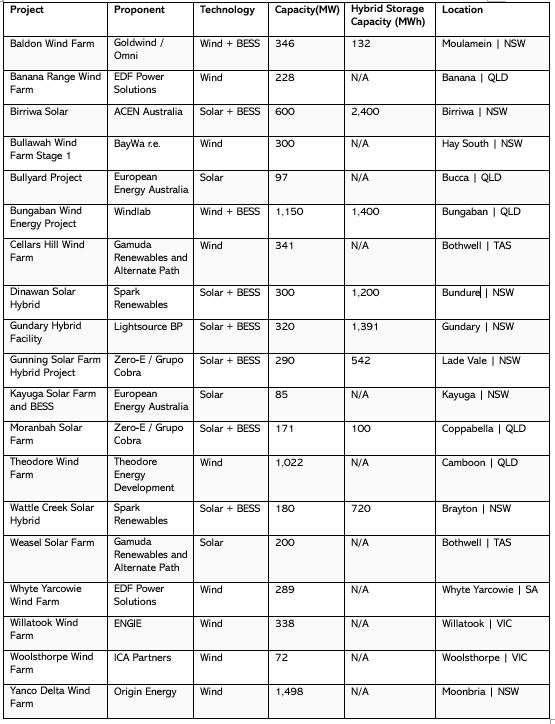
The Australian government has announced the successful outcome of Capacity Investment Scheme (CIS) Tender 7 – NEM Generation with support for 19 projects expected to provide a combined 7.8 GW of renewable generation energy across New South Wales (NSW), Victoria, Queensland, South Australia and Tasmania.
The tender, that was seeking an indicative target of 5 GW of renewable energy generation across the National Electricity Market (NEM), will also deliver more than 2.0 GW / 7.9 GWh of energy storage capacity to the grid with eight of the successful projects hybrid – that is including a battery along with the solar or wind generation.
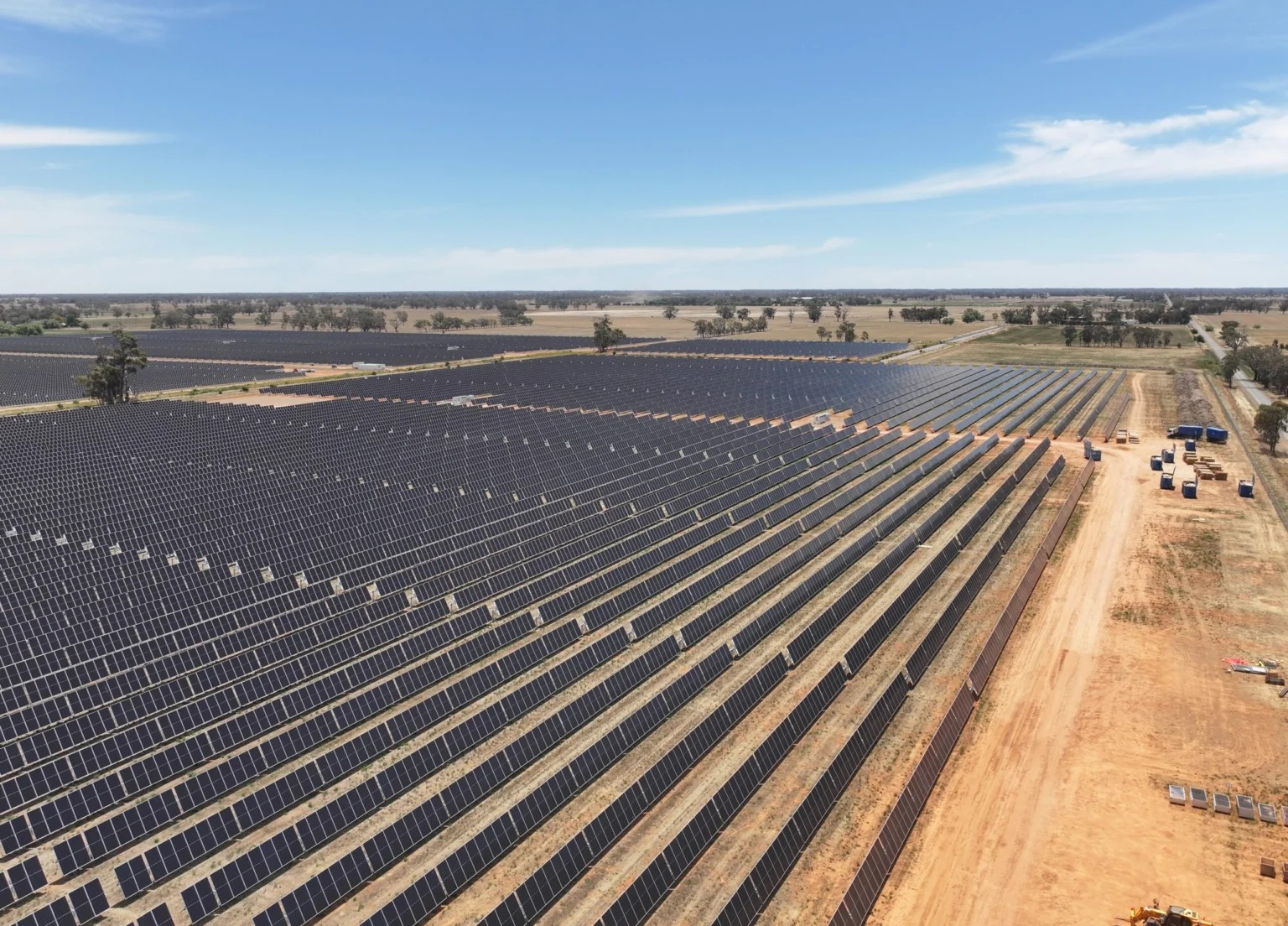
Almost 2.5 GW of the total generation capacity will be delivered by solar projects, including the 200 MW Weasel Solar Farm being developed in Tasmania by Malaysia’s Gamuda Renewables in collaboration with Melbourne-based developer Alternate Path and the 97 MW Bullyard and 85 MW Kayuga solar farms being progressed in Queensland and Tasmania respectively by Danish renewable energy developer European Energy. The Kayuga project also includes a battery but that is outside the CIS parameters.
Six solar hybrid projects also secured CIS support, including the Birriwa 600 MW solar farm and 2,400 MWh battery being developed by the Australian arm of Philippines-based energy company Acen and British-owned Lightsource bp’s Gundary 320 MW solar and 1,391 MWh battery project, both in NSW.
Other successful hybrid projects in NSW include the Dinawan 300 MW solar and 1,200 MWh battery and the Wattle Creek 180 MW solar and 720 MWh battery projects being developed by Malaysia-owned Spark Renewables.
The Moranbah 171 solar and 100 MWh battery and the 290 MW Gunning solar and 542 MWh battery projects being developed in Queensland by Spanish infrastructure giant Grupo Cobra subsidiary Zero-E are also among the successful hybrid projects.
All projects, including more than 5.5 GW of wind generation, are expected to be operational by 2030. Collectively, the selected projects will provide enough power to supply more than 4 million households in the NEM.
Federal Energy Minister Chris Bowen said the projects are also expected to unlock an estimated AUD 17 billion ($12.16 billion) in private investment, noting that nearly AUD 1.2 billion in social licence commitments had been made by the winning projects. The projects are also expected to create an estimated 19,000 construction jobs and use AUD 257 million worth of Australian steel.
“The Capacity Investment Scheme is delivering what Australia needs: more cheap, clean energy, more jobs and more investment in our regions,” Bowen said. “This is not just about megawatts. It is about jobs on the ground, investment in local communities, and making sure communities share in the benefits of the renewable energy transition.”
CIS Tender 7 is the latest round in the federal renewable energy support mechanism administered by AusEnergy Services Limited (ASL).
The CIS provides long-term revenue guarantees for renewable energy generation and storage projects through competitive auctions, offering a revenue floor and ceiling mechanism designed to reduce investment risk.
The announcement of the successful projects comes as ASL prepares to open up the next tender for registrations.
CIS Tender 9, targeting 5 GW of NEM generation capacity is expected to open this week with bids close on 20 July 2026.
“Tender 9 will target 5 GW of renewable generation and will be open to all NEM jurisdictions except NSW, where proponents can participate in the re-started NSW Roadmap generation tenders,” the government said.
This content is protected by copyright and may not be reused. If you want to cooperate with us and would like to reuse some of our content, please contact: [email protected].

Please login to comment