Pakistan targets solar sector with higher sales tax on modules, increased duties on batteries and inverters

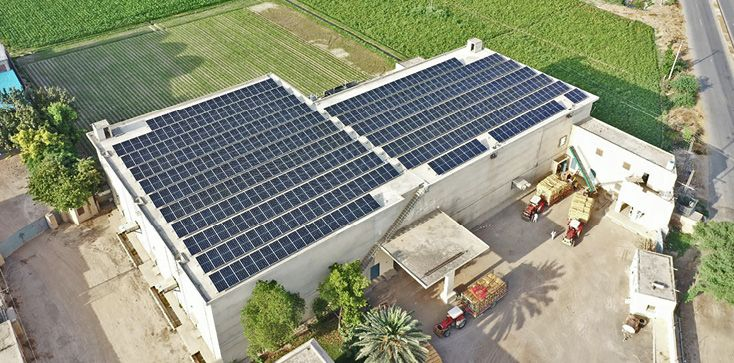
Pakistan’s solar industry association has launched a campaign to protest a potential hike in the general sales tax applied to solar panels in the country, while calling for the abolition of a raft of taxes and duties to support further PV and battery storage deployment.
The Pakistan Solar Association (PSA) has launched its ‘Stop the Sun Tax’ campaign ahead of a 2026/2027 government budget which could see higher tax and duties applied to renewables products.
Solar panels in Pakistan are currently subject to a 10% general sales tax (GST), a rate already opposed by the PSA when it was introduced in 2025, but now the government is considering hiking this to 18% in its next budget.
This in combination with existing import duties on some solar and battery storage equipment is hindering electrification in Pakistan according to the PSA, at a time when the association argues the country should be reducing exposure to fossil fuel imports.
The association has three main demands. PSA wants to see the government abolish GST on solar panels and inverters; to remove import duties on batteries and inverters – unless part of a strategic initiative to support local manufacturing; and has called more stability in the tax regime for solar and batteries.
PSA President Waqas Moosa told pv magazine that the association is lobbying through three main channels in its campaign to reduce the tax burden on Pakistan’s solar sector. PSA will engage in direct approach with the government and regulators, is reaching out to the business community through various industry associations, and is allying with non-government organizations and think thanks “who have similar objectives.”
Moosa added that the PSA is continuing to push for recognition of a BESS emergency in Pakistan and noted there is willingness from international suppliers to support deployment.
“There is an appetite, at least among Chinese giants, to invest in the Pakistani market and it shows the future potential of the Pakistani market,” Moosa told pv magazine.
The PSA president – who is also CEO of Lahore-based developer Hadron Solar– added that to attract more investment in battery storage in Pakistan, the country must answer four key questions: where projects should be sited, what the technical specifications will be, how tariffs will compensate BESS projects, and how projects can be financed.
“We need to work on all four tracks simultaneously and to target to have the required policies roughly aligned by the end of 2026.” Moosa said. “PSA has started some work on a couple of the areas, but there needs to be a lot of work done. We hope many partners will join in once they see we are able to align stakeholders for a unified clear strategy.”
Solar adoption in Pakistan has soared in recent years, with Renewables First estimating more than 50 GW of modules had been imported as of September 2025, with 6.1 GW installed as net metering installations, between 16.5 GW and 26.4 GW in deployed behind the meter, and 780 MW as part of utility-scale projects. Between 17.3 GW and 27.2 GW of solar capacity may still have been stockpiled or not-yet deployed in late 2025 according to the Islamabad-based think tank.
Despite soaring adoption, Pakistan’s energy regulator, the government and solar industry have had a tumultuous 2026 as policy changes have been put forward then rowed back. An attempt to retroactively adjust net metering rates paid to customers with existing contracts sparked an industry and public outcry, leading to intervention from the Prime Minister to overturn the move.
Pakistan’s budget for the next financial year has not yet been finalized – the industry campaign continues.
This content is protected by copyright and may not be reused. If you want to cooperate with us and would like to reuse some of our content, please contact: [email protected].

Please login to comment