IED unveils predictive technology to detect tracker galloping in real time

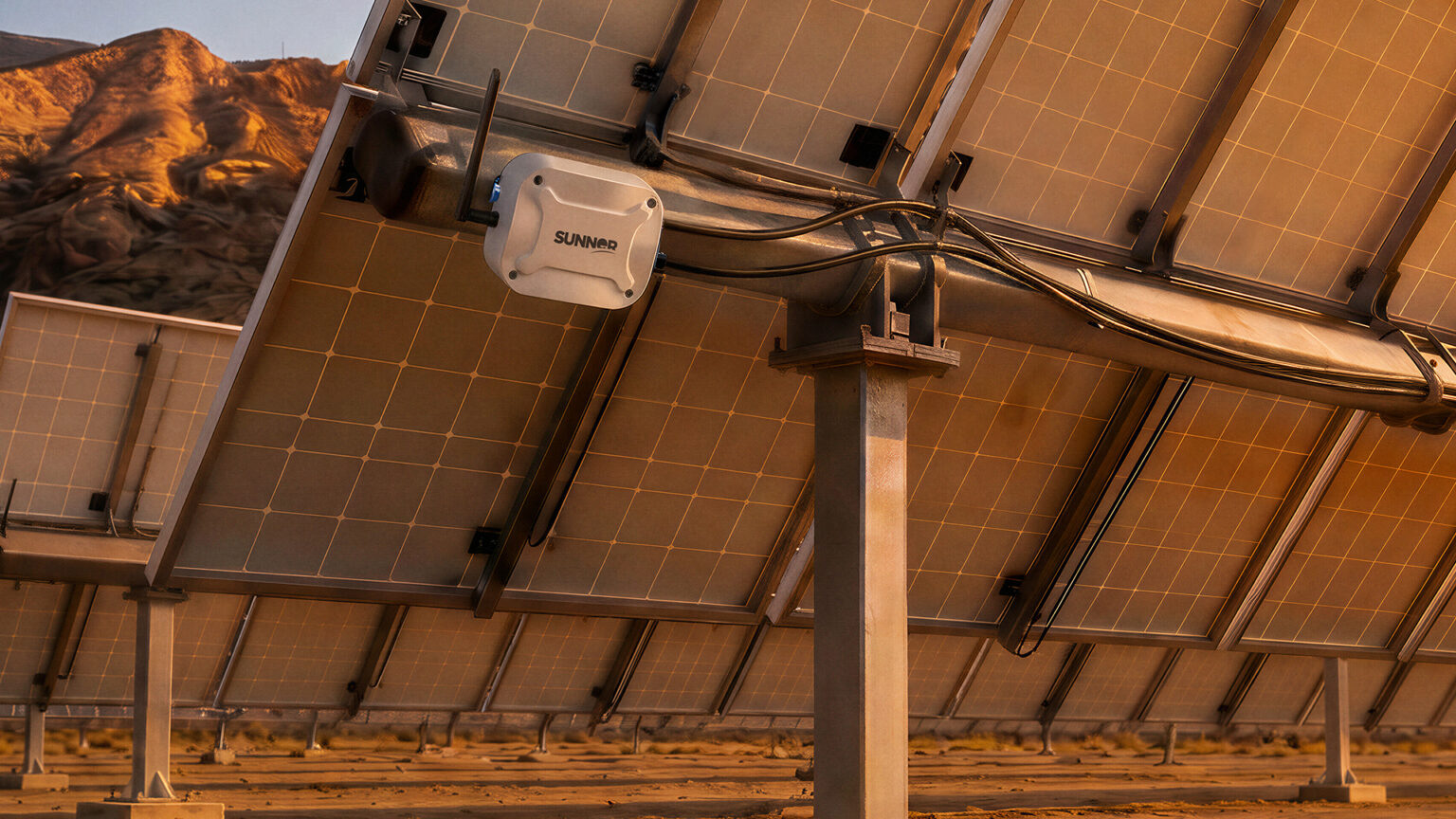
Sunner, the brand of Spanish company IED specializing in control systems for solar trackers, has developed a predictive control system that detects the onset of aeroelastic instabilities before they can damage tracker structures.
The predictive monitoring system is called TrueWind and is designed to detect aeroelastic instabilities in solar trackers before they develop into damaging galloping events. Galloping is a wind-induced aeroelastic instability that causes large, self-amplifying oscillations in solar tracker structures, potentially leading to mechanical damage or structural failure.
The technology combines structural sensors, physics-based models, and real-time dynamic analysis algorithms to continuously assess the behavior of tracker structures during operation. It received The smarter E Award 2026 in the Photovoltaics category at Intersolar Europe.
Unlike conventional protection systems, which typically rely on wind speed thresholds measured by anemometers, TrueWind monitors the dynamic response of the tracker itself. The system uses data collected by the company’s Galloping Avoidance Unit (GAU), a sensor installed on the tracker torque tube that measures the structure’s torsional behavior during operation.
The data is processed using filtering techniques and real-time modal analysis to identify each tracker’s natural vibration frequencies and damping coefficients. Using these parameters, the software continuously estimates the structural response through physics-based models and computational methods designed to adapt to changing operating conditions.
According to the company, this approach enables the system to identify conditions that may lead to galloping before vibration amplitudes reach potentially damaging levels. The controller can then modify tracker operation to mitigate the instability while avoiding unnecessary stow events.
IED said the technology can be deployed in both new and existing photovoltaic plants without requiring modifications to tracker structures. Continuous monitoring also enables operators to compare measured structural performance with design assumptions, helping identify deviations and improve understanding of tracker behavior over the lifetime of an installation.
The company said the system is intended to improve the balance between structural protection and energy production. Conventional wind protection strategies often place trackers in a stow position whenever predefined wind speed thresholds are exceeded, even if structural conditions do not present an immediate risk.
By assessing the tracker’s actual dynamic response rather than relying solely on wind speed measurements, TrueWind determines when aeroelastic instability is developing and allows trackers to resume energy-producing operation sooner once conditions are stable. According to Sunner, this reduces unnecessary downtime and increases plant availability while maintaining structural safety.
The company also said that reducing repeated mechanical loading during unnecessary stow cycles can help extend tracker service life and lower the risk of cumulative structural fatigue.
This content is protected by copyright and may not be reused. If you want to cooperate with us and would like to reuse some of our content, please contact: [email protected].

Please login to comment