Augmented reality helps heat pump installers cut workload, installation time

Germany’s Fraunhofer Institute for Solar Energy Systems (Fraunhofer ISE) is developing software designed to help heat pump installers streamline deployment while reducing their workload.
The Heat Pump PlanAR app prototype, described as “manufacturer-neutral,” reportedly allows heating, ventilation, air conditioning and plumbing contractors to simulate heat pump projects during an initial customer visit.
“Contractors can create quotes more easily and automatically compare the costs of different system configurations,” the research institute said in a statement. “In addition, the app facilitates communication between employees at the office and on the job site.”
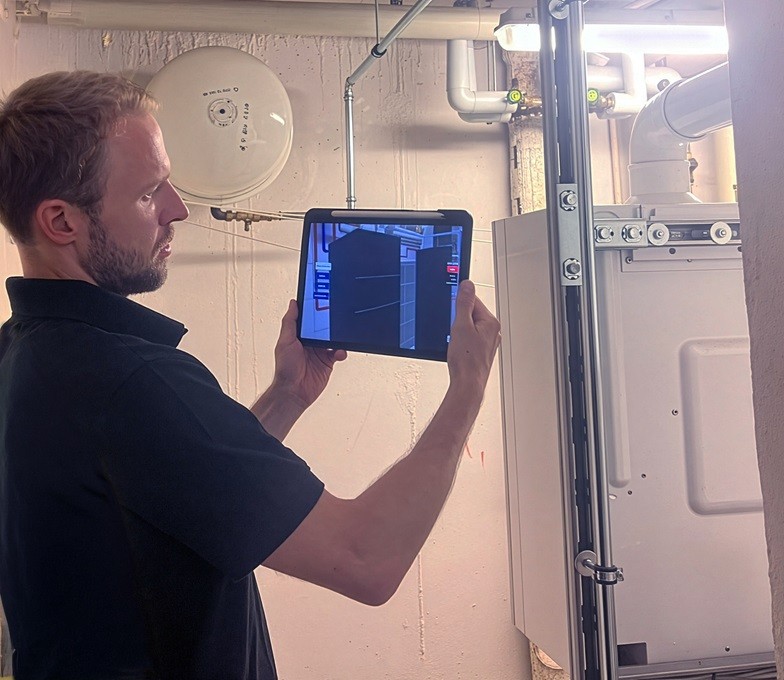
The process begins with a 3D scan of the boiler room using a tablet running the app. Based on the captured space, the installer can choose an appropriate heat pump configuration from the software’s database. The app then maps the main system components into the digital model and generates a piping plan optimized for cost.
Installers can inspect the proposed setup on site through an augmented reality view, which overlays the planned equipment onto the physical room, and reposition components where necessary. Further modifications can be carried out later from a computer using the app’s virtual reality environment.
Once the system design is finalized, the software can generate and export a list of the components required for the installation, along with an estimate of the time needed to complete the work.
“The newly developed app—or individual components of it—is now available to software providers, who can integrate it into their solutions, further develop it, and commercialize it,” the Fraunhofer ISE said. “Individual functions, including component positioning optimization and automatic routing for piping, are available as licensable web services.”
The prototype was developed under the Wespe joint research project, coordinated by Germany’s Central Association for Plumbing, Heating and Air Conditioning (ZVSHK).
This content is protected by copyright and may not be reused. If you want to cooperate with us and would like to reuse some of our content, please contact: [email protected].

Please login to comment