The $21 billion capex bill: analyzing the cost of the U.S. 100 GW module production milestone

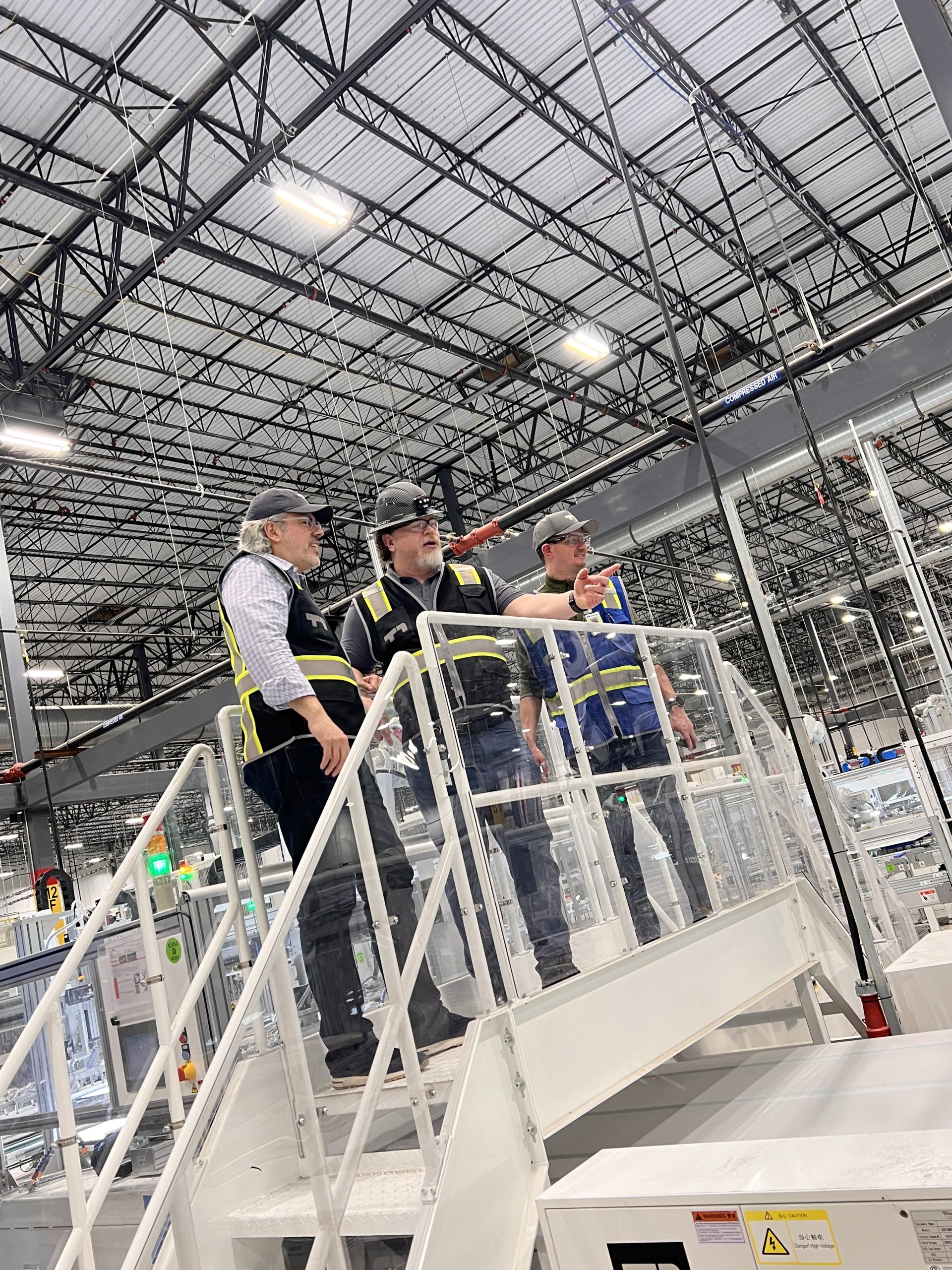
The United States crossed 100 GWp-dc of cumulative solar PV module production during the second quarter of 2026, the subject of my recent article on pv magazine.
But how much did the United States spend on solar PV manufacturing capital expenditure (capex) to achieve this milestone?
Background research by the author – undertaken on the build up to the Solar Manufacturing USA 2026 conference in Austin Texas on 22-23 September 2026 – places this at about $21 billion of U.S. solar manufacturing capex. This covers a period of more than 50 years, going back to the commercial origins of U.S. solar PV manufacturing in the early 1970’s through to the end of Q2 2026, when the 100 GW cumulative production volume was achieved.
This $21 billion of cumulative capital deployed into U.S. solar PV manufacturing assets includes a wide range of spending outcomes: factories that succeeded, many that failed, and plenty of production equipment that never generated anything close to its intended purpose.
Manufacturing capex is defined as spending on factory buildings for commercial manufacturing operations, the related infrastructure and production equipment, and maintenance/upgrade spending. The analysis excludes R&D spending and its related infrastructure, and pilot lines.
One company accounts for about one quarter of all capex spent in the history of U.S. solar
I estimate First Solar’s domestic manufacturing capex allocations to represent about one-quarter of all U.S. PV manufacturing capex. This starts with the original Perrysburg, Ohio, factory to the recent Alabama, Louisiana and South Carolina additions.
Therefore, by the end of Q2 2026, First Solar accounted for about one-quarter of cumulative manufacturing capex supported by about two-fifths of the cumulative module production in the United States, dating back to the starting point for the country’s solar manufacturing aspirations in the early 1970’s.
For those that have tracked First Solar production and capex over the past few decades and its focus on the United States, these statistics will not come as any surprise. For years leading up to the introduction of the Inflation Reduction Act at the end of 2022, the domestic U.S. solar manufacturing sector was essentially First Solar and ‘everyone-else’.

Figure 1: At the end of Q2 2026, when cumulative U.S. solar module production reached the 100 GW point, First Solar is estimated to account for almost one-quarter of solar PV manufacturing capex in the United States going back to the first investments in U.S. solar manufacturing in the early 1970’s.
The thin-film boom that mostly vanished
First Solar is the only meaningful company making thin-film solar modules in the United States. The company is also the only entity of significance making thin-film modules globally.
However, for a five-year period about 15 years ago, capex allocations for new solar PV manufacturing sites in the United States painted a different picture.
Excluding the domestic capex of First Solar, I estimate that about $3.4 billion of U.S. manufacturing capex went into other thin-film companies, concentrated heavily in the 2007-2012 boom.
During this period, Unisolar, Solyndra, Abound Solar, Global Solar, MiaSolé, Stion, Nanosolar, HelioVolt, SoloPower and others created an extraordinary factory-building cycle across the full range of thin-film variants including amorphous silicon, CIS/CIGS and CdTe. However, these companies’ cumulative (and legacy) contribution to the 100 GW module production landmark is only in the 1% range.
Much of this $3.4 billion in capital was written off, stranded or absorbed by factories that operated briefly.
Silicon-based capex: repeated restarts before a genuine scale-up
The crystalline-silicon history of capex spend in the United States is equally informative. From the industry’s beginnings in the early 1970’s through to the end of 2017, I estimate cumulative U.S. c-Si manufacturing capex at about $3.9 billion.
This spending spans several generations; Arco Solar and Solarex, BP and Shell, SolarWorld, Evergreen Solar, Suniva, and Japanese entrants. But the spending here never produced a durable, scaled domestic c-Si sector.
Section 201 created a partial c-Si capex uptick. This safeguard period helped bring initial module manufacturing back to the United States in modest volumes through companies including Qcells, JinkoSolar, LG Electronics, Silfab and Heliene. However, most of the capex activity remained focused on downstream module assembly.
IRA/45X changed the capital equation
The real uptick in c-Si capex comes after the Inflation Reduction Act and Section 45X. From 2023 through Q2 2026, c-Si manufacturing capex accounts for almost 40% of all the PV manufacturing capital deployed in the United States since the industry’s beginnings, concentrated into just three and a half years.
In fact, the post-IRA c-Si capex total is already roughly twice the amount invested across the entire 1970-2017 c-Si period. It also exceeds all pre-IRA c-Si capex combined, with the current investment cycle spanning Qcells, T1 Energy, Canadian Solar and a much broader group of new U.S. entrants.
The next test is production
The first 100 GW therefore cost the United States about $21 billion in cumulative manufacturing capex, but the money was distributed unevenly. Almost one-quarter went into First Solar; another one-sixth went into a thin-film boom whose production legacy was minimal; and nearly two-fifths has arrived only since the start of the post-IRA c-Si cycle.
Going forward, can the elevated levels of capital now being deployed into U.S. c-Si manufacturing translate into sustained production, high utilization and long-lived factories?
The historical record shows that spending money is the easy part, with First Solar’s quarter-century of continuous U.S. manufacturing the exception. The durability of the post-45X build-out, coupled with the increased capex arising from the introduction of Section 232, will determine whether the next 100 GW looks fundamentally different from the first.
To understand more about the companies currently committing capex to existing or new solar PV manufacturing sites in the United States, the new Solar Manufacturing USA Quarterly report from Terawatt PV Research provides an ideal reference point. The report also features analyses on current solar PV manufacturing sites, with production and capex for each company forecast out to the end of 2030.
To learn more about the report and subscription options, please send an email to the pv magazine USA team at [email protected].
This content is protected by copyright and may not be reused. If you want to cooperate with us and would like to reuse some of our content, please contact: [email protected].

Please login to comment