ETH Zurich unveils new tech to produce heat with solar


A research team from Swiss research institute ETH Zurich has developed a novel thermal trap technology that can absorb concentrated sunlight and deliver heat at over 1,000 C.
The thermal trap system features a quartz rod, measuring 7.5 cm in diameter and 30 cm in length, coupled to a ceramic absorber which, due to its optical properties, can absorb sunlight and convert it into heat.
The left end of the system’s rod is exposed to concentrated solar radiation and the right end is in contact with an opaque silicon carbide disk, serving as the solar absorber. According to the research paper, the use of opaque material is important as when exposed to solar radiation, the material absorbs the radiation at its surface and transfers it by conduction across its walls, meaning the highest temperature is achieved at the absorbing surface.
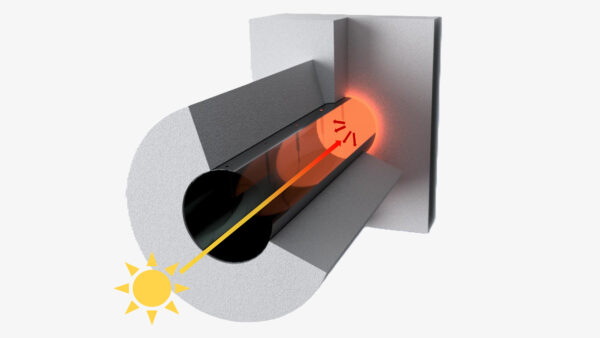
Image: ETH Zurich/Emiliano Casati
In lab-scale experiments, the researchers exposed the rod to artificial light with an intensity equivalent to 135 times that of sunlight, reaching temperatures of up to 1,050 C. According to the university, previous studies by other researchers have achieved a maximum of 170 C with such thermal traps.
The methodology opens the doors to an alternative to burning coal or oil to produce cement or steel, the scientists said. It is envisaged the technology could make it possible to use solar energy not only to generate electricity, but also to decarbonize energy-intensive industries on a large scale, offering the potential to make key industrial applications such as cement manufacturing and metallurgical extraction independent from fossil fuels.
“Our approach significantly improves the efficiency of solar absorption,” said the research’s lead author, Emiliano Casati. “We are, therefore, confident that this technology supports the deployment of high-temperature solar plants.”
The novel thermal trap was presented in the paper “Solar thermal trapping at 1,000°C and above,” which was published in the latest edition of the scientific journal Device. Detailed technical and economic analyses are still pending, as such work was beyond the scope of the current experimental study.
“To combat climate change, we need to decarbonize energy in general,” Casati added. “People often think of energy in terms of electricity, but we actually use about half of our energy in the form of heat.”

Please login to comment

The problem with ingenious schemes like this to generate industrial process heat directly is that (a) you can get any realistic temperature you want for a process from simple electrical devices (b) firmed renewable electricity is available quite cheap in unlimited quantities, and the price keeps falling. It is getting ever harder.for non-electric alternatives to compete, and most will fail. The dodos are a long list, from nuclear reactors to wave enegy and hydrogen cars and homes..
[…] وقال كاساتي، إن موارد الطاقة لا تُستعمل فقط لإنتاج الكهرباء، لكنها تظهر في استعمالات أخرى مثل التدفئة والحرارة، طبقًا لمجلة بي في مغازين (PV Magazine). […]