Heat pumps cheaper to operate than gas boilers in almost all EU countries, IEA claims

The IEA has examined how the adoption of heat pumps in both industrial and residential applications could reduce the EU’s dependence on fossil fuels, of which it currently imports around 80%, largely to meet energy demand across industry, buildings and transport.
The agency’s data shows that heat pumps are the most cost-effective technology for electrifying most low-temperature industrial heat, defined as below 150 C, in the European Union.
Based on 2025 prices, heat pumps have lower lifetime costs than gas boilers in 17 countries, representing around 40% of low-temperature thermal energy demand in the EU.
However, deployment remains limited even in markets where heat pumps are already cost-competitive. The IEA calls for stronger policy support to accelerate uptake.
“Low-temperature heat represents about 15% of industrial energy demand, which could be served almost exclusively by heat pumps,” the agency’s analysts said.
They added that industrial consumers could benefit from tariff structures that pass through low day-ahead or intraday electricity prices to flexible users. In markets such as Denmark, Germany and the Netherlands, reduced grid fees for flexible demand are already being introduced to improve electrification economics. The analysts noted this as an example of the policy support required. In other EU countries, end-user electricity prices remain high relative to gas, even when wholesale power prices turn negative, due to flat network charges.
The IEA also highlighted the EU Grids Package as a mechanism that could help reduce barriers to industrial heat pump deployment, including high upfront capital costs, infrastructure constraints and long grid connection delays.
Residential heat pumps
In the residential sector, heat pumps could also support building electrification across the EU. However, the IEA finds deployment remains highly uneven, with the Nordics, Portugal, France and Austria leading adoption.
Residential heat pump sales across 11 key European markets, including France, Germany and Poland, rose 17% in the first quarter of 2026.
Over their lifetime, residential heat pumps are cost-competitive with gas boilers in 16 countries, representing around one-third of EU residential space heating demand. These markets also benefit from relatively favorable electricity-to-gas price ratios, ranking among the 17 countries with the lowest spreads.
Outside the Nordics, ownership of a heat pump is estimated to be 15%–30% cheaper than a gas boiler in the Netherlands, Portugal and Bulgaria.
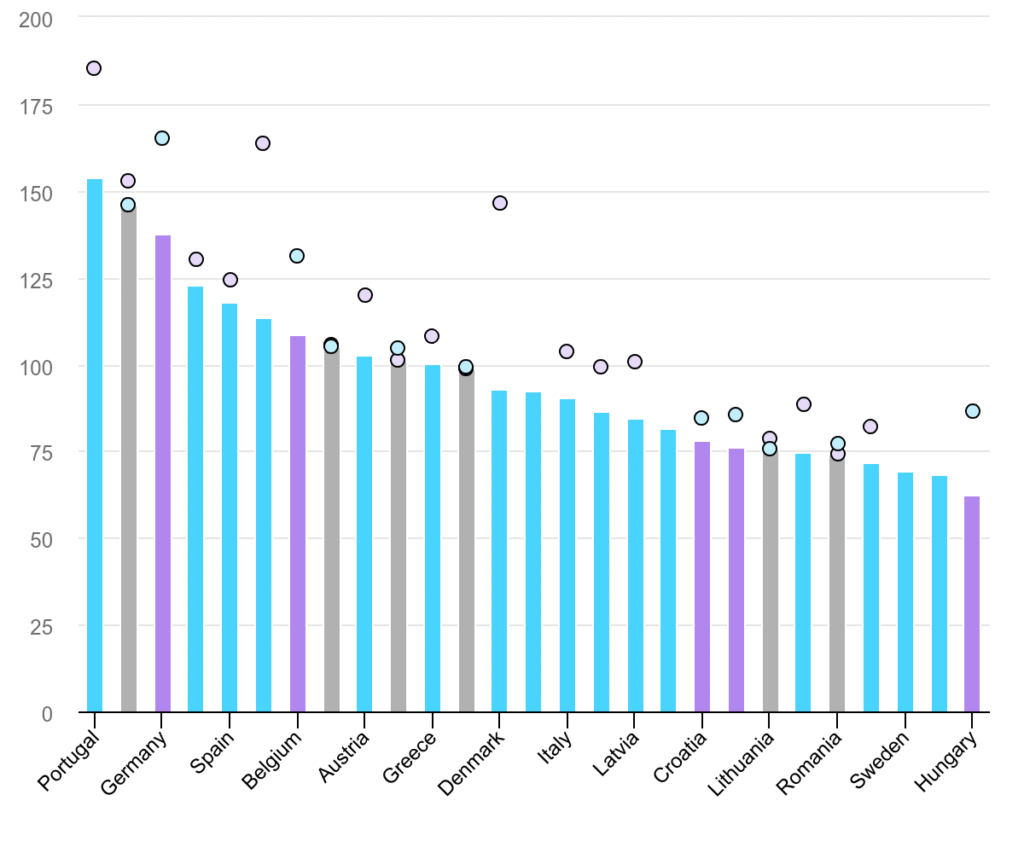
In the remaining 11 countries, heat pumps are either equally or more expensive to own than gas boilers at 2025 prices, including major heating markets such as Germany, Poland and France, together accounting for around two-thirds of the EU’s heating demand. However, in all but five of these countries, the difference in total ownership costs is below 5%, suggesting that targeted upfront subsidies or improvements in the electricity-to-gas price ratio could tip the balance in favor of heat pumps.
“Heat pumps are cheaper to operate than gas boilers in almost all EU countries, with annual energy savings of up to €800 ($924),” the IEA stated. “With appropriate installation and operation, heat pumps also last longer, improve thermal comfort and increase property values, while reducing exposure to fossil-fuel price volatility and local air pollution. Air-to-air units also improve indoor air quality and boost productivity and wellbeing in the summer months.”
These benefits come with an important caveat: upfront costs for gas boilers remain significantly lower than for heat pumps, and installation is generally less complex. As a result, consumers tend to favor the more familiar and cheaper initial option. Similar to the industrial sector, the IEA recommends policy measures such as low-interest financing and project management support for building renovations to address these barriers.
Beyond heat pumps, the IEA also notes that electric vehicles are becoming increasingly competitive in the broader electrification landscape. Its analysis suggests that battery electric cars are expected to improve further in affordability as more cost-effective models enter the market and supportive policies expand adoption.
The agency also found that there is no single universal energy price ratio at which electrification technologies become cost-competitive. Instead, heat pumps and electric vehicles emerge as among the most promising solutions, with competitiveness depending on end-use application and a range of regional factors, including climate conditions, consumer behavior, financing costs and baseline energy prices.

Please login to comment