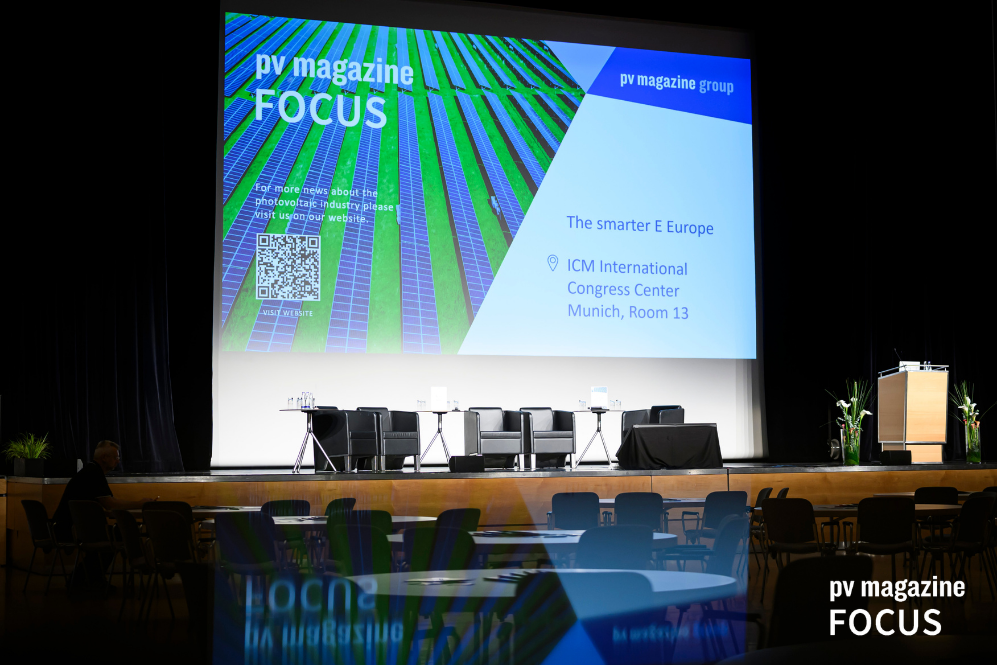
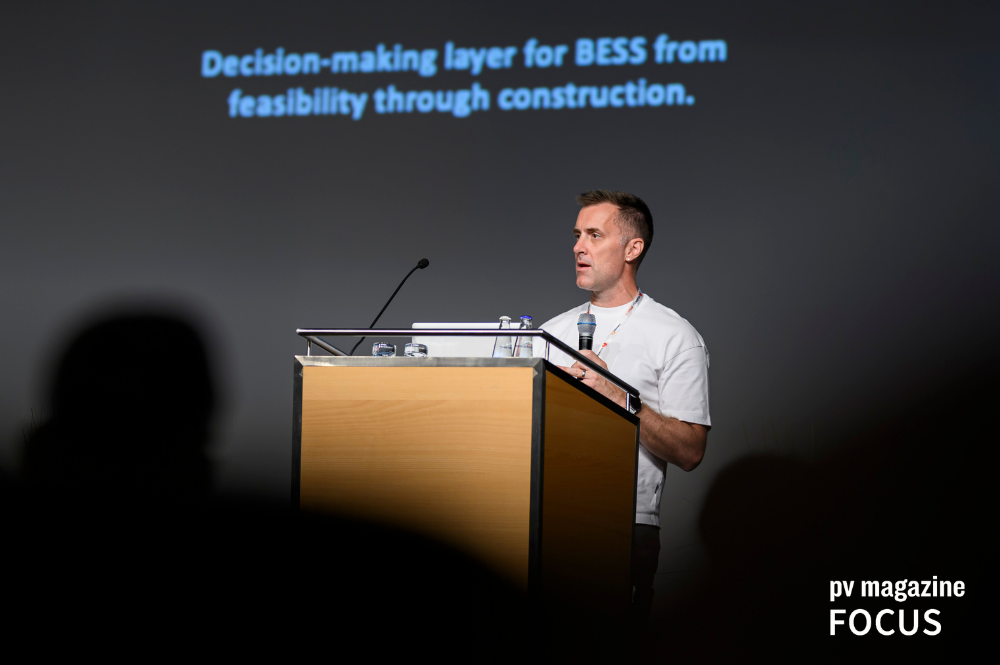
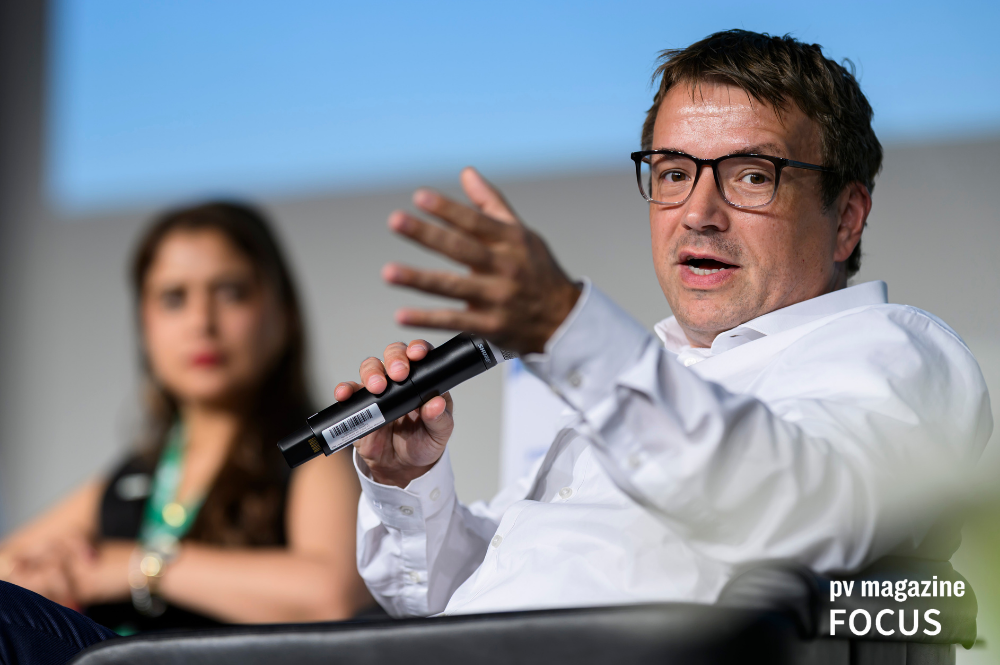
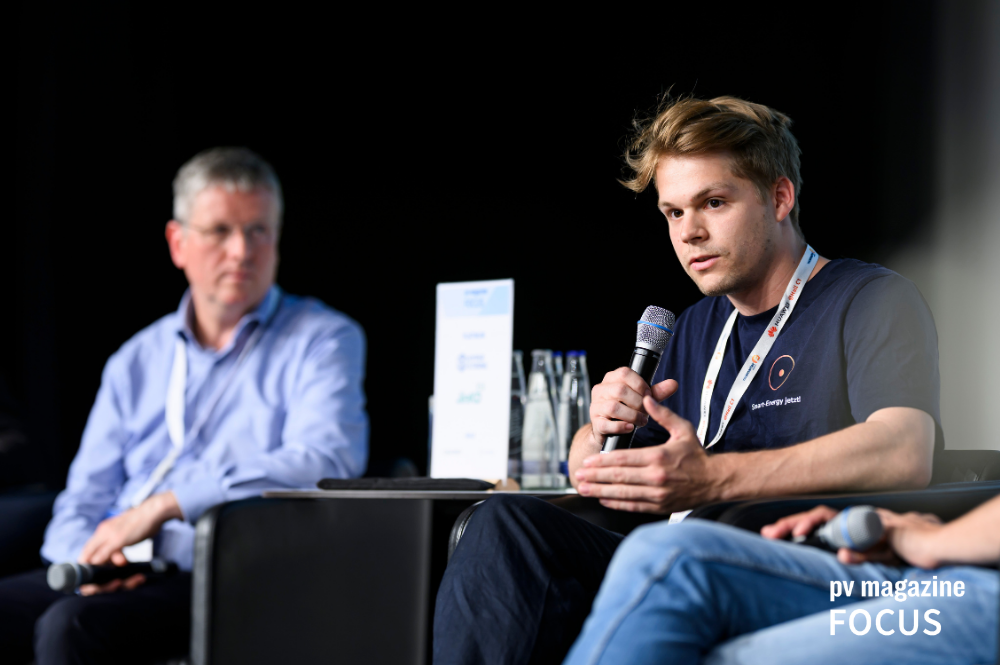
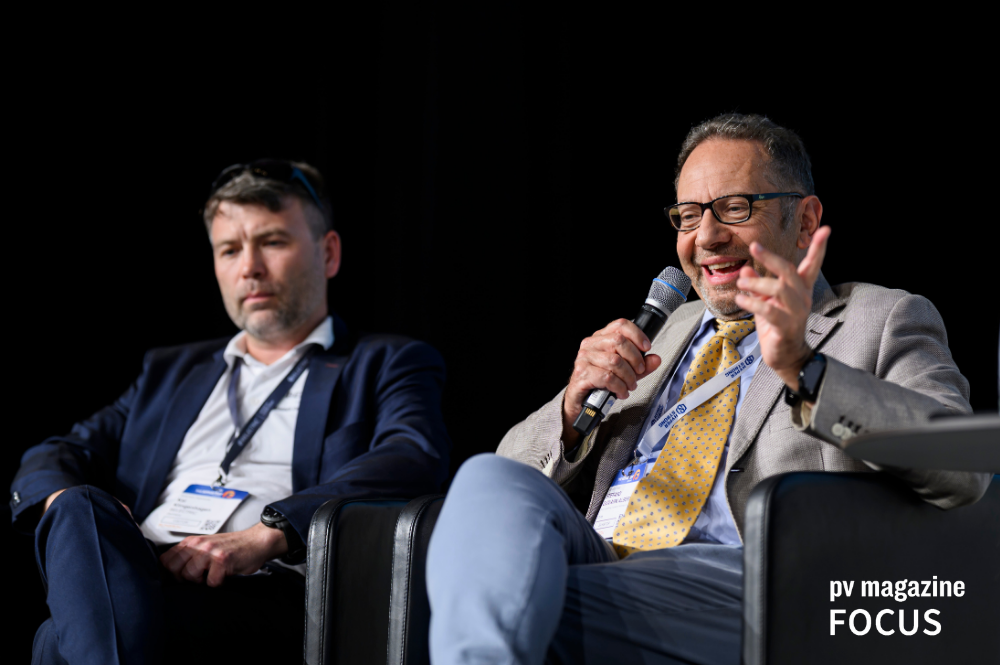
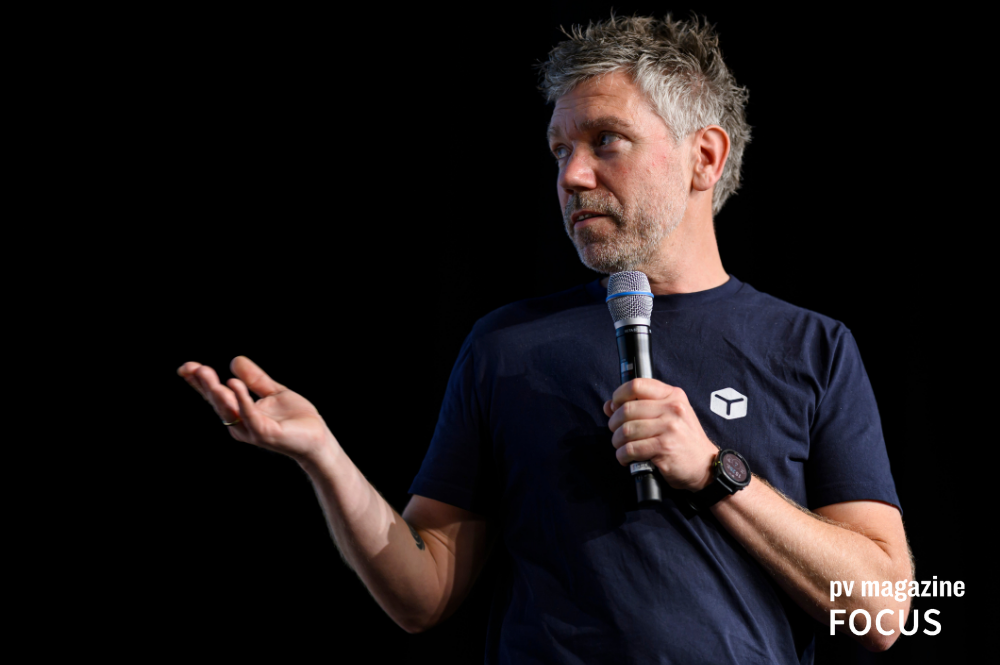
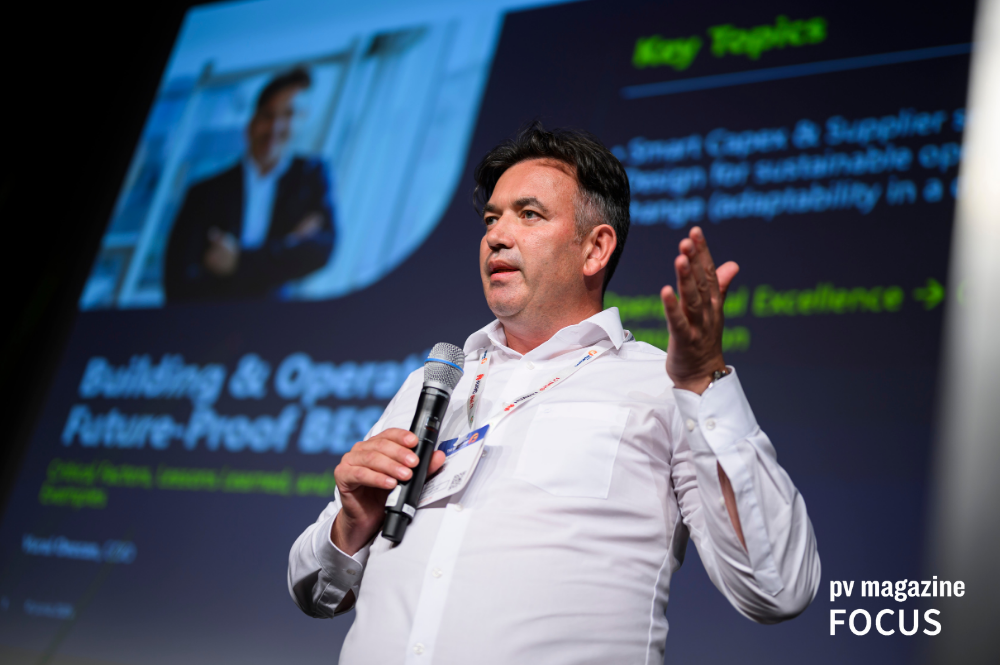
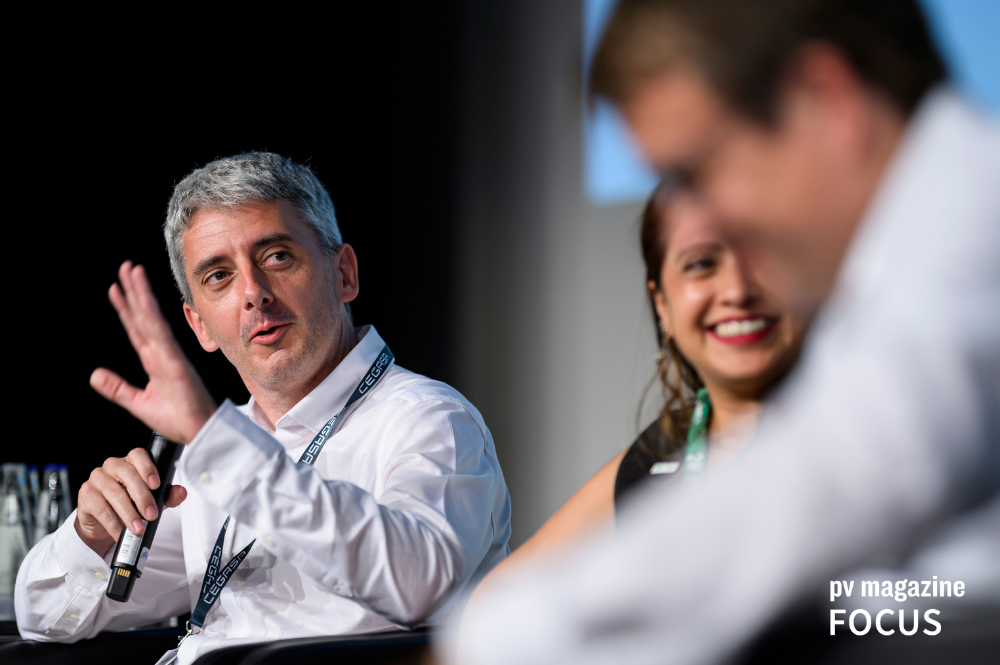
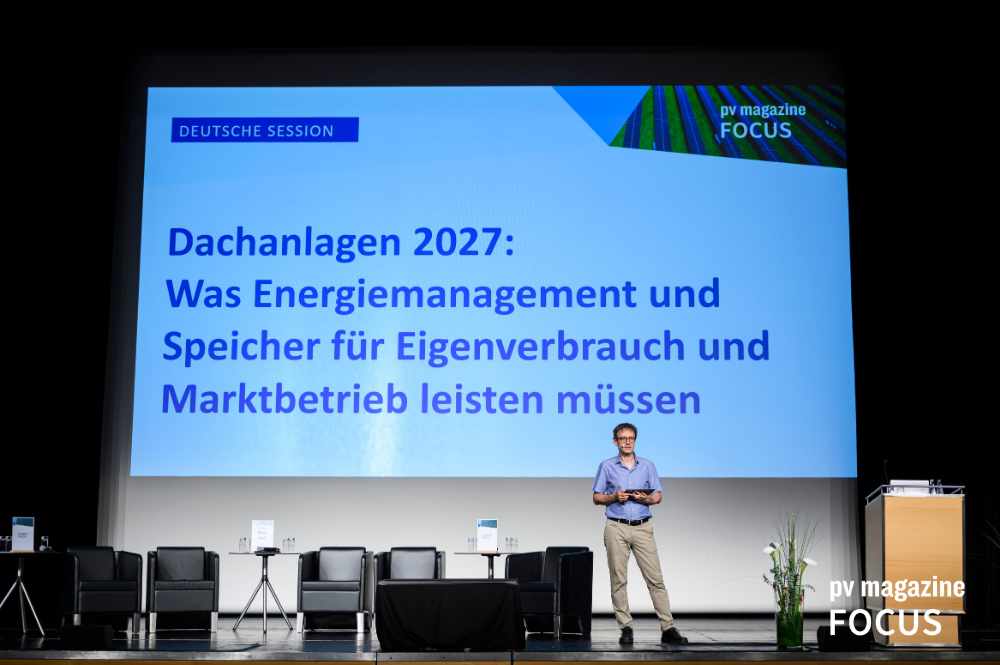
The event is now over, but you can find the presentations, a brief recap video, and photos for impressions below. You can find additional insights in the recap articles:

In 2026, pv magazine Focus once again delivers high-level discussions on the latest trends in solar and energy storage across Europe and beyond. With sessions in English and German, the program will address key challenges from large-scale project development to residential energy systems, offering participants valuable insights into technical innovation, financing, and integration.
Covering online news on the German market and editing the German print issue since 2021, Marian has been writing about power electronics for pv magazine’s global website and monthly print magazine since 2018.
When purchasing battery energy storage systems (BESS), price is only the starting point. The procurement process is often riddled with hidden pitfalls that can jeopardize project delivery and expected returns if not carefully managed.
This session cuts through the complexity to help buyers recognize quality in a crowded market, understand the technical parameters that truly matter, and evaluate warranty conditions that have a direct impact on performance, risk, and revenue. Experts will also examine current trends in lithium-ion battery pricing and availability, explaining what it means for buyers and what to expect in the future. The session will share a practical buyer’s checklist, key warranty insights, and real-world lessons on system integration and risk mitigation to support more bankable, successful BESS projects.
1pm – 1:15pm | What Factory Audits Reveal About BESS Quality
Insights from factory audits and field inspections. Common manufacturing defects, quality escape mechanisms and their impact on technical due diligence, project risk and bankability.
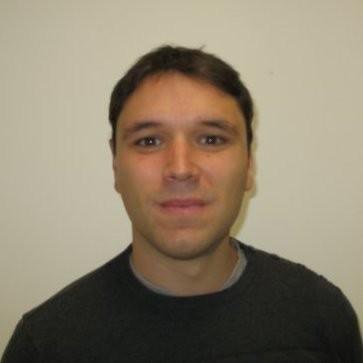
Garikoitz Sarriegi Etxeberria is a Project Engineer at Kiwa PI Berlin, specialising in power electronics and energy-storage-related systems. With a PhD in Power Electronics from RWTH Aachen University, he brings over a decade of experience translating advanced R&D into deployable solutions for battery systems, converters, and grid-connected applications.
His work sits where theory meets bankable reality, supporting the design, optimisation, and reliability of technologies that underpin modern BESS projects. At the BESS Business & Development Forum, Garikoitz shares an engineering-driven perspective on how robust power electronics and system design directly influence performance, risk, and long-term project value.
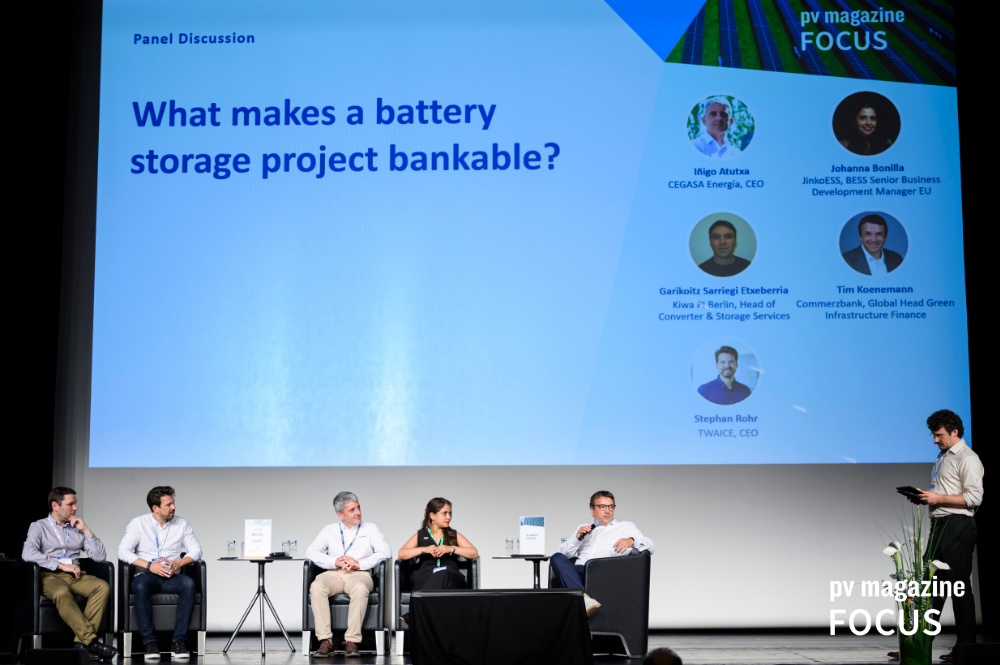
1:15pm – 1:50pm | What Makes a Battery Storage Project Bankable?
Discussion on procurement quality, technical due diligence and bankability. Which certifications, audits, warranties and supplier characteristics matter most for investors, lenders and developers?


Garikoitz Sarriegi Etxeberria is a Project Engineer at Kiwa PI Berlin, specialising in power electronics and energy-storage-related systems. With a PhD in Power Electronics from RWTH Aachen University, he brings over a decade of experience translating advanced R&D into deployable solutions for battery systems, converters, and grid-connected applications.
His work sits where theory meets bankable reality, supporting the design, optimisation, and reliability of technologies that underpin modern BESS projects. At the BESS Business & Development Forum, Garikoitz shares an engineering-driven perspective on how robust power electronics and system design directly influence performance, risk, and long-term project value.

Tim Koenemann leitet das Center of Competence Green Infrastructure Finance der Commerzbank AG. Er hat in seiner Funktion weltweite Verantwortung für Unternehmens- und Projektfinanzierungen im Bereich erneuerbarer Energien und anderer grüner Infrastruktur mit einem Portfolio von ca. 15 Mrd. EUR. Tim ist seit 2011 in verschiedenen (leitenden) Rollen im Kompetenzzentrum tätig. Vor seinem Eintritt in die Bank war er 6 Jahre als Strategieberater für Accenture und Roland Berger Strategy Consultants im Energiesektor tätig.
Tim Koenemann is heading Commerzbank‘s Center of Competence Green Infrastructure Finance. In his current role he has global responsibility for all corporate and project finance activities in the sector renewable energies and other green infrastructure with a portfolio of EUR 15 bn.
Tim is with the bank since 2011 and has worked in various (managerial) roles within the Center of Competence. Before his time with the bank, he has been working for 6 years as a strategy consultant in the energy sector with Accenture and Roland Berger Strategy Consultants.

Dr. Stephan Rohr is Co-CEO and Co-founder of TWAICE, a pioneer in battery analytics helping asset managers and operators scale BESS fleets safely, reliably, and predictably. He earned his Ph.D. from the Technical University of Munich, dedicating more than six years to researching Li-ion cell degradation and the economic impacts of lifecycle performance, work that inspired him to bridge battery science and real-world applications. Founded in 2018, TWAICE turns deep battery science and machine learning into operational solutions, including SOH estimation, operational life modeling, and predictive maintenance strategies to maximize BESS ROI.
1:50pm – 2pm | Certification Chaos? Navigating BESS Standards and Requirements
How manufacturers navigate evolving BESS certification requirements and differing expectations from banks, EPCs, insurers and customers.
2pm – 2:10pm | From Site Layout to Operation: Where BESS Projects Go Wrong
Lessons learned from more than 100 utility-scale BESS planning discussions. Common design mistakes, site constraints and overlooked decisions that create downstream costs and operational limitations.

Ben Callam is Chief Product Officer at PVFARM, the decision platform for utility-scale solar and battery design. He brings deep experience in solar construction and EPC delivery, including engineering, estimating, procurement, logistics, civil and structural coordination, and the handoffs that determine whether a design can be built efficiently. That background shapes how he leads product strategy: connecting real project constraints with the workflows, data, and decisions that matter most to engineers and project teams. His current work spans PVFARM’s core design platform, civil optimization, quantity continuity, BESS design tooling, RE PILOT, and the feedback loops between design, procurement, construction, and handover. His perspective is shaped by close work with EPCs, engineering consultants, and battery/storage teams across the US and European markets.
2:10pm – 2:45pm | The Most Underestimated Risks in Utility-Scale BESS
EPCs, manufacturers and monitoring experts discuss installation quality, commissioning challenges and operational risks. How can project teams avoid costly mistakes and improve long-term performance?

Dr. Stefano Alberici is the VP of Technology for EMEA at HyperStrong International. Holding a Ph.D. in Nuclear Engineering, he transitioned to renewables in 2005, specializing in PV physics, inverter technology, and energy storage. Based in Bologna, he will present HyperStrong’s integrated engineering approach to solving critical bottlenecks in the European utility and C&I energy storage markets.
Ben Callam is Chief Product Officer at PVFARM, the decision platform for utility-scale solar and battery design. He brings deep experience in solar construction and EPC delivery, including engineering, estimating, procurement, logistics, civil and structural coordination, and the handoffs that determine whether a design can be built efficiently. That background shapes how he leads product strategy: connecting real project constraints with the workflows, data, and decisions that matter most to engineers and project teams. His current work spans PVFARM’s core design platform, civil optimization, quantity continuity, BESS design tooling, RE PILOT, and the feedback loops between design, procurement, construction, and handover. His perspective is shaped by close work with EPCs, engineering consultants, and battery/storage teams across the US and European markets.

Kai Klingenhagen is a qualified engineer (Dipl.-Ing.) with over 20 years of experience in the renewable energy (RE) industry. He spent 14 years in the Asia-Pacific (APAC) region, where he successfully developed and executed large-scale renewable energy projects.
In 2024, he returned to Germany to join BELECTRIC, where he is responsible for establishing a centralised BESS engineering team and leading the development of BESS projects across Germany.
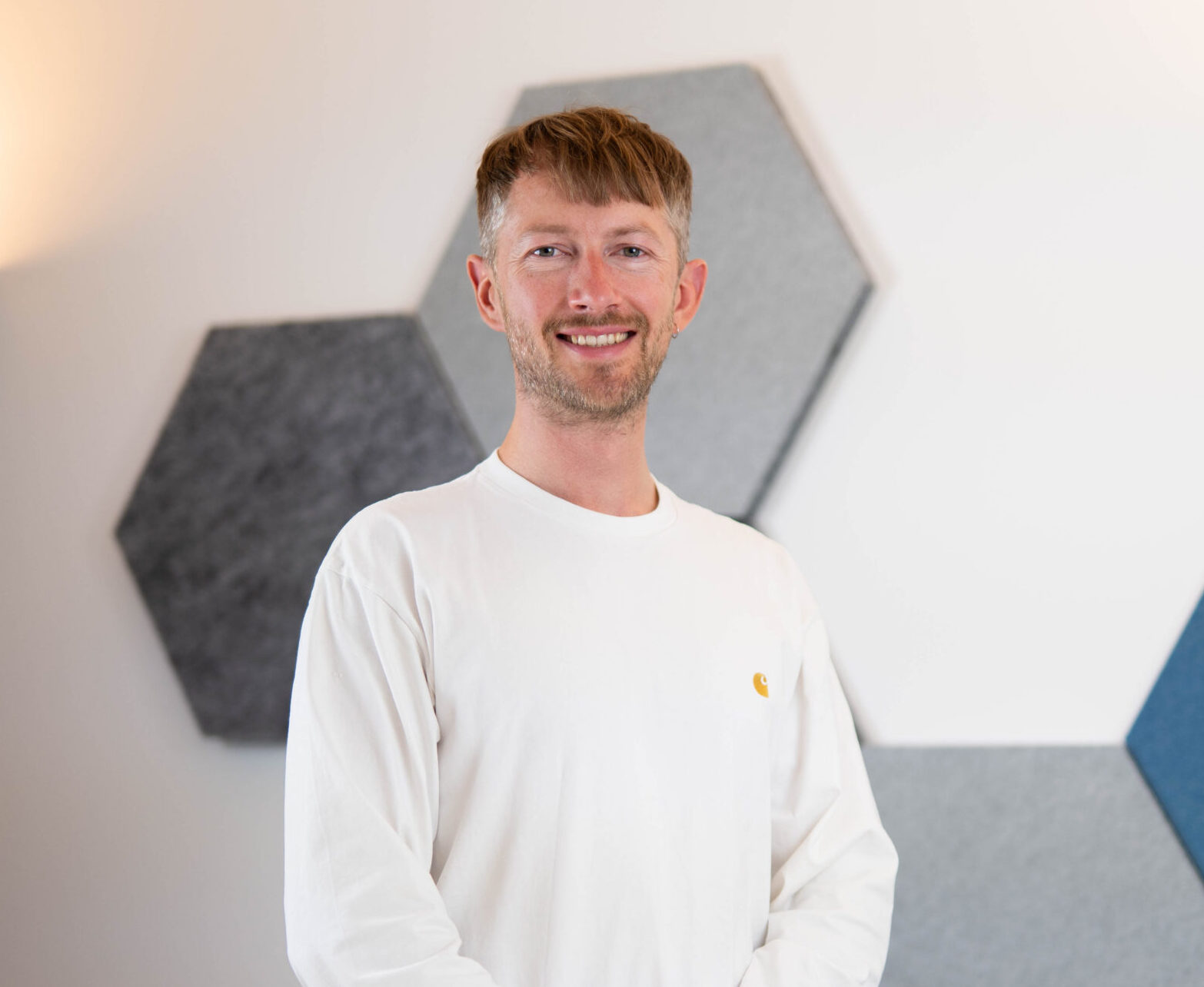

Michael heads the pv magazine editorial department. He’s been writing about solar since 2008, and helped build the German platform under his role as editor in chief. Previously, he worked for radio, television and national newspaper titles, and completed a doctorate in physics.
Batteriespeicher und Energiemanagement in Residential- und C&I-Anwendungen werden unter neuen Rahmenbedingungen geplant. Regulatorische Änderungen, flexible Stromtarife sowie die zunehmende Einbindung von Wärmepumpen, PKW– und LKW-Ladeinfrastruktur und perspektivisch bidirektionalem Laden verändern die Anforderungen an Speichergröße, Betriebsstrategien und Systemarchitektur. Energiemanagementsysteme übernehmen dabei eine zentrale Rolle, um die Photovoltaik-Speicher-Anlage nicht nur für den Eigenverbrauch, Peak-Shaving und atypische Netznutzung, sondern perspektivisch auch für dynamische Netzentgelte sowie vor allem für die Vermarktung des erzeugten Solarstroms und der Batterieflexibilität am Energiemarkt und perspektivisch für den Handel zu nutzen. Vor allem Letzteres verspricht eine deutliche Verkürzung der Amortisationszeit.
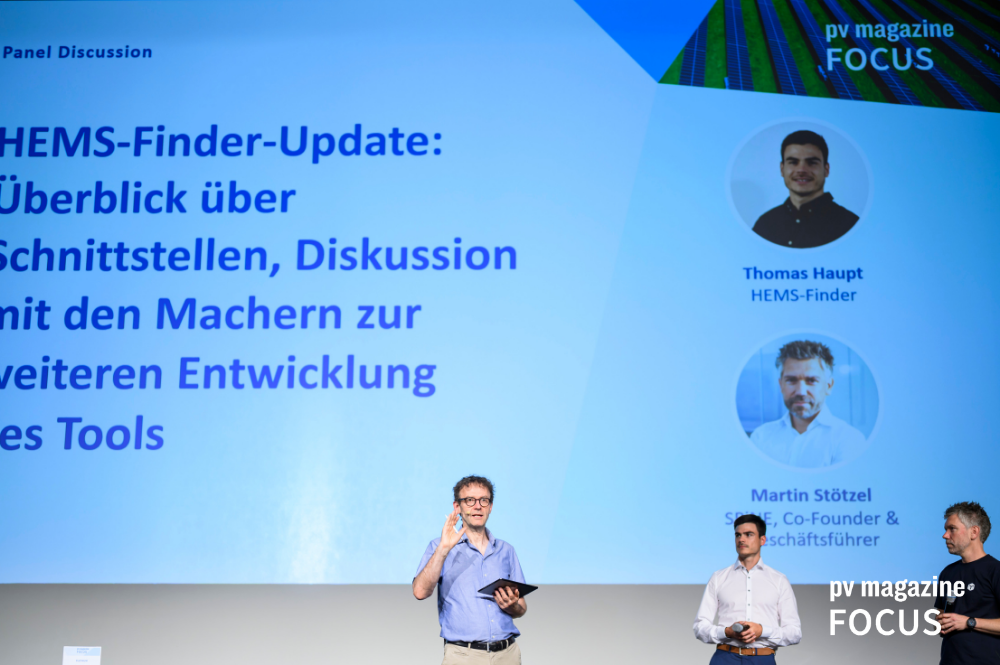
15:15 – 15:30 Uhr | HEMS Finder


Martin Stötzel ist Diplom-Wirtschaftsingenieur (KIT Karlsruhe) und promovierter Innovationsmanager (FAU Erlangen-Nürnberg). Mit über 20 Jahren Erfahrung im Top-Management-Consulting sowie in leitenden Positionen an der Schnittstelle von Technologie, Produktmanagement und Energiewirtschaft bringt er ein breites strategisches und operatives Fundament mit. Seine Karriere führte ihn u. a. zu Vodafone sowie zu SMA/coneva, wo er tiefes Branchen-Know-how in der Energiewirtschaft aufbaute. Heute ist er Co-Founder und Geschäftsführer von SPiNE, einem Technologieunternehmen für intelligente Messsysteme im deutschen Energiemarkt, und verantwortet dort als CPO die Bereiche Produkt und Marketing. Mit SPiNE treibt er die Digitalisierung der Energiewende voran – von der Softwareplattform für Messstellenbetreiber bis zum App Store für Energiemanagement-Anwendungen.
15.30 – 15:35 Uhr | Dynamische Stromtarife und Speicher-Effizienz

15.35 – 15.40 Uhr | Was die neuen Geschäftsmodelle für bidirektionales Laden für Hausbesitzer bedeuten
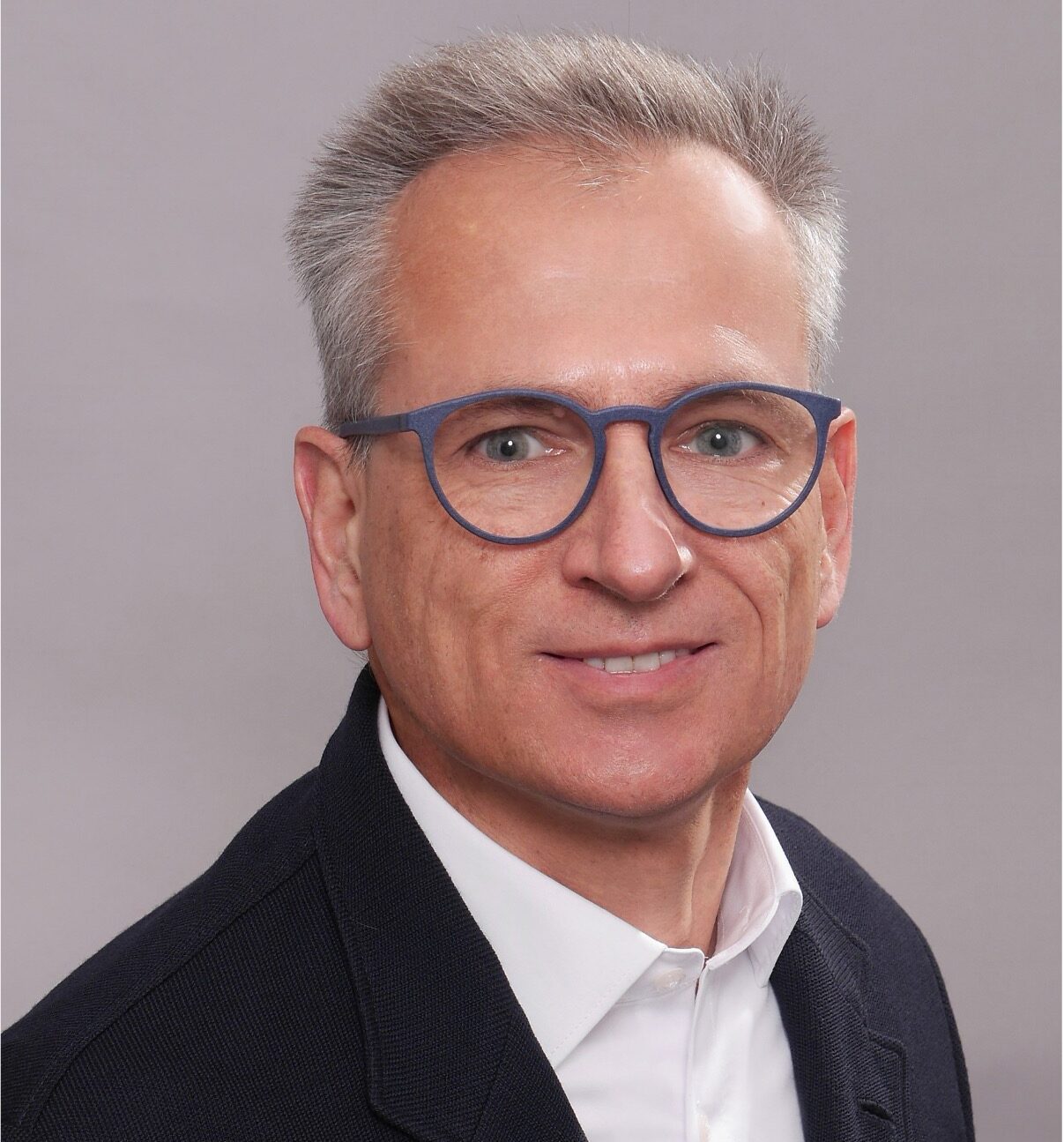
Dr. Spennemann holds a mechanical engineering degree from RWTH Aachen and built a distinguished 25-year career in leadership at Daimler / Mercedes-Benz. His tenure included ten years focused on Charging and Energy, during which he also spent eight years representing Mercedes-Benz on the Board of Directors of The Mobility House. Now leading Home Grid Integration at The Mobility House, Dr. Spennemann is dedicated to unlocking the potential of smart charging and vehicle-to-grid (V2G) solutions.
15.40 – 16.00 Uhr | Trends bei Hems

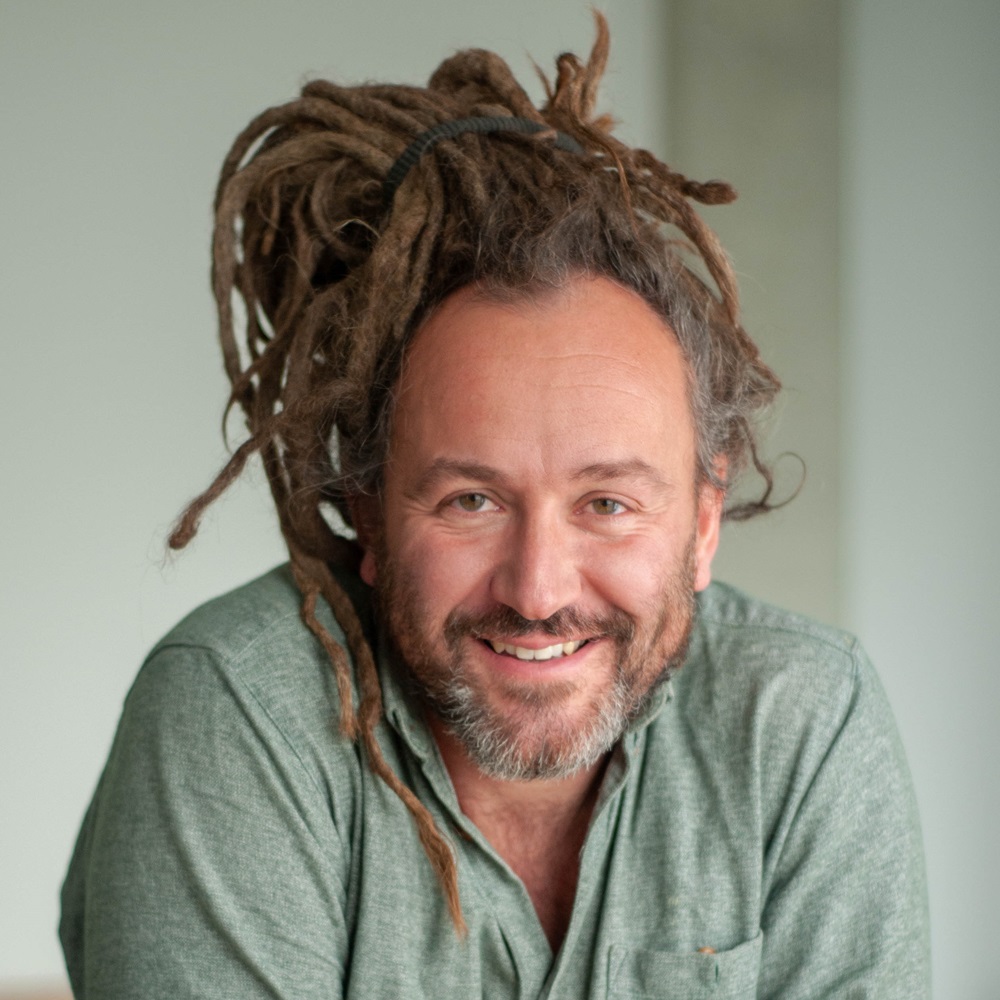

16.00 – 16.05 Uhr | Wie sich eine Wärmepumpe imVergleich zu Gasheizungen in Zeiten der Biotreppe amortisieren
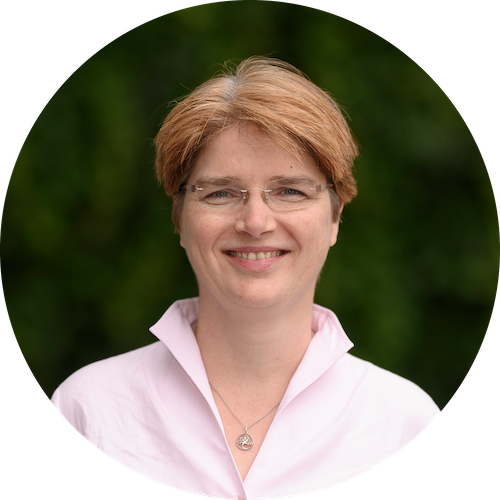
Cornelia Lichner has been writing for pv magazine since 2008 and regularly reports on a wide range of topics with a focus on innovative concepts for the coupling of solar power with other sectors. She also organizes webinars and publishes podcasts.
16.05 – 16.10 Uhr | Was aus der Direktvermarktung des Stroms an Erlösen zu erwarten ist
Michael heads the pv magazine editorial department. He’s been writing about solar since 2008, and helped build the German platform under his role as editor in chief. Previously, he worked for radio, television and national newspaper titles, and completed a doctorate in physics.
16.10 – 16.15 Uhr | Direktvermarktung als Massenprodukt: IT-upgrade bei Netzbetreibern als Schlüssel für ein konkurrenzfähiges Angebot

McKinsey/Agora Energiewende/ENGIE/Solarimo/BMWE/1000GW
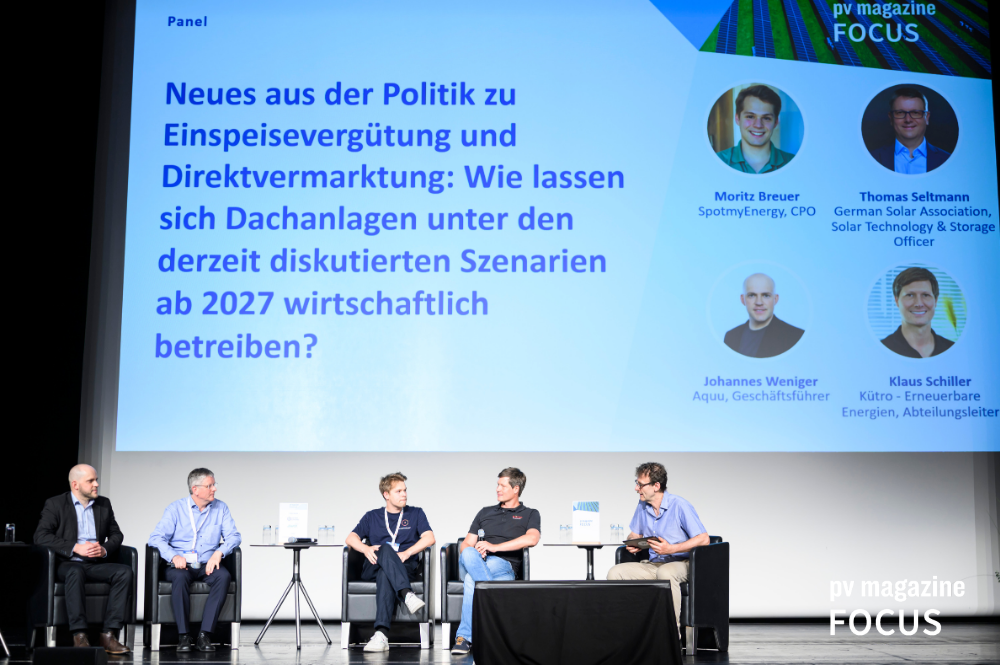
16.15 – 16.35 Uhr | Neues aus der Politik zu Einspeisevergütung und Direktvermarktung: Wie lassen sich Dachanlagen unter den derzeit diskutierten Szenarien ab 2027 wirtschaftlich betreiben?

Moritz joined SpotmyEnergy as its first employee in 2023 and has helped build the company alongside founder Jochen and the growing team ever since. Prior to SpotmyEnergy, he gained experience in energy trading and the broader energy sector, including roles at Impuls Energy Trading. Today, he is focused on developing smart energy solutions for single-family homes that help customers reduce their electricity costs while increasing comfort and automation. His work centers on combining virtual power plants, dynamic electricity tariffs, smart meters, and connected energy assets into a seamless customer experience that unlocks the full value of the energy transition.

As a Solar Technology & Storage Officer at the German Solar Association, Thomas Seltmann has been working since March 2022 on the further development of technical regulations and political framework conditions for photovoltaics in Germany. Prior to that, he was a photovoltaics and prosumer consultant at the North Rhine-Westphalia Consumer Advice Centre (Verbraucherzentrale NRW) and worked in various roles in the solar industry for around thirty years. He is a lecturer, author and writes advice articles on photovoltaics tax issues for the trade journal PV-Magazine Germany.
16.35 – 16.40 Uhr | Energiemanagement im Gewerbe – Essenz der ersten Übersicht
Michael heads the pv magazine editorial department. He’s been writing about solar since 2008, and helped build the German platform under his role as editor in chief. Previously, he worked for radio, television and national newspaper titles, and completed a doctorate in physics.
16.40 – 16.45 Uhr | Aus der Praxis: Gewerbeprojekt mit BTM Vermarktung

Philipp Roß ist seit gut fünf Jahren im Bereich Erneuerbare Energien tätig und verantwortet aktuell als Produktmanager für die energielenker solutions das Produktportfolio. Aus seiner Zeit bei einem Installateur und im direkten Kundenkontakt kennt er die Anforderungen der Praxis aus erster Hand. Energielenker solutions GmbH vereint Digitalisierungs- und Energiekompetenz und ermöglicht die Visualisierung und Steuerung von Energieflüssen, unabhängig von Herstellern und Schnittstellen. Zum Produktportfolio zählen passgenaue EZA-Regler-Lösungen für verschiedene Anwendungsfälle, ein Commercial Energy Management System sowie das Lastmanagementsystem Lobas. Damit sorgt energielenker solutions für eine wirtschaftliche und nachhaltige Energieversorgung der Zukunft.
16.45 – 16.50 Uhr | Was man mit MiSpEl und Asset backed Trading bei Gewerbeanlagen erwarten kann

16.50 -17.10 Uhr Batteriespeicher und EMS richtig planen: Was müssen Systeme künftig können, damit Dachanlagen wirtschaftlich bleiben und vermarktbar werden?
Philipp Roß ist seit gut fünf Jahren im Bereich Erneuerbare Energien tätig und verantwortet aktuell als Produktmanager für die energielenker solutions das Produktportfolio. Aus seiner Zeit bei einem Installateur und im direkten Kundenkontakt kennt er die Anforderungen der Praxis aus erster Hand. Energielenker solutions GmbH vereint Digitalisierungs- und Energiekompetenz und ermöglicht die Visualisierung und Steuerung von Energieflüssen, unabhängig von Herstellern und Schnittstellen. Zum Produktportfolio zählen passgenaue EZA-Regler-Lösungen für verschiedene Anwendungsfälle, ein Commercial Energy Management System sowie das Lastmanagementsystem Lobas. Damit sorgt energielenker solutions für eine wirtschaftliche und nachhaltige Energieversorgung der Zukunft.

Grown up in Kiel at the sea, industrial engineer by training, startup fan already as a student (working student at UnternehmerTUM in Munich), in that job I first touched the energy world and got hooked. Worked as an energy trader myself afterwards trading power and gas before founding Otter Energy Trading with my co-founders Roman and Marek.
Agenda
Moderators
Michael heads the pv magazine editorial department. He’s been writing about solar since 2008, and helped build the German platform under his role as editor in chief. Previously, he worked for radio, television and national newspaper titles, and completed a doctorate in physics.
Covering online news on the German market and editing the German print issue since 2021, Marian has been writing about power electronics for pv magazine’s global website and monthly print magazine since 2018.
Speakers
Dr. Stefano Alberici is the VP of Technology for EMEA at HyperStrong International. Holding a Ph.D. in Nuclear Engineering, he transitioned to renewables in 2005, specializing in PV physics, inverter technology, and energy storage. Based in Bologna, he will present HyperStrong’s integrated engineering approach to solving critical bottlenecks in the European utility and C&I energy storage markets.
Moritz joined SpotmyEnergy as its first employee in 2023 and has helped build the company alongside founder Jochen and the growing team ever since. Prior to SpotmyEnergy, he gained experience in energy trading and the broader energy sector, including roles at Impuls Energy Trading. Today, he is focused on developing smart energy solutions for single-family homes that help customers reduce their electricity costs while increasing comfort and automation. His work centers on combining virtual power plants, dynamic electricity tariffs, smart meters, and connected energy assets into a seamless customer experience that unlocks the full value of the energy transition.
Ben Callam is Chief Product Officer at PVFARM, the decision platform for utility-scale solar and battery design. He brings deep experience in solar construction and EPC delivery, including engineering, estimating, procurement, logistics, civil and structural coordination, and the handoffs that determine whether a design can be built efficiently. That background shapes how he leads product strategy: connecting real project constraints with the workflows, data, and decisions that matter most to engineers and project teams. His current work spans PVFARM’s core design platform, civil optimization, quantity continuity, BESS design tooling, RE PILOT, and the feedback loops between design, procurement, construction, and handover. His perspective is shaped by close work with EPCs, engineering consultants, and battery/storage teams across the US and European markets.
Garikoitz Sarriegi Etxeberria is a Project Engineer at Kiwa PI Berlin, specialising in power electronics and energy-storage-related systems. With a PhD in Power Electronics from RWTH Aachen University, he brings over a decade of experience translating advanced R&D into deployable solutions for battery systems, converters, and grid-connected applications.
His work sits where theory meets bankable reality, supporting the design, optimisation, and reliability of technologies that underpin modern BESS projects. At the BESS Business & Development Forum, Garikoitz shares an engineering-driven perspective on how robust power electronics and system design directly influence performance, risk, and long-term project value.
McKinsey/Agora Energiewende/ENGIE/Solarimo/BMWE/1000GW
Kai Klingenhagen is a qualified engineer (Dipl.-Ing.) with over 20 years of experience in the renewable energy (RE) industry. He spent 14 years in the Asia-Pacific (APAC) region, where he successfully developed and executed large-scale renewable energy projects.
In 2024, he returned to Germany to join BELECTRIC, where he is responsible for establishing a centralised BESS engineering team and leading the development of BESS projects across Germany.
Tim Koenemann leitet das Center of Competence Green Infrastructure Finance der Commerzbank AG. Er hat in seiner Funktion weltweite Verantwortung für Unternehmens- und Projektfinanzierungen im Bereich erneuerbarer Energien und anderer grüner Infrastruktur mit einem Portfolio von ca. 15 Mrd. EUR. Tim ist seit 2011 in verschiedenen (leitenden) Rollen im Kompetenzzentrum tätig. Vor seinem Eintritt in die Bank war er 6 Jahre als Strategieberater für Accenture und Roland Berger Strategy Consultants im Energiesektor tätig.
Tim Koenemann is heading Commerzbank‘s Center of Competence Green Infrastructure Finance. In his current role he has global responsibility for all corporate and project finance activities in the sector renewable energies and other green infrastructure with a portfolio of EUR 15 bn.
Tim is with the bank since 2011 and has worked in various (managerial) roles within the Center of Competence. Before his time with the bank, he has been working for 6 years as a strategy consultant in the energy sector with Accenture and Roland Berger Strategy Consultants.
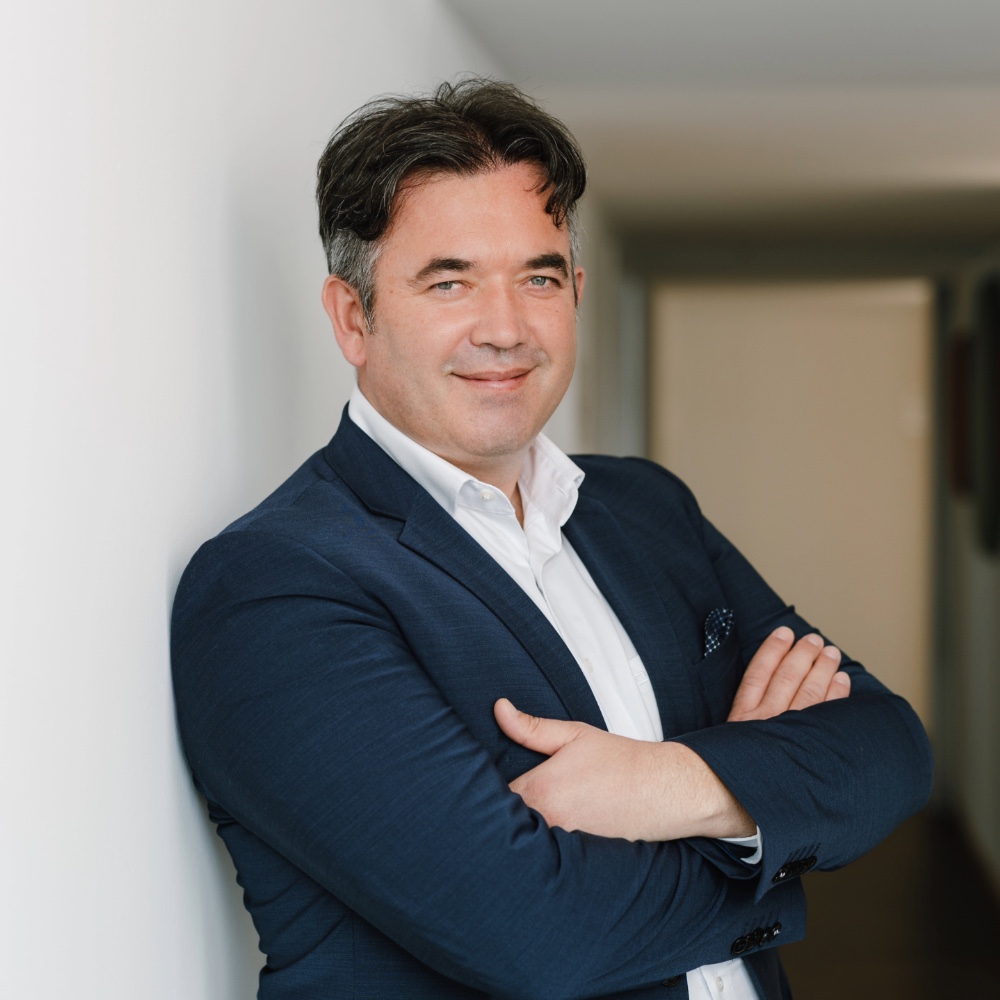
Dr. Stephan Rohr is Co-CEO and Co-founder of TWAICE, a pioneer in battery analytics helping asset managers and operators scale BESS fleets safely, reliably, and predictably. He earned his Ph.D. from the Technical University of Munich, dedicating more than six years to researching Li-ion cell degradation and the economic impacts of lifecycle performance, work that inspired him to bridge battery science and real-world applications. Founded in 2018, TWAICE turns deep battery science and machine learning into operational solutions, including SOH estimation, operational life modeling, and predictive maintenance strategies to maximize BESS ROI.
Philipp Roß ist seit gut fünf Jahren im Bereich Erneuerbare Energien tätig und verantwortet aktuell als Produktmanager für die energielenker solutions das Produktportfolio. Aus seiner Zeit bei einem Installateur und im direkten Kundenkontakt kennt er die Anforderungen der Praxis aus erster Hand. Energielenker solutions GmbH vereint Digitalisierungs- und Energiekompetenz und ermöglicht die Visualisierung und Steuerung von Energieflüssen, unabhängig von Herstellern und Schnittstellen. Zum Produktportfolio zählen passgenaue EZA-Regler-Lösungen für verschiedene Anwendungsfälle, ein Commercial Energy Management System sowie das Lastmanagementsystem Lobas. Damit sorgt energielenker solutions für eine wirtschaftliche und nachhaltige Energieversorgung der Zukunft.

Grown up in Kiel at the sea, industrial engineer by training, startup fan already as a student (working student at UnternehmerTUM in Munich), in that job I first touched the energy world and got hooked. Worked as an energy trader myself afterwards trading power and gas before founding Otter Energy Trading with my co-founders Roman and Marek.
As a Solar Technology & Storage Officer at the German Solar Association, Thomas Seltmann has been working since March 2022 on the further development of technical regulations and political framework conditions for photovoltaics in Germany. Prior to that, he was a photovoltaics and prosumer consultant at the North Rhine-Westphalia Consumer Advice Centre (Verbraucherzentrale NRW) and worked in various roles in the solar industry for around thirty years. He is a lecturer, author and writes advice articles on photovoltaics tax issues for the trade journal PV-Magazine Germany.
Dr. Spennemann holds a mechanical engineering degree from RWTH Aachen and built a distinguished 25-year career in leadership at Daimler / Mercedes-Benz. His tenure included ten years focused on Charging and Energy, during which he also spent eight years representing Mercedes-Benz on the Board of Directors of The Mobility House. Now leading Home Grid Integration at The Mobility House, Dr. Spennemann is dedicated to unlocking the potential of smart charging and vehicle-to-grid (V2G) solutions.
Martin Stötzel ist Diplom-Wirtschaftsingenieur (KIT Karlsruhe) und promovierter Innovationsmanager (FAU Erlangen-Nürnberg). Mit über 20 Jahren Erfahrung im Top-Management-Consulting sowie in leitenden Positionen an der Schnittstelle von Technologie, Produktmanagement und Energiewirtschaft bringt er ein breites strategisches und operatives Fundament mit. Seine Karriere führte ihn u. a. zu Vodafone sowie zu SMA/coneva, wo er tiefes Branchen-Know-how in der Energiewirtschaft aufbaute. Heute ist er Co-Founder und Geschäftsführer von SPiNE, einem Technologieunternehmen für intelligente Messsysteme im deutschen Energiemarkt, und verantwortet dort als CPO die Bereiche Produkt und Marketing. Mit SPiNE treibt er die Digitalisierung der Energiewende voran – von der Softwareplattform für Messstellenbetreiber bis zum App Store für Energiemanagement-Anwendungen.
Event location
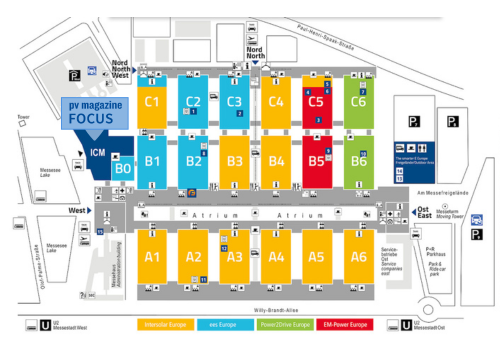
Event Partners
Platinum


Gold


Gallery 2026