ATW at SNEC 2026: Optimizing the full spectrum of PV manufacturing with its ‘AI Chef’

pv magazine: ATW has achieved significant growth since 2019. What enabled this trajectory?
Rocha: I’d highlight mentality first – a hard-work culture combined with an entrepreneurial mindset. Our CEO has been very effective in transmitting that to the entire organization: R&D, sales, and operations. There’s a strong push not to be satisfied with the status quo and to strive for more. Back in 2014, we were primarily a module-equipment company, especially in stringers. We had a passionate, focused team and built a strong position there. From that foundation, we diversified: from module tools into cell, ingot and wafer equipment, and also lithium battery and semiconductor equipment. The combination of a driven organization and a highly skilled R&D team allowed us to replicate the success we had with module equipment across the rest of the value chain. Once you can do that in multiple segments, the growth becomes close to exponential.
Moving from modules into cells is a big leap. When did you become a serious player in cell equipment – and where did you first deploy those lines?
We started developing cell equipment around 2020–2021. In 2020 we set up our first internal cell line, and commercial sales really started in late 2022 and 2023. Initially, all of this is in China – that’s our pattern. A key principle for us is that we only sell equipment abroad once it has been fully developed, tested and debugged in Chinese mass production. By the time overseas customers see a product, it is mature and fully functional. That makes it easier for us, because there is less debugging to do thousands of kilometers away, and it builds confidence in ATW as a reliable brand with strong service.
How has your business mix between China and overseas markets evolved over that period?
When I joined in 2019, overseas markets were maybe 10% of our revenue. Today they have become an important pillar of our revenue. Over the last year we’ve seen domestic orders in China decrease, while overseas orders increased. China is clearly in an overcapacity phase; things are slowing domestically, while demand outside China is still building up.
Which overseas regions are most important for you?
Southeast Asia is number one. It’s geographically close to China and has received a lot of manufacturing relocation due to tariffs and geopolitics. Malaysia led the way, followed by Vietnam and Thailand. Beyond that we have a solid footprint in the Middle East.
Do you approach overseas markets differently from your home market?
Yes, very differently. In China we mainly sell key process equipment – a soldering machine, a screen-printing line, a specific process tool. Chinese PV manufacturers usually have strong in-house integration teams and process engineers, so they do the line integration themselves. In most overseas markets, customers are looking for solutions, not just tools. Instead of “a soldering machine,” they want a complete module line; instead of a single cell tool, they want a full cell factory. These are often emerging manufacturing markets without deep integration know-how. So we tend to supply turnkey solutions, including integration, know-how transfer and sometimes even operation. We often follow a “build, operate, transfer” model: we build the factory, operate it for a period, and then hand over. Those turnkey lines typically include third-party equipment alongside our own. In China, when we deliver key-process tools, it’s usually all ATW; overseas, in a turnkey factory, we orchestrate a broader ecosystem.
There is a lot of talk about different PV cell and module technologies, ranging from zero- to multi-busbar, from mono- to bifacial, from PERC, TopCON, HJT to perovskite tandem, not to mention a wide range of wafer and module sizes. Can ATW cover all these technologies or are there areas where ATW cannot deliver the required cell or module production technologies?
I would say we can cover most of them. In the past two years we have seen a wide range of technologies develop. Some countries are even back to PERC due to intellectual property constraints. Whereas before, it was just one or two solutions with PERC as the dominant technology. We’re used to diversifying our portfolio, and we’ve followed the technology roadmap closely. Our view is that we won’t see a single dominant technology crushing everything else. Instead, I think TOPCon will stay, BC will come, even HJT is gaining strength now. These technologies and others will coexist, each with its own share and application niches, from ground-mount to rooftops to space.
When we met earlier this spring you mentioned the fascinating concept of “AI Chef”, meaning that such a Chef could run an integrated ingot, wafer, cell and module production hub without much human intervention and with the throughput and efficiency close to what is achieved by top tier manufacturers in China. Can you explain this AI-driven solution in more detail?
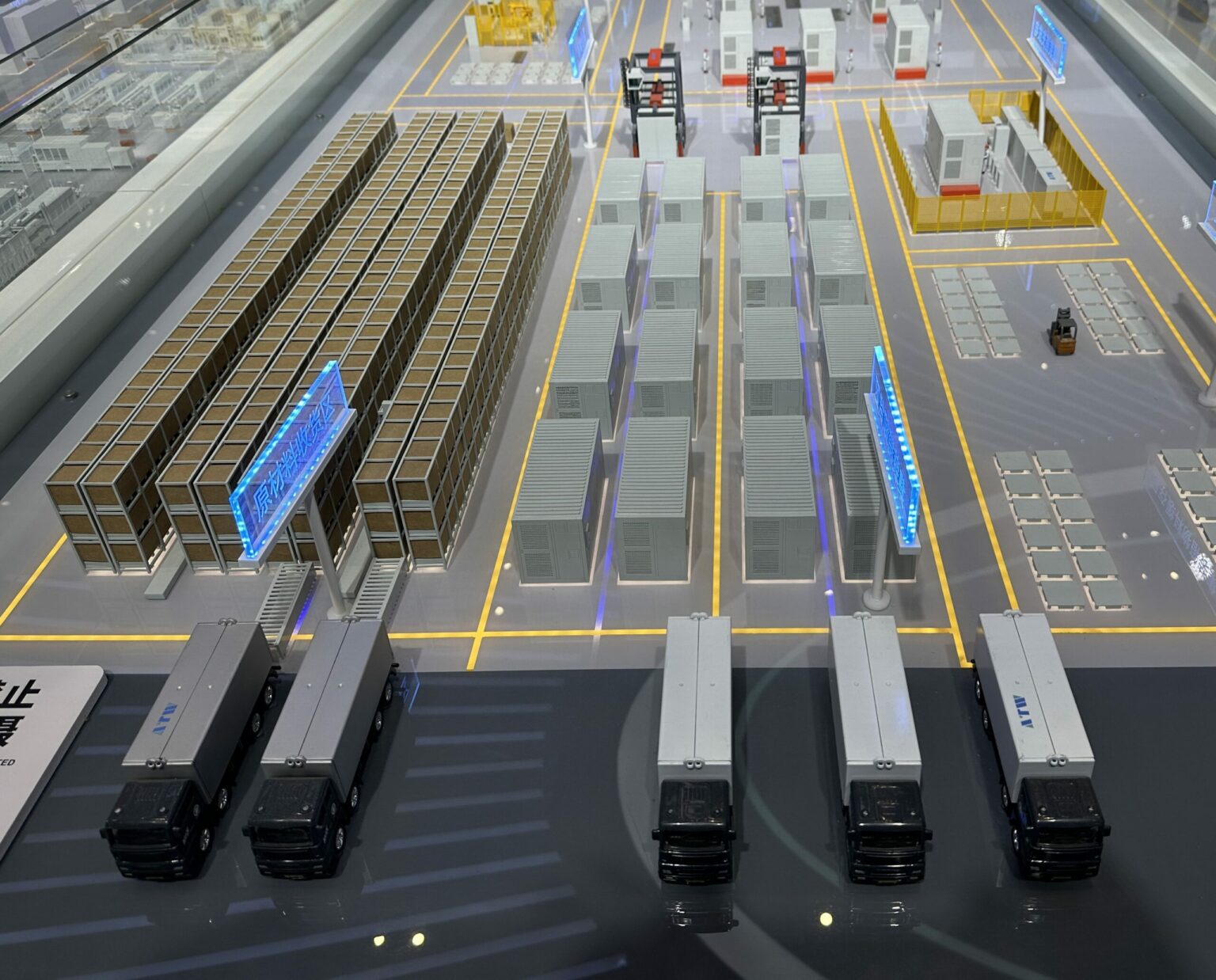
AI Chef is essentially a smart, centralized AI-based system that encapsulates process know-how and integrates it across the entire manufacturing chain. One of its consequences is that you can take a highly optimized factory configuration developed in China and replicate it at the overseas location of the ATW customer with similar efficiency and throughput. It functions like a movable “brain” or database for process parameters, decision rules and supply-chain logic. That makes it much easier to move know-how out of China without having to move large teams of experts physically. AI Chef also allows further automation of decisions that used to be manual or operator-driven. For example, in ingot-wafer manufacturing the system can integrate real-time information about downstream demand and upstream supply, including raw materials pricing, and then automatically decide when to buy more polysilicon (or other materials) or increase production capacity.
Can you give a concrete example from ingot-wafer production? How does AI Chef change the process on the factory floor?
In the past, seeding in ingot manufacturing was a manual task. An operator had to observe the melt and decide when was the right moment to start seeding. Now we use vision systems. These cameras, combined with AI models, decide the optimal seeding time, and the central control system then automatically triggers the process. This improves consistency and yield and also reduces reliance on individual operator experience. Because everything is managed under one “brain”, traceability becomes much stronger. If there is a problem with a finished module, you can trace it back through the cell and wafer all the way to a specific ingot or even the polysilicon batch, which is also critical for supply-chain traceability and compliance.

Please login to comment