Miners test viability of battery-electric technology

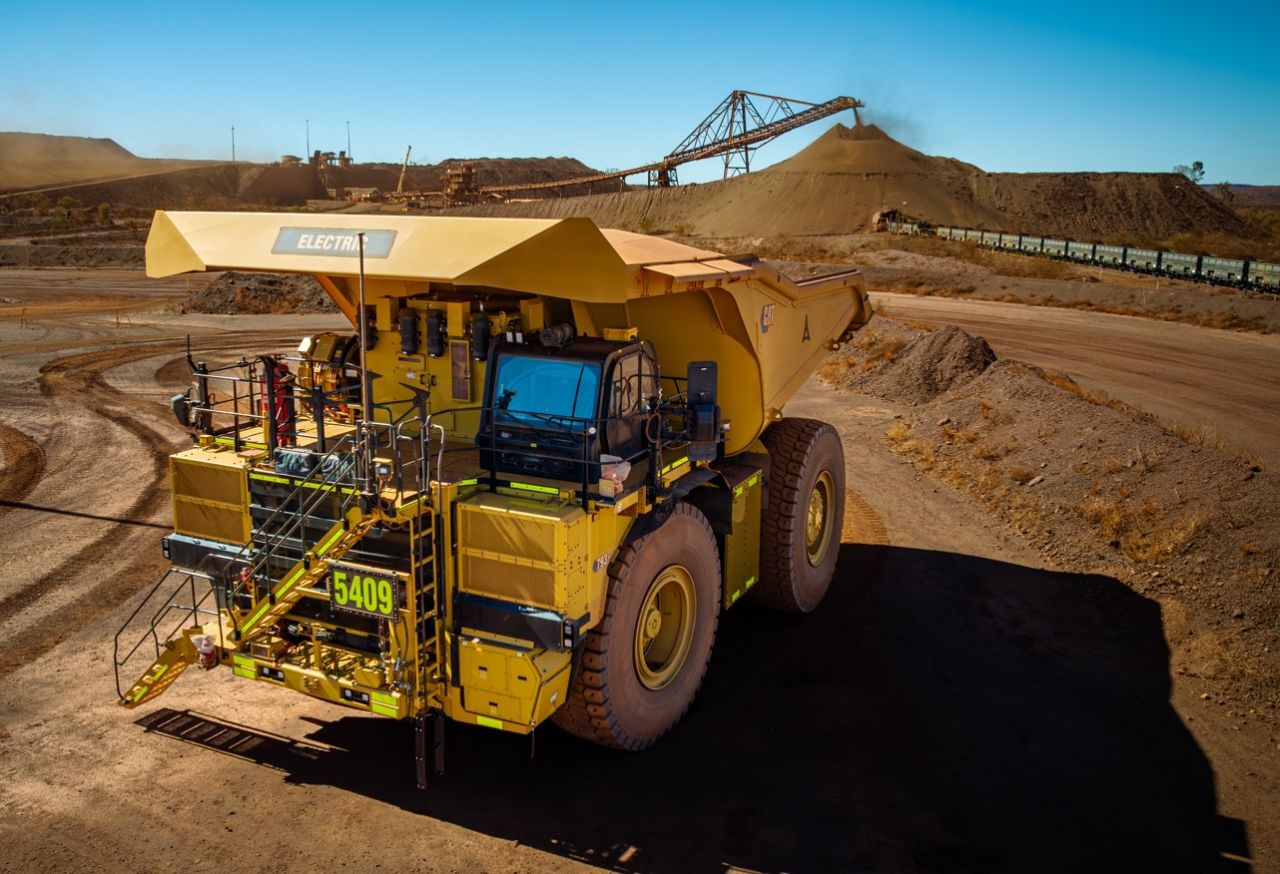
BHP and Rio Tinto are trialling two of United States-headquartered equipment manufacturer Caterpillar’s battery-electric haul trucks at BHP’s Jimblebar iron ore mine in Western Australia as part of plans to reduce diesel usage across their operations.
The two Cat 793 XE Early Learner battery-electric haul trucks, delivered to the Jimblebar site late last year, have already accumulated more than 100 operating hours and completed 200 test laps.
“The trial is showing meaningful progress,” the companies said, adding that the scale and operational intensity of the Pilbara make it “an ideal testing ground” for the battery-electric technology.
BHP Australia President Geraldine Slattery said electrification of mining operations is core to the company’s decarbonization goals, and this trial is integral to that journey with diesel-powered haul trucks among the biggest Scope 1 emissions sources in open-pit mining, burning an estimated 40-50% of all diesel used across large-scale operations.
“Investing in battery-electric haul truck fleet technology and operations in the Pilbara is key to our decarbonisation,” Slattery said.
“This trial is helping to advance the technologies and engineering in battery energy management, in power demand, and in informing what it will take to scale across our operations, safely, productively and reliably.”
Jimblebar is home to two of seven Cat 793 XE Early Learner haul trucks currently being tested globally. The battery-electric trucks match their diesel counterparts with a 240-tonne payload capacity and are powered by a 564 kWh lithium iron phosphate battery pack and 480 kW electric motor output, with regenerative braking on downhill runs designed to allow for 24/7 operations.
Initial testing has focused on battery performance across repeated charge-discharge cycles, energy consumption per haul cycle, regenerative recovery efficiency, and charging infrastructure suitability in real-world conditions.
The next phase of the trial will test dynamic charging technology designed to charge the trucks while in motion.
Data collected is being used to evaluate technical readiness, infrastructure requirements, commercial viability, and will inform the potential integration of battery-electric haul truck fleets into each company’s operations.
Slattery said while electrification is central to BHP’s decarbonization strategy, its role will depend on proven capability to perform at scale.
“This is why this industry-first collaboration with Rio Tinto and Caterpillar matters” she said. “By working together we can accelerate progress in the technologies enabling electrification, on what is needed in the mining operation, and across our supply chains.”

Please login to comment