Cuba’s PV capacity tops 1.4 GW

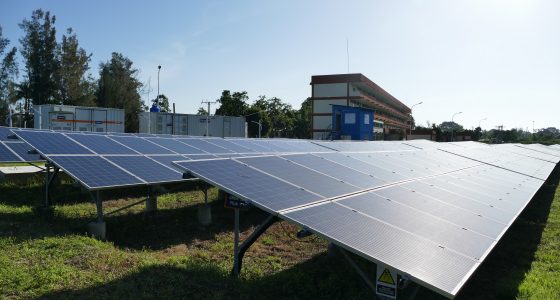
Cuba has reached 1.42 GW of installed solar capacity across 144 photovoltaic plants and expects the total to exceed 1.5 GW by the end of 2026, according to Cuban President Miguel Díaz-Canel.
Speaking on the radio program Criterio Compartido, broadcast from the Radio Rebelde studios, Díaz-Canel said Cuba has installed 1,418 MW of solar capacity across 144 projects.
“We expect to close the year with more than 1,500 MW,” he said while discussing the country’s energy transition.
Díaz-Canel said more than 563 MW of additional generation capacity has been installed at consumer sites in the state and non-state sectors. He said deployment is growing fastest in the private sector, where on-site solar generation now covers around 20% of electricity consumption, reducing demand on Cuba’s National Electric Power System (SEN).
Renewable energy sources currently account for 21.4% of Cuba’s electricity generation, according to Díaz-Canel.
He also provided figures for the country’s energy storage rollout, saying 50 MW of storage capacity has been installed and another 100 MW is scheduled to come online in October.
Solar deployment is also expanding into water pumping. Díaz-Canel said 646 solar-powered pumps have been installed for public water supplies, while more than 1,000 units have been deployed for livestock and irrigation. Seven provinces have also launched initiatives based on distributed generation systems and solar plants.
The government plans to deploy another 200 MW of solar capacity specifically for water pumping. Díaz-Canel said the aim is to make pumping operations independent of the SEN in the first months of 2027, before extending the initiative to the remaining provinces.
Renewables are also being deployed across public services. According to figures presented by Díaz-Canel, renewable energy systems are in use at 99% of polyclinics, 47% of hospitals, 89% of nursing homes and elderly day-care centers, 99% of maternity homes, 98% of funeral homes, 16% of homes for children without parental care, and 72% of banks.
In the communications sector, 97% of radio stations have photovoltaic systems, along with 25% of Radio Cuba transmitters and 25% of Etecsa base stations, Díaz-Canel said.
He added that Cuban banks offer financing for renewable energy installations to individuals and businesses. Cuba has also established a feed-in tariff of CUP 90 ($0.37) per kWh for electricity supplied to the SEN and expanded tax incentives for renewable energy installations.
This content is protected by copyright and may not be reused. If you want to cooperate with us and would like to reuse some of our content, please contact: [email protected].

Please login to comment