Batteries to center stage – 02-2021

Already a subscriber?
Login
Excerpt from the magazine

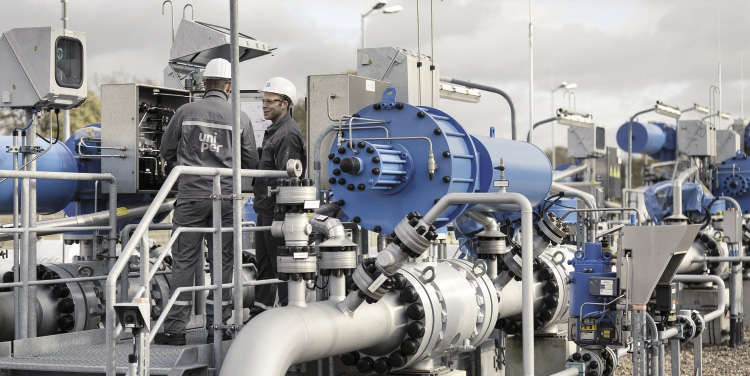

A new era for battery materials
Every year, chemical and energy companies produce $15 billion worth of commodities such as carbon black, silicon oxide, and aluminum oxide, for manufacturing purposes. Engineers do this by pumping chemicals into a flame and collecting material formed in the fire, in an approach known as flame spray pyrolysis. This approach, according to scientists at Argonne National Laboratory, has the potential to create more advanced materials for use in next-generation storage batteries.
Feb 11, 2021

Zero Plus for cheaper, cleaner communities
A recently completed, EU-funded applied research project has proven that significant cost reductions can be achieved when designing entire communities, rather than individual buildings, on a Net Zero Energy (NZE) basis. Elad Shaviv, the chair of the Energy Innovation Leaders Group and the head of the Israeli Smart Energy Association, reports on the findings – including how an overall energy cost reduction of almost 27% can be achieved.
Feb 11, 2021
Subscribe now for instant access to this issue and every published issue since 2016.
Subscribe

The race for green hydrogen
Large swaths of low-cost land: check. Lots of sun and wind: check. The ability to transport green hydrogen cost-effectively to energy importing economies: check. Then you’re in the race to become one of the “renewable energy superpowers” of the low-carbon economy. A growing number of countries are assessing their renewable resources and natural attributes and positioning themselves to become green hydrogen exporters. However, not all are created equal.
Feb 11, 2021

European batteries, a sustainable reality
Building on Germany’s technical expertise and trailblazing track record in the early years of the energy transition, a number of homegrown battery integrators have supplied a range of market segments – with some now enjoying an enviable track record, globally. Tesvolt is one such battery provider, and founder and CEO Daniel Hannemann says that expanded battery production in Europe will only grow in importance.
Feb 11, 2021

Nickel’s problem with waste
For many of the newest lithium-ion batteries, reducing the amount of cobalt in the mix means increasing the share of nickel. But nickel comes with its own set of environmental concerns: Once it is extracted from the ground, the processing of nickel ores generates far more waste than it does usable material. And dealing with this waste is a growing problem for many producers.
Feb 11, 2021

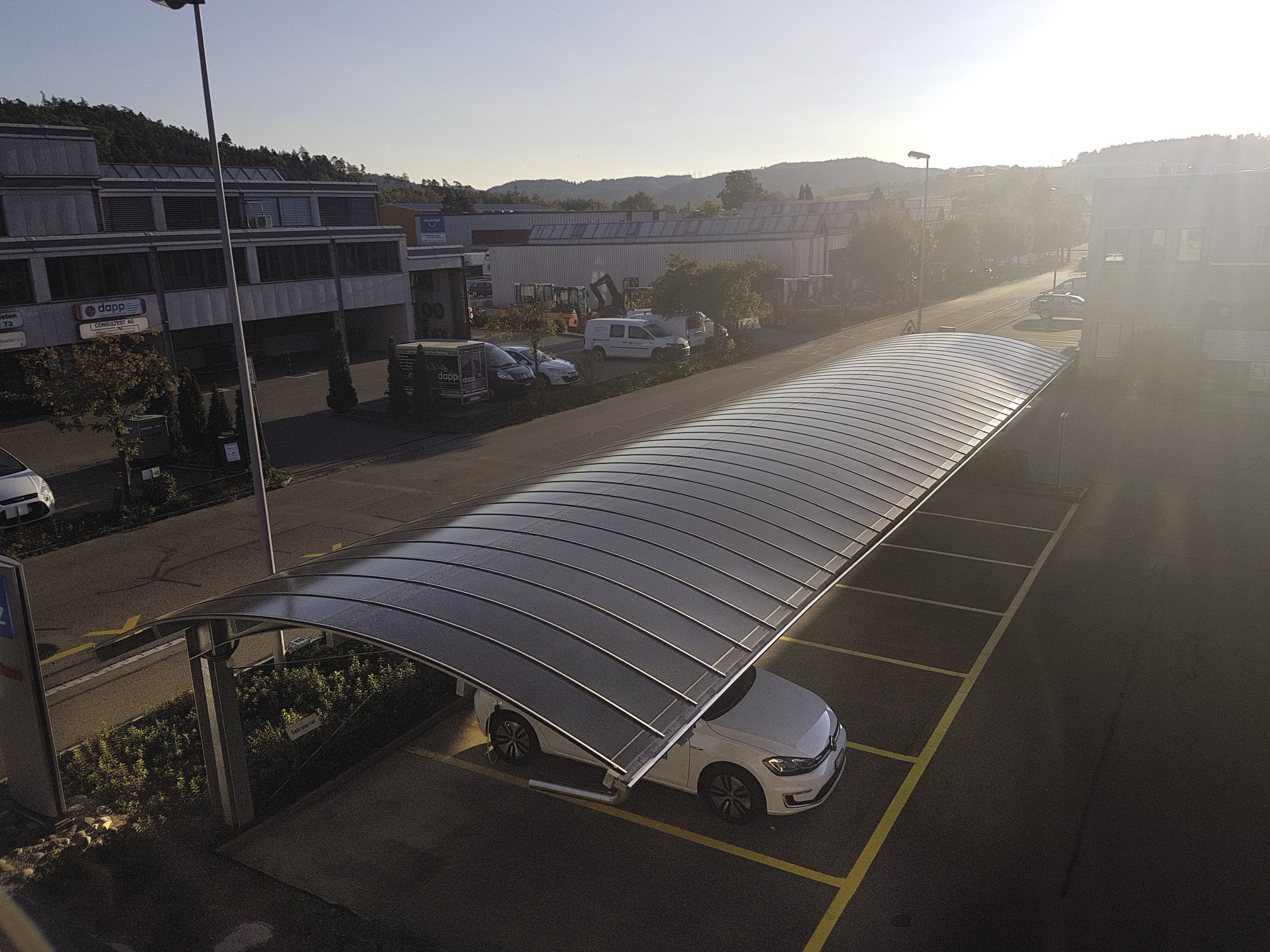
Unlocking lightweight, flex applications
Not all rooftops can bear the weight of glass PV modules. Some others have curves and shapes ill-suited to uniform, bulky panels. Flexible modules have long been advanced as the solution here, however the keys to unlocking this potential have proven elusive.
Feb 11, 2021
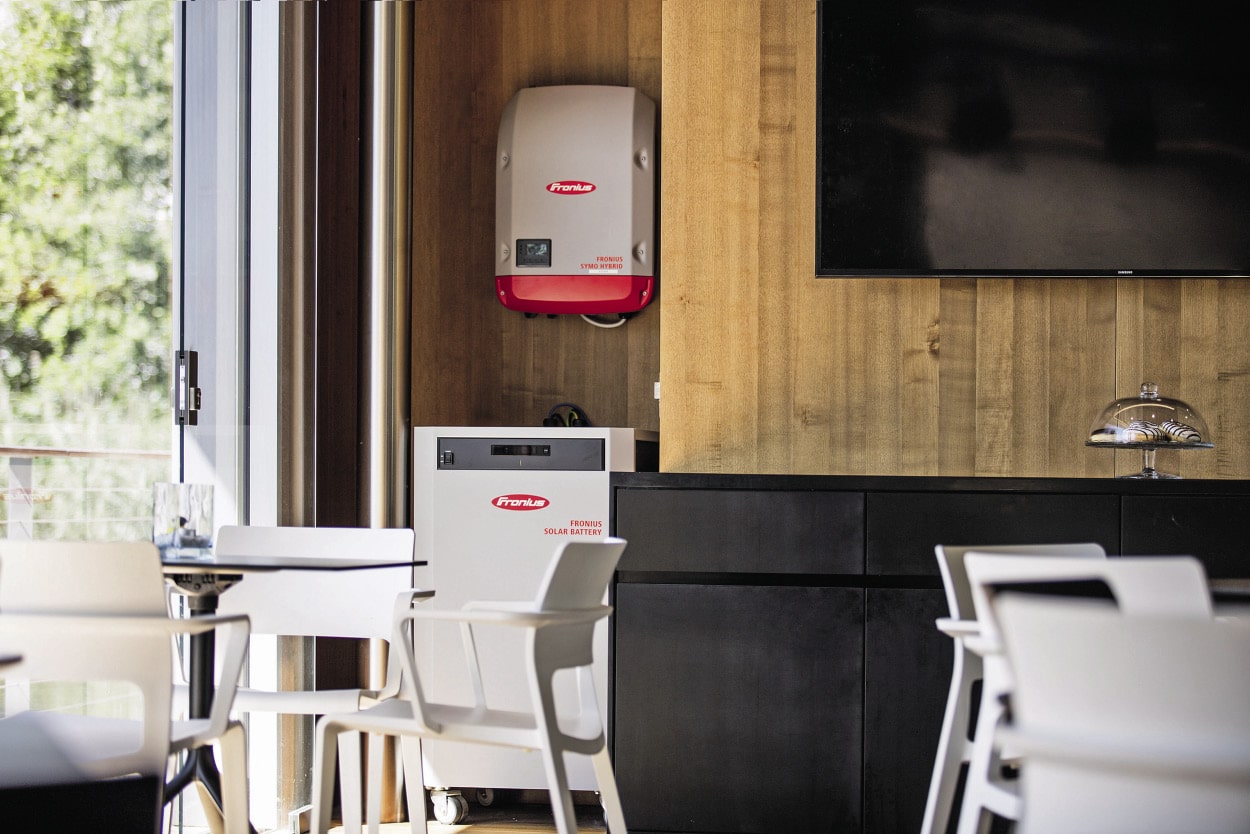
Support schemes migrate from solar to storage
Behind-the-meter residential storage has been much talked about, but looking at application by market segment, very little capacity has actually been installed. IHS Markit says that an increasing number of ways to monetize distributed battery value are going to be introduced. Bundled together with the eagerness of grid operators to regulate grid exports, rapidly dropping feed-in tariff rates, and growing financial support for batteries, the time for wider storage adoption may be nigh.
Feb 11, 2021
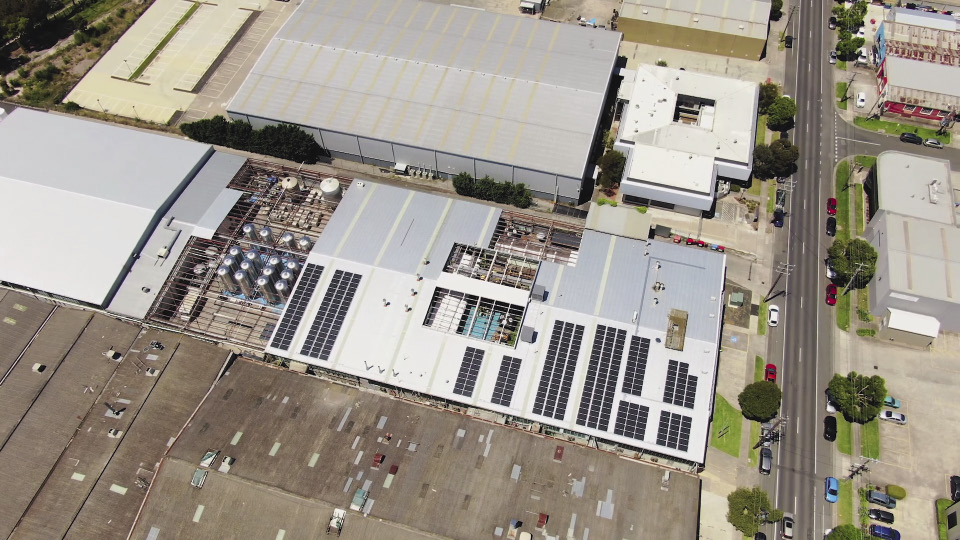
The regulator’s wish is my export limitation
As distributed PV grows, new grid codes have scared installers across some markets. Network operators want to gain control over grid export, even of smaller arrays. Additions of new array controllers and special gateways could be costly putting speedy development of PV at risk. Fret not, says Fimer, as the Italy-based power-electronics manufacturer has placed the solution to the problem already inside its latest inverter range.
Feb 11, 2021

Bifacial adoption spurs rethink on PID
PV systems are unique among electronic devices, as they are expected to survive outdoors for at least 25 to 30 years. This makes module and system quality one of the cornerstones of guaranteed returns on investment. Potential-induced degradation (PID) is a critical failure mode with a potentially high financial impact. New research from imec and Hasselt University looks at the damaging impact that PID can have on bifacial technology, writes Michaël Daenen, a professor at EnergyVille and Hasselt University.
Feb 11, 2021

Double-digit growth ahead for BIPV
In November, experts at Switzerland’s University of Applied Sciences (SUPSI) and the Becquerel Institute published the “BIPV Status Report 2020.” It is designed to serve as a practical handbook for all stakeholders in the development process for building integrated photovoltaics (BIPV) by providing valuable information and approaching the topic of solar construction from different perspectives. Philippe Macé, head of business intelligence at the Becquerel Institute, explains why the stage is set for BIPV.
Feb 11, 2021

The future is female among Egyptian engineers
How do you achieve gender equality among shift-working engineers in a remote location in North Africa? With a clear vision and concrete measures, according to Scatec’s operations and maintenance (O&M) team in Egypt, which has a 30% share of female engineers.
Feb 11, 2021
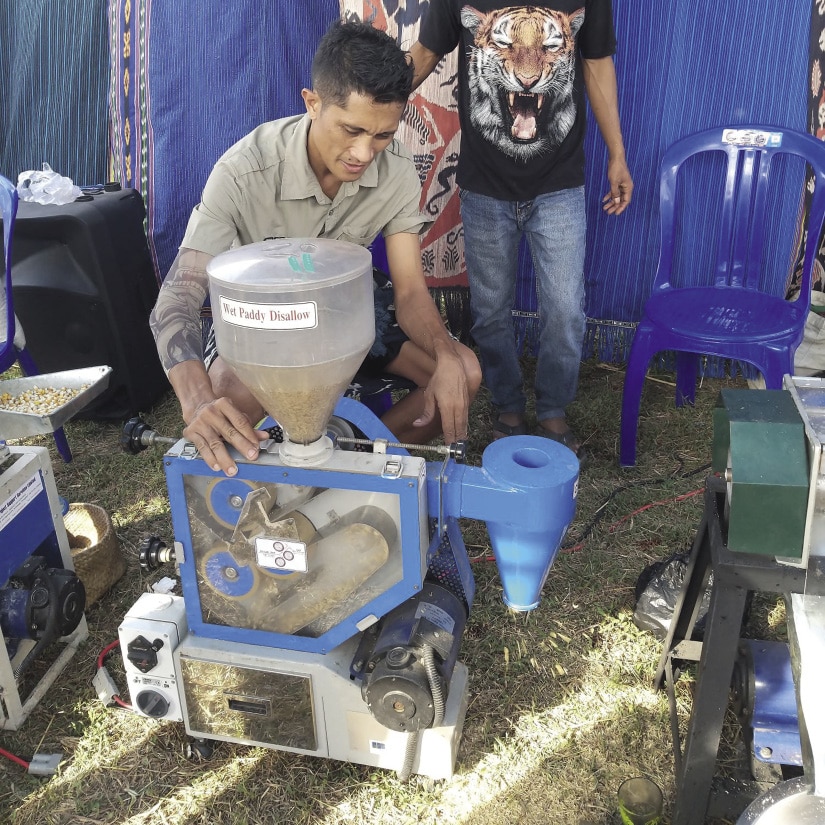
Filling the energy technology, poverty gap
Advanced technology is of little use if it cannot reach those who need it most. Two Indonesian companies – Kopernik, an NGO based in Bali, and Sumba Sustainable Solutions, from the island of Sumba – are trying to bridge the gap between those in need and those with technological solutions. They both focus on the PV electrification of rural areas and brightening Indonesia’s “last mile.”
Feb 11, 2021
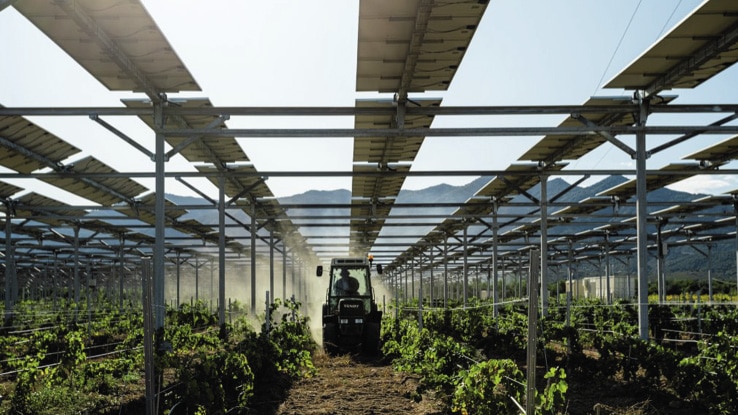
An inclusive, rural European Green Deal through agrisolar
Combinations of sustainable agriculture with solar PV systems have immense potential in the EU, writes Miguel Herrero, policy adviser at SolarPower Europe, and the coordinator of the organization’s agrisolar workstream. According to SolarPower Europe’s most recent policy briefing, if agrisolar is deployed on just 1% of arable land, it could deliver more than 700 GW of technical capacity, amounting to more than 25% of the EU’s current electricity consumption. If the EU taps this potential, it could lead the world in this efficient global solar PV innovation.
Feb 11, 2021
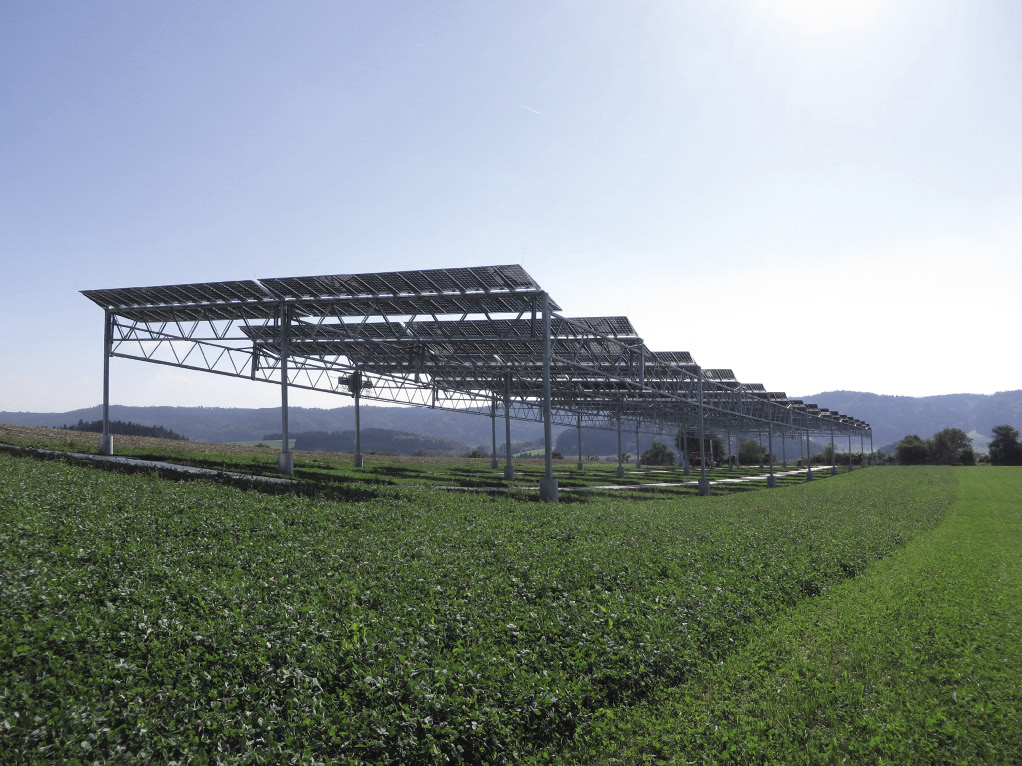
Solar’s flexibility can be agriculture’s gain
Both solar and the farming industry are beginning to see potential in the combined use of land for food production and energy generation. And as innovators begin to experiment with different forms, it’s becoming clear that in most cases it is solar that will have to bend to the needs of agriculture, and not the other way around, to ensure a positive outcome.
Feb 11, 2021
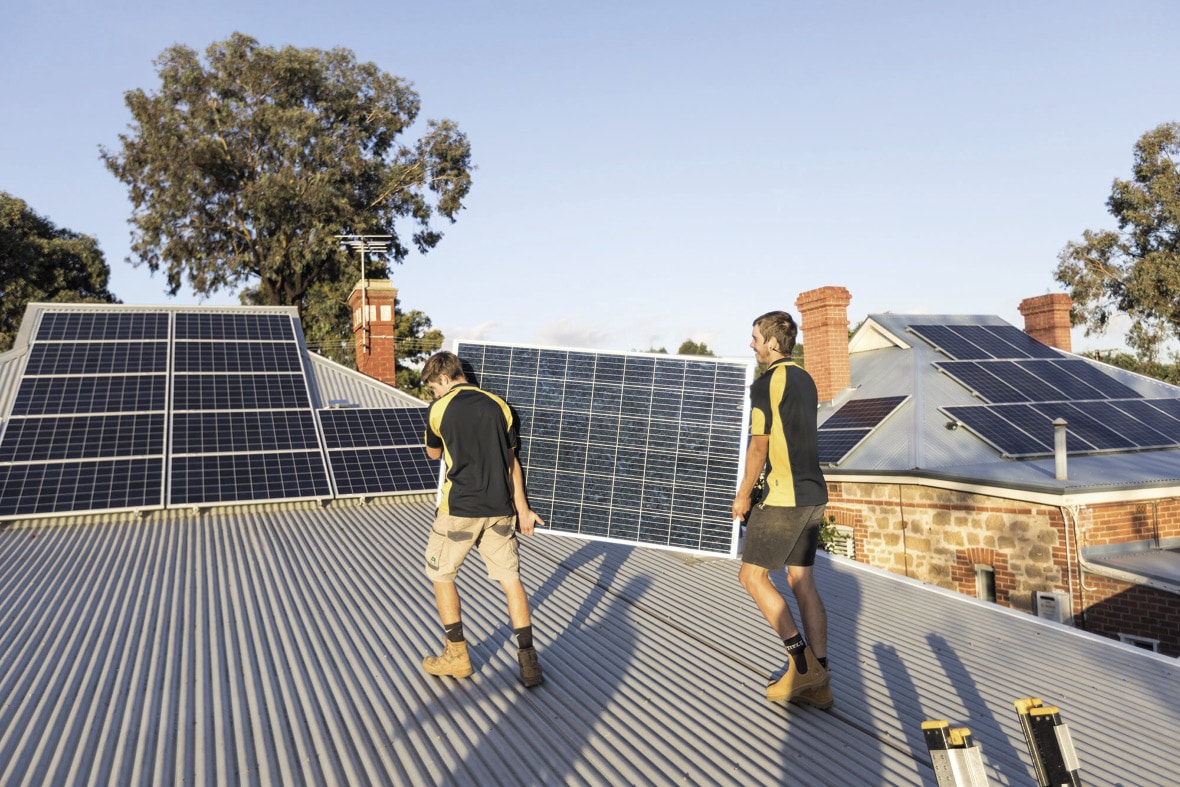
The big PV switch-off
South Australia is leading the nation in terms of renewable energy penetration, with rooftop solar a major contributor. But the state’s hard-won ability to deactivate thousands of rooftop solar systems in response to grid voltage disturbances has caused significant disruptions to solar installers. With a deeper look inside the changes, it appears to be a good thing for solar in the state, as well as other markets in which distributed PV is growing rapidly.
Feb 11, 2021

US storage goes mega-scale
In the midst of a still-surging Covid-19 pandemic, the U.S. energy storage market is booming, driven by utility procurement of increasingly large projects well beyond the 100 MW mark. The industry is clearly focused, and seemingly unified, on the need for wide and rapid deployment. But a key question for the U.S. market is whether policy, regulation, and the supply chain can keep up.
Feb 11, 2021

What Asia needs to turn away from coal
Given the rapid decrease of the solar electricity cost, pv magazine explores the drivers and obstacles behind switching off coal and embracing photovoltaics and other renewable energy technology in Asia. The good news: things are moving in the right direction.
Feb 11, 2021
New partnership to drive EU battery innovation
The Batteries European Partnership Association is now up and running. Partnering with the EU will drive research activities and innovation to support a competitive, sustainable, and circular European battery value chain, writes Michael Lippert, who currently leads product and market strategy for Saft Energy Storage Systems.
Feb 11, 2021

New EU battery rules support a sustainable industry
On Dec. 10, European Internal Market and Environment Commissioners Thierry Breton and Virginijus Sinkevičius, in conjunction with Vice President Maroš Šefčovič, announced a keenly anticipated piece of legislation: the commission’s proposal for modernized EU battery rules. Pia Alina Lange – head of communications for Recharge, the European battery industry association – says that while there are potential pitfalls with the new regulation, it could pave the way to sustainable industry development.
Feb 11, 2021
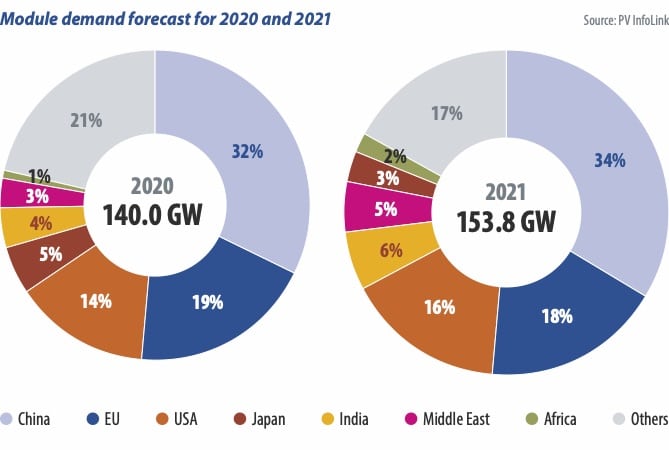
Global PV installations to surpass 150 GW in 2021
Despite pandemic-induced impacts, the PV market was bigger than expected last year. In particular, an installation rush in Vietnam and China took place in December and pushed global demand upward. PV InfoLink estimates that global module demand in 2020 reached 140 GW. Analyst Mars Chang delves into the numbers.
Feb 11, 2021
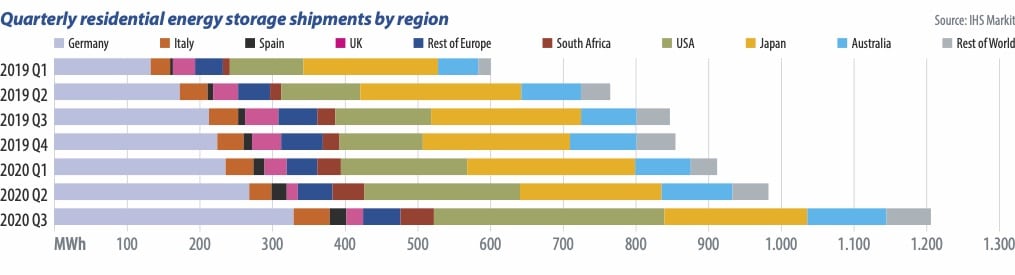
Growth continues despite Covid-19 headwinds
The global residential energy storage market continued to grow in 2020, writes IHS Markit Analyst Michael Longson. Many suppliers were looking to build upon a strong first quarter when Covid-19 hit in March 2020 and slowed the market significantly. However, as a result of several funding packages being introduced and the gradual easing of local restrictions, shipments continued to grow throughout the second and third quarters, enabling strong year-on-year growth for the sector in 2020.
Feb 11, 2021
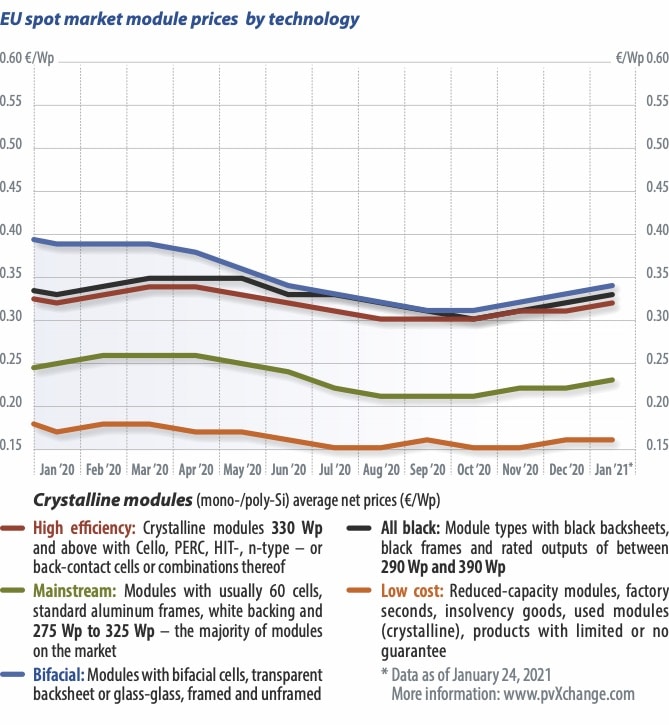
A wrench in the works
Looking back at the past year, the renewables sector has seen two extremes. In Germany, disparities were triggered in part by the recently passed amendment to the Renewable Energy Sources Act (EEG). For solar PV in particular, the pendulum will swing in favor of installers of small systems in the near term, writes Martin Schachinger of pvXchange. For installations up to 30 kWp, the new law has cleared market barriers.
Feb 11, 2021
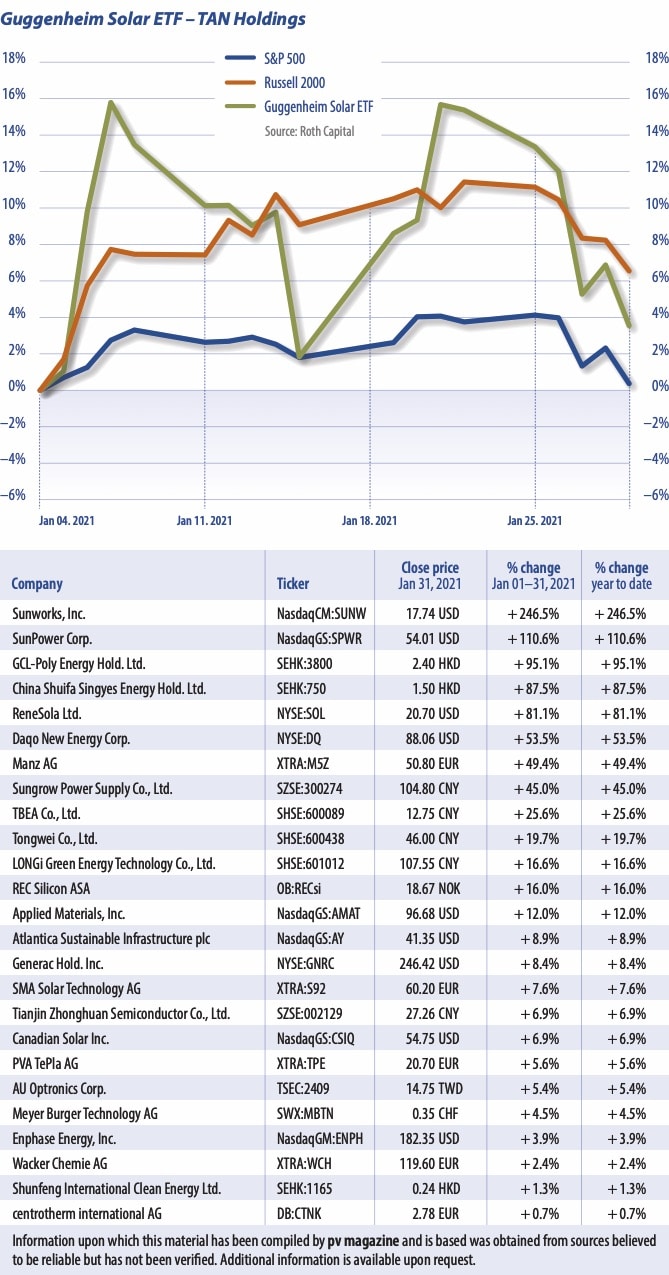
Strong beginnings
Solar stocks enjoyed a good start in 2021, writes Jesse Pichel of ROTH Capital Partners. In the United States, the Biden administration’s focus on climate change and the expectation of further incentives for renewables saw solar stocks rally in January. The global forecast is also positive, with China and others set for big installation numbers.
Feb 11, 2021

Solar surges, storage up next
The forecasting of global PV installations is best done at a safe distance. The ability of PV to be installed quickly, and the spikes in installations before a certain subsidy program winds up, or when project completion is required under a tender, often results in a surge of deployment – sometimes far beyond the expectations of even the most courageous analyst.
Feb 11, 2021

