Gaining Traction – 02-2022

Already a subscriber?
Login
Excerpt from the magazine

To be ‘the battery’
Another year has passed, with 2021 seeing significant growth for residential storage globally, up 30%. Germany and Japan are the world’s leading markets, followed by the rest of Europe, the US, and Australia. Factors driving residential storage around the world include high power prices and power outage backup.
Feb 11, 2022

On a mission
Europe is on a mission to establish itself as a key manufacturing base for batteries. Over the past six years, ambitious plans have been announced to achieve this goal, with the latest predictions suggesting that 35 gigafactories will be operational by 2035. Becky Beetz maps the progress.
Feb 11, 2022

Sustainable debt has shown its potential in 2021
Last year marked another milestone for sustainable debt, with more than $1.6 trillion issued. This brings the total market to over $4 trillion. Sustainable debt can directly finance green and social projects, as is the case for green and social bonds and loans. It can also push organizations to move their sustainability agendas forward by giving them preferential financing conditions if they meet certain sustainability metrics, as is the case for sustainability-linked bonds and loans. Maia Godemer, research associate at BloombergNEF, reports on the latest developments.
Feb 11, 2022

The changing geopolitics of green hydrogen
With 90% of world economies committed to net zero targets, the disruptive nature of the energy transition is becoming clear. Climate targets require us to triple renewable energy capacity by 2030, phase out coal by 2040, end fossil fuel subsidies, and ensure support for a just transition. While hydrogen is sure to be a key technology in this energy transition, the exact role it will play is not yet clear, reports Felicia Jackson.
Feb 11, 2022
Subscribe now for instant access to this issue and every published issue since 2016.
Subscribe

Silicon carbide’s second coming
Silicon carbide (SiC) has promised inverter makers higher power density, higher efficiency, and a total bill of materials that comes in closer to its more established rival in silicon. Has SiC finally arrived? Tristan Rayner spoke to the people at the forefront of the wider-bandgap material to find out the back story and what’s next.
Feb 11, 2022

Vehicle integrated, in production
Producing solar products for integration into a range of electric vehicles will be a fundamentally new development and production process, says Robert Händel, the CEO and founder of Opes Solutions. The offgrid and solar mobility producer has developed its first two vehicle-integrated photovoltaic (VIPV) modules and is preparing for the market opportunity ahead.
Feb 11, 2022

Staying charged
The integration of solar cells into passenger vehicles appears to be progressing in lockstep with the increasing penetration of electric vehicles, which itself looks to have hit an inflection point. But how does one know whether a solar roof is still in good working order in the testing environment of the open road? German flasher provider Wavelabs is looking closely at the issue, and CEO Torsten Brammer provides some insights into the challenge.
Feb 11, 2022

Rolling solar
The new year opened with the announcement from a prestige brand about an electric vehicle (EV) designed to extend the horizon of zero-emissions transportation – and solar was a part of the vision. Mercedes-Benz announced the launch of its Vision EQXX EV, with the headline figure that it can travel 1,000 km on a single charge of its 100kWh battery.
Feb 11, 2022

Charging with solar at home
Using the electrons generated on your roof to power your car may be an idea that appeals to many homeowners. However, it is not yet a given among EV chargers available in Germany. And it may not make financial sense, according to the market overview carried out by pv magazine Deutschland.
Feb 11, 2022

Overview of home charging stations in Germany
It is not a leader, but Germany is moving quickly on the adoption of electric vehicles. And with a relatively high uptake of rooftop solar, homeowners are keen to ensure they’re “driving on sunshine” as often as possible. A market survey of EV chargers in Germany provides key insights into what is available today and what is in store as EV uptake continues to accelerate. Michael Fuhs, pv magazine’s head of editorial, reports.
Feb 11, 2022

Standards to unlock V2G
Mass adoption of electric vehicles presents opportunities for significant battery deployment to support our grid and power our homes. Developing and adopting standards for vehicle-to-grid bidirectional technology is needed to accelerate the path to these opportunities, reports pv magazine USA’s Tim Sylvia.
Feb 11, 2022

Highway to the inflection point
Electric vehicles, both fully electric and plug-in hybrid EVs, look set to become dominant in new car sales within years in many parts of the world, but overall changes to car fleets face significant inertia. What impact will this have on the future grid, and where’s the opportunity for solar? Tristan Rayner gets behind the wheel.
Feb 11, 2022

Power to be heard
The wide-open spaces of the Australian outback make it ripe for solar development, but doing so without the true inclusion of Indigenous communities may repeat the mistakes made by resource extraction companies in the past. However, Indigenous-led companies and an innovative new initiative are looking to put power and ownership into the hands of the land’s traditional owners, reports pv magazine Australia’s Bella Peacock.
Feb 11, 2022

Buyer power in a tight PV module market
Material shortages, trade restrictions, and shipping bottlenecks create challenges for PV module buyers, but the good news is that there are steps to take to ensure quality supply in a timely fashion. PVEL CEO Jenya Meydbray takes us through best practice for module buyers in the current market climate.
Feb 11, 2022

The coast is clear
There are literal oceans of space for floating PV (FPV), beyond the first applications on lakes, reservoirs and hydro-electric dams. For countries where land is at a premium, such as the Netherlands, Singapore and Japan, offshore FPV is of particular interest. Of course, unlike a reservoir, the sea is rarely still. Thankfully FPV’s growth has also brought technological innovation and maturity with it, meaning the coast could now be clear for solar to head offshore.
Feb 11, 2022

After the FITs
Japan’s PV sector remains the third largest in the world in terms of installed capacity, at some 78.5GW, making it one of the leading global PV marketplaces in the last decade. But as the world races to install more solar, it is one of the few markets in recent years that has charted a decline in new installs. An approach involving numerous government agencies is looking to restart the market, and not purely based on feed-in-tariffs (FITs), says Izumi Kaizuka, the director and principal analyst at RTS Corp.
Feb 11, 2022
Solar support in coal country
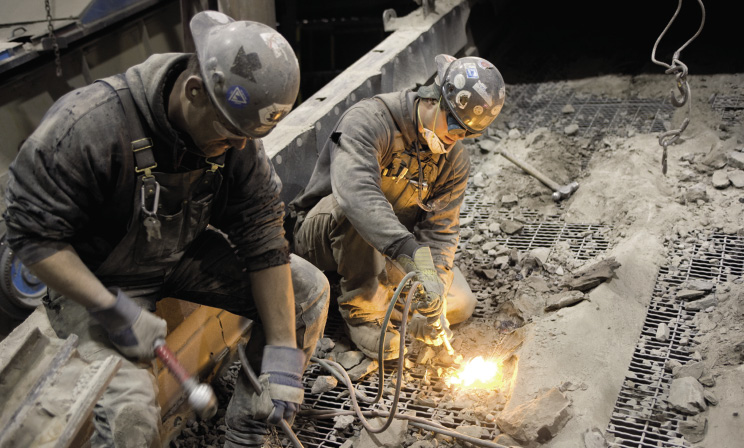
In the United States, passage of the Build Back Better Act would extend the solar Investment Tax Credit and offer other clean energy initiatives that would boost the renewable energy momentum already underway in Senator Joe Manchin’s home state of West Virginia. This is good news for the state and is resulting in unlikely allies, reports pv magazine USA senior editor Anne Fischer.
Feb 11, 2022

Build back later
After multiple rounds of slashing the total cost of the Build Back Better bill, US senators remain locked in negotiations. Democratic Senator Joe Manchin (West Virginia) voted against an earlier proposal, shocking many, and has now said he will reopen negotiations “starting from scratch.” pv magazine USA’s Ryan Kennedy reports.
Feb 11, 2022

Celebrating solar in MENA
More than 200 guests celebrated the Middle East Solar Association’s (MESIA) 10th Annual Awards during Abu Dhabi Sustainability Week. The event recognized an industry that is not only transforming the regional market, but thriving in spite of the pandemic and supply chain challenges. pv magazine’s Felicia Jackson reports from Abu Dhabi, which was shown live online on the Middle East Solar Energy Digital Channels and Solarabic.
Feb 11, 2022
Keeping up with growing demand
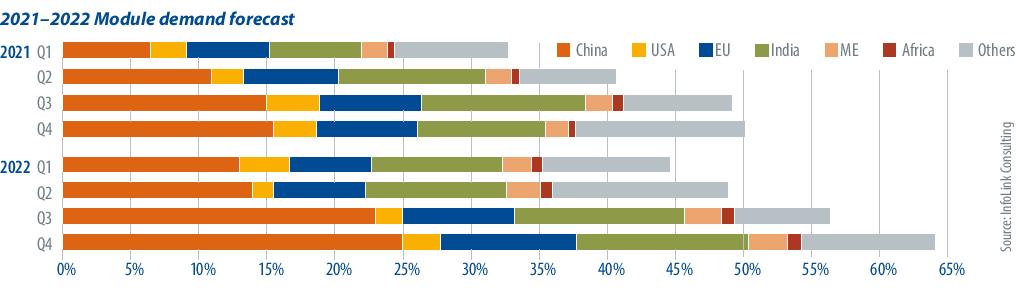
Despite a few recent bumps in the road, the outlook is bright for the solar industry in 2022 and beyond. A growing list of countries are making commitments to net-zero carbon emissions, and solar energy is central to many of their strategies for reaching this goal. InfoLink analyst Amy Fang sheds light on the growing demand for PV around the world, and the latest price trends and technology developments that will shape the market in 2022.
Feb 11, 2022
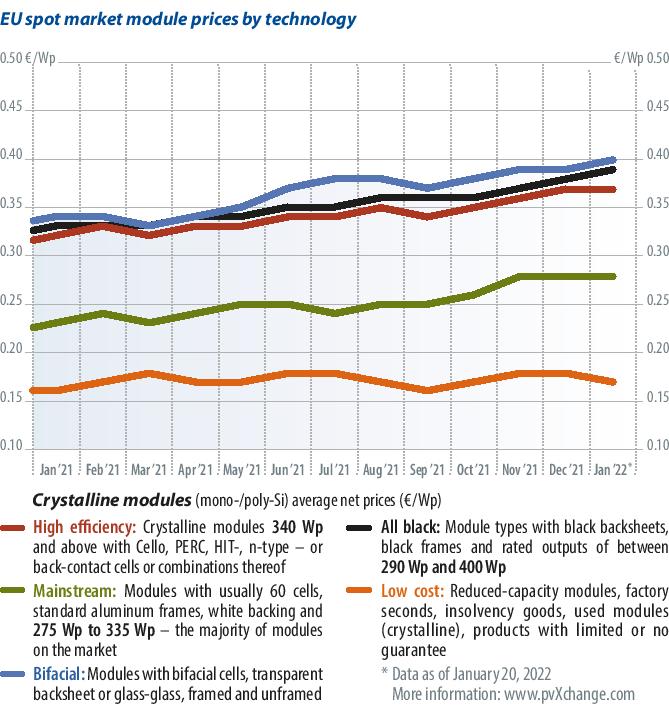
Scarcity is the new norm
Scarce goods, delays, organizing, improvising – our fellow citizens from the former eastern bloc know these terms all too well. The centrally planned socialist economies were characterized by shortages of almost everything. Not until the fall of the Berlin Wall at the end of the 1980s did citizens of the bloc get a new perspective. Suddenly, everything was supposed to be available in abundance. As a result, the values of thrift, stockpiling and repairing, instead of buying new things, were increasingly abandoned. With PV modules in short supply, these values may need to make a comeback, writes Martin Schachinger of pvXchange.
Feb 11, 2022

Between a rock and a hard place
In the month of January, the Invesco Solar ETF, an ETF that tracks the MAC Global Solar Energy Index, underperformed relative to the S&P 500 and Dow Jones Industrial. Delays to the Build Back Better Act in the United States, coupled with ongoing concerns around availability and the PV supply chain, led to a significant pull-back, writes Jesse Pichel of ROTH Capital Partners.
Feb 11, 2022

New frontiers
There was a time when the solar industry would pile into a new or fast-growing market – generally on the back of an attractive feed-in tariff scheme. And while those days are not entirely in the past, global efforts to decarbonize not only electricity supply but a broader range of economic sectors are opening up new opportunities for PV.
Feb 11, 2022