Balancing CAPEX and OPEX in Distributed PV: The Rise of Lightweight Monitoring Technology on module level
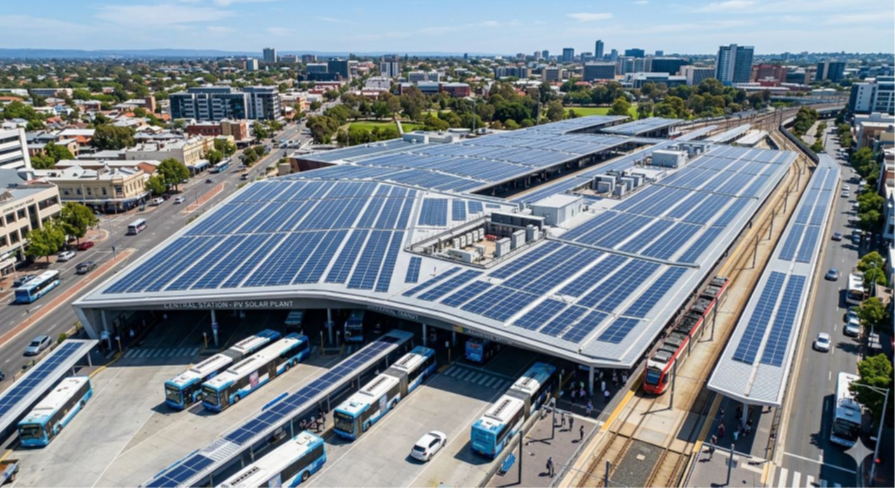
Over the past few years, global distributed PV—particularly residential and C&I (commercial and industrial) rooftop installations—has experienced explosive growth. However, as a vast number of these assets enter the early-to-mid stages of their 25-year lifecycles, the market is grappling with an unspoken industry pain point: the initial capital expenditure (CAPEX) commitments we made are being gradually eroded by high long-term operations and maintenance (O&M) labor costs (OPEX), while traditional solutions aimed at addressing this issue bring their own new costs.
In the management of rooftop PV assets, how can we find the “golden balance” between initial costs, system stability, and long-term O&M efficiency? A quiet revolution driven by “lightweight IoT monitoring technology” is now underway.
I. The “Dilemma” of Distributed Rooftop PV: Over-engineering vs. Blind Troubleshooting
In C&I and residential rooftop projects, complex environments often lead to issues that impact power generation, such as shading, bird droppings and dust accumulation, localized hot spots, and diode failures. To enhance system traceability, the market has been conditioned over the past decade to embrace the concept of Module-Level Power Electronics (MLPE).
However, traditional MLPE solutions (such as full-scale power optimizer or micro-inverter deployments) are increasingly raising concerns among EPC contractors and asset operators:
- Significant Surge in CAPEX: In markets that are highly price-sensitive and lack mandates for rapid shutdown functionality, the hardware investment required for full-scale optimizers or micro-inverters causes project budgets to balloon, thereby extending the payback period for system owners.
- Potential Risk of “Thermal Failure”: Optimizers and micro-inverters incorporate highly complex semiconductor topologies. In the high-temperature environment of a rooftop, the high-frequency switching of these electronic components generates significant heat. Affixing a continuously generating “heat source” to the back of a solar panel for an extended period not only poses a potential threat to the module’s lifespan but also causes the hardware’s own failure rate to rise exponentially over time.
- The extreme opposite of the OPEX: opting for a completely non-smart setup (a purely traditional string inverter solution) plunges the project into a “blind O&M” black hole for the next 20 years. When output drops at a multi-megawatt rooftop installation—and given the high cost of labor overseas—dispatching technicians with specialized equipment to manually inspect thousands of panels one by one could result in a single “call-out fee” wiping out months of power generation revenue.
Distributed PV urgently requires a new approach based on “Anti-Over engineering.”
II. Finding the Golden Balance: What is “Lightweight Monitoring”?
To break the aforementioned dilemma, “lightweight monitoring technology” emerged. Its core philosophy is subtraction: stripping away redundant, heat-generating, and costly functions while retaining only the essential digital touchpoints for asset management.
This technology is integrated directly into the solar panel’s junction box. It does not participate in high-frequency power conversion (no power optimization) nor handle high-voltage disconnection (no mandatory rapid shutdown); consequently, its internal circuitry is extremely streamlined and generates almost no additional heat. By eliminating complex topologies, costs are slashed to a fraction—or even less—of traditional MLPE solutions.
Yet, it makes no compromises regarding digital O&M capabilities: it accurately captures and uploads fundamental electrical parameters—voltage (V) and current (I)—for every individual panel in real-time.
III. One-Fifth of the Cost, 80% of the Digital Value
For owners of medium-to-large commercial and industrial (C&I) rooftops as well as discerning residential systems, the voltage and current data obtained via lightweight monitoring are sufficient to generate a highly valuable digital asset profile:
- Pinpointing “invisible faults” in seconds: If a panel is heavily covered in bird droppings or suffers internal bypass diode failure, the cloud monitoring system uses the resulting anomalous voltage and current data to pinpoint the exact location—down to the specific row, column, and module—on a mobile app or O&M dashboard.
- Drastic reduction in OPEX: Maintenance teams no longer need to troubleshoot blindly. They can head to the roof armed with diagnostic results and precise coordinates, enabling “first-time-right” repairs and cleaning. In markets like Europe or Australia, this can cut on-site labor hours for after-sales teams by over 70%.
- An ideal ROI curve: With minimal initial CAPEX—combined with a heat-free design and a 25-year lifespan that perfectly matches the solar modules—this lightweight solution drives the project’s overall Internal Rate of Return (IRR) to levels difficult for traditional, complex systems to match.
IV. Practices of an Industry Pioneer: QC Solar’s “Minimalist Intelligence”
Amidst the technological wave reshaping distributed solar ROI, QC Solar (Stock Code: 301278)—a global leader in PV connection and encapsulation technology—has positioned itself at the forefront of the industry.
Addressing the global commercial and industrial (C&I) rooftop market’s dual demand for “exceptional cost-performance” and “digital O&M,” QC Solar has launched a new generation of lightweight, intelligent monitoring module connection solutions. This solution embodies the company’s decades of core expertise in precision semiconductor packaging/testing and high-current connectivity:
QC Solar ingeniously encapsulates a miniature, low-power IoT chip directly within the junction box, linking it to a ground-based gateway via a proprietary lightweight communication network. “We found that the market is often ‘over-engineered’,” noted QC Solar’s technical lead. “For the vast majority of rooftop projects not subject to mandatory rapid shutdown regulations, owners simply need to know which panel is underperforming; they don’t need to assign an expensive ‘private doctor’ to every single panel. Our smart module solution monitors only key voltage and current parameters while generating virtually zero internal heat rise. This ensures safety throughout the module’s lifecycle, while the price point makes it an irresistible choice for any C&I owner focused on maximizing IRR.”
The system currently features a comprehensive, international-ready lightweight cloud monitoring platform (Cloud App & Dashboard). Whether for a single residential rooftop or the multi-megawatt roof of a multinational corporation’s logistics warehouse, overseas installers and EPCs can adopt this “smart-monitoring-ready” system with minimal barriers to entry. It offers a plug-and-play experience that translates directly into a premium, differentiated sales proposition for end-customers.
V. Conclusion: The Next Rational Decade for Distributed PV
As the global photovoltaic sector shifts from a phase of “extensive land-grabbing” to one of “refined operational management of existing assets,” the scrutiny of costs and efficiency has become more rational than ever before.
While complex, all-encompassing systems certainly have their niche markets, the vast “long-tail” market of global commercial, industrial, and residential rooftops calls for a different approach. “Lightweight monitoring technology”—championed by companies like QC Solar—delivers low heat generation, low CAPEX, and high returns on O&M. By leveraging pure digital electrical parameters, this technology charts a healthier, more resilient asset appreciation trajectory for global PV investors. This may well be the essential path forward as distributed PV enters its next rational decade.