JinkoSolar, Marubeni sign 25-year PPA for 1.177 GW Sweihan project at $0.0242/kWh

In what is a landmark development, China’s JinkoSolar and Japan’s Marubeni will join forces to develop one the world’s largest PV power plant in Abu Dhabi. The Sweihan project will not only be vast in size, but will also sell power under a 25-year PPA at a record-setting low price.
JinkoSolar has confirmed with pv magazine the PPA price is of $0.0242/kWh.
The Sweihan project will supply electricity to a fast-growing region within Abu Dhabi, and heralds solar’s arrival as a highly competitive power source in the Middle East.
Construction on the truly vast 1.177 GW power plant will begin in April, with completion and full commercial operation set for early 2019.
“Not only will the project, once constructed, be the world’s largest single utility scale solar PV plant, but the price of net electrical energy that we have agreed to today is one of the most competitive prices seen to date in the solar PV industry,” said Abdullah Ali Musleh Al Ahbabi, Chairman of ADWEA.
Officially the PPA has been signed with ADWEC, a wholly owned subsidiary of ADWEA.
“We are excited to be a part of the significant milestone project to co-develop with ADWEC and Marubeni,” said Jinko Chairman Xiande Li. “We are proud of making a significant contribution to the development of the solar industry in the Emirate of Abu Dhabi.”
The Sweihan project was awarded through a competitive bidding process managed by ADWEA. Given its vast size, bidding parties were encouraged to form consortia.
In September 2016, pv magazine reported that JinkoSolar and Marubeni putting in the most price competitive bid of just $0.0242 per kWh. At that time, there were some media reports that the lowest bid, of the six shortlisted consortia, came in at $0.023/kWh.
In the initial stages of its development, the Sweihan project was slated for a capacity of 350 MW. Presumably, as a result of the low bids, ADWEA chose to expand its final capacity to the more than 1.1 GW (AC) announced today.

Please login to comment

It’s Great project . Its big project in solar world .

interesting stats

[…] record of 2.91 U.S. cents set in Chile just a month earlier. In March 2017 Marubeni and JinkoSolar signed a 25-year PPA for a 1.18GW solar […]
[…] record of 2.91 U.S. cents set in Chile just a month earlier. In March 2017 Marubeni and JinkoSolar signed a 25-year PPA for a 1.18GW solar […]
[…] record of 2.91 U.S. cents set in Chile just a month earlier. In March 2017 Marubeni and JinkoSolar signed a 25-year PPA for a 1.18GW solar […]

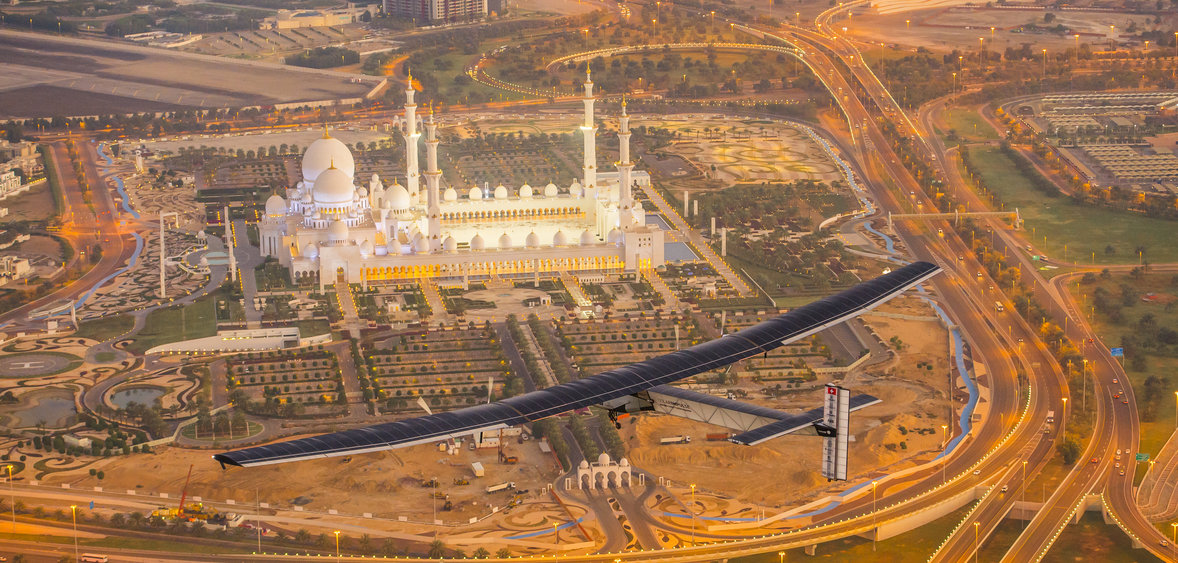
Great picture to show the scale and extent, However we still need game changing innovation to reduce the cost of solar by increasing efficiency and reducing cost of building utility scale plants without subsidy but purely replacing based on economic viability considering lifecycle costing of both Coal & Solar to become energy cost neutral to the customer without any Govt subsidy.
[…] Jinko signs 1.17GW solar panel deal – With Jinko pitching up to 9GW for their 2017 numbers, deals like this are going to once or twice a year. My guess is that the panels are priced on a sliding scale based upon future market pricing, with some volume being booked immediately at today’s pricing. Any accountants know how a deal like this would be booked? As product is delivered to a customer? […]