China set for 40 GW of pumped hydro storage next year

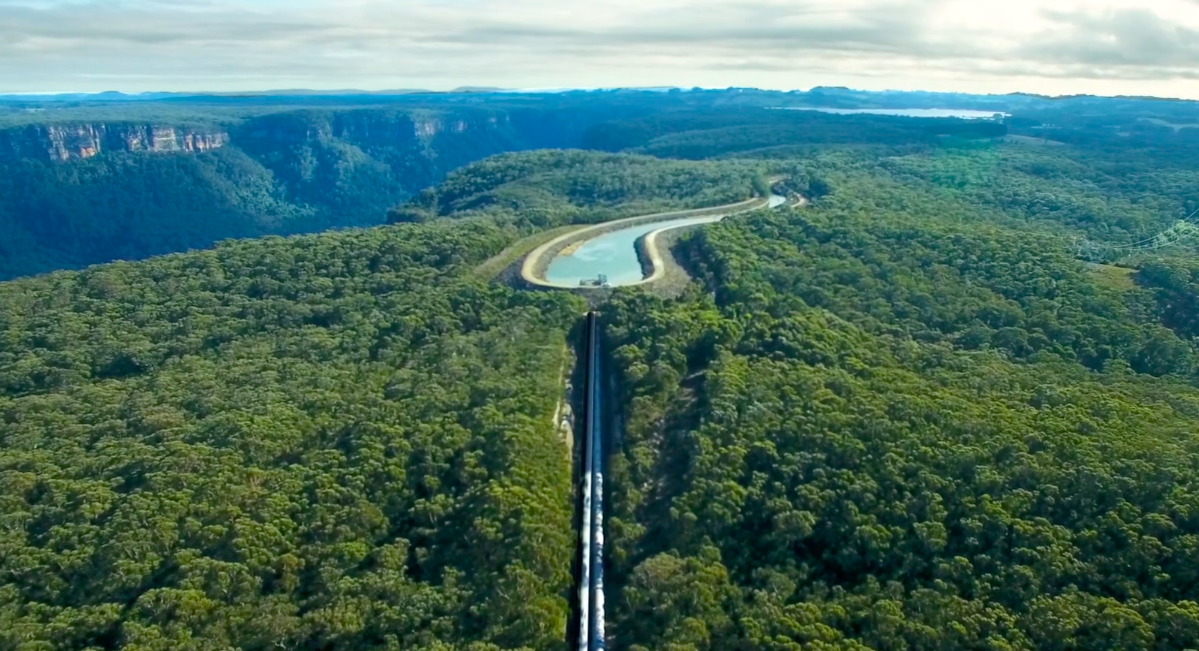
The 3.6 GW energy storage project being built by China in Fengning county will help the nation to 40 GW of pumped hydro capacity next year, as stipulated in the government’s 13th five-year plan.
The National Energy Administration says there is already 19.23 GW of pumped hydro storage capacity in China with a further 31.15 GW under construction, including the $2.78 billion Fengning project in Hebei province which is set to be the world’s largest.
Chinese state media sources including the Xinhua News agency, state broadcaster CCTV and newspaper The People’s Daily have reported Fengning will take just five minutes to switch from full pumping operation – where excess renewable energy present in the grid is used to drive water uphill between two large reservoirs – to full energy generation as the water rushes back downhill, thus acting as a huge battery for an eventual 3.6 GW of solar-and-wind-to-hydro power.
Winter Olympics
The project is not expected to be fully operational until 2023 but a $1.54 billion, 1.8 GW first stage will enable it to provide peak shaving services to the grid and emergency back-up power during the Winter Olympics to be staged in Beijing and Zhangjiakou in 2022. The second stage of the project will add the remaining 1.8 GW of storage capacity at an estimated $1.24 billion cost.
China’s National Development and Reform Commission approved the start of works in 2013 with the project featuring 12 reversible hydroelectric power generators.
The project is being developed by the State Grid Corporation of China with fellow state-owned entity China Gezhouba Group Corp providing engineering, procurement and construction services.
With a huge volume of solar and wind projects having been developed in the north of China, the state is investing heavily in pumped storage as well as in ultra-high-voltage transmission lines to transmit power to the eastern coastal cities.
This content is protected by copyright and may not be reused. If you want to cooperate with us and would like to reuse some of our content, please contact: [email protected].

Please login to comment

[…] countries such as Portugal and China have been pushing ahead with new pumped storage plants as governments and energy companies believe […]

Is there anyone could guide me or name of website, “how to calculate cost comparison between “Hydro Storage vs Solar Batteries (or) other type of energy storages”
Greately appreciate anyone help,

For comparison, the USA is at about 23 GW and Japan at 26 GW – I don’t know the Gwh. Some new projects are going ahead, but nothing like the pace in China. The Blakers global atlas of potential sites is up to 616,000 GW.
The photo of an Australian plant at Shoalhaven shows penstocks on the surface; rather ugly. In some PUHS cases the site imposes tunnelling, out of sight but much more expensive. An affordable half-measure would be cut-and-cover near the surface. There would be additional costs if it were necessary to access the penstocks for repairs, but on the other hand burial reduces the risks of accidental damage from falling trees etc.

Is that GWh of storage?

No. The figures in the article mostly refer to the power storage ability and should be measured in Watt. For example, the Fengning plant is of 3.6 GW means the maximum storage ability of this facility is 3.6 GW by pumping water from lower reservior to upper one.
[…] part of a pipeline of projects, will further the country’s capabilities, helping China reach as much as 40 GW of installed capacity in the coming […]