The weekend read: Solar needs aluminum, but it has a carbon problem
From pv magazine 11/2020
The energy transition, the World Bank says, will require more aluminum than any other metal. In order to keep temperatures below a two-degree increase, clean energy technologies will need almost six million tons of the metal each year by 2050. By comparison, the combined total of lithium, cobalt and nickel, the mineral poster children of the energy transition for their use in batteries, is not expected to pass four million tons. These estimates rely heavily on myriad assumptions, but they underline the importance that metals have along the path to zero-emission energy.
Almost all this aluminum for clean energy will be used in solar module frames. Its resistance to corrosion and light weight make it an optimal choice for exposure to the elements and ensuring modules structural stability.
Aluminum’s energy challenge
Aluminum may be needed for the climate, but the industry’s main environmental challenge is its own climate impact, according to engineering professor Guðrún Sævarsdóttir at the University of Reykjavik. Production is reaching ever higher volumes, but so are the industry’s carbon emissions.
“There has been a large increase in the production volume of aluminum [over the past two decades], it has more than doubled since the year 2000,” says Sævarsdóttir. “And a lot of that development has been based on coal power, unfortunately.”
New Chinese aluminum smelters have driven the spike in production, and they now produce more than half the world’s new aluminum. While the country relies on coal for 70% of its power, the power mix of aluminum smelters is more than 90% coal, according to Sævarsdóttir’s research.
Mining, refining and smelting new aluminum produces nearly 2% of the world’s total carbon emissions. Every ton of aluminum produces on average roughly 15 tons of CO2 equivalents. That’s almost four tons higher than 20 years ago. By some measures the jump in aluminum production may mean 400 million more tons of CO2 equivalents each year by 2040.
A number of aluminum companies are developing new smelting processes and building new types of plants to reduce the industry’s footprint on the planet, but scientists have said more development is needed to align its GHG emissions with its renewable energy product.
“We’re at a critical juncture at the moment,” says Cameron Jones, director of assurance with the Aluminum Stewardship Initiative. The ASI, a nonprofit industry certification group, is conducting “healthy and rigorous” discussions to update its standard that encourages companies to target 8 tons of C02 equivalents by 2030. It plans to create a more “inclusive and challenging” target, but there are technological and policy barriers to overcome.
The process problem
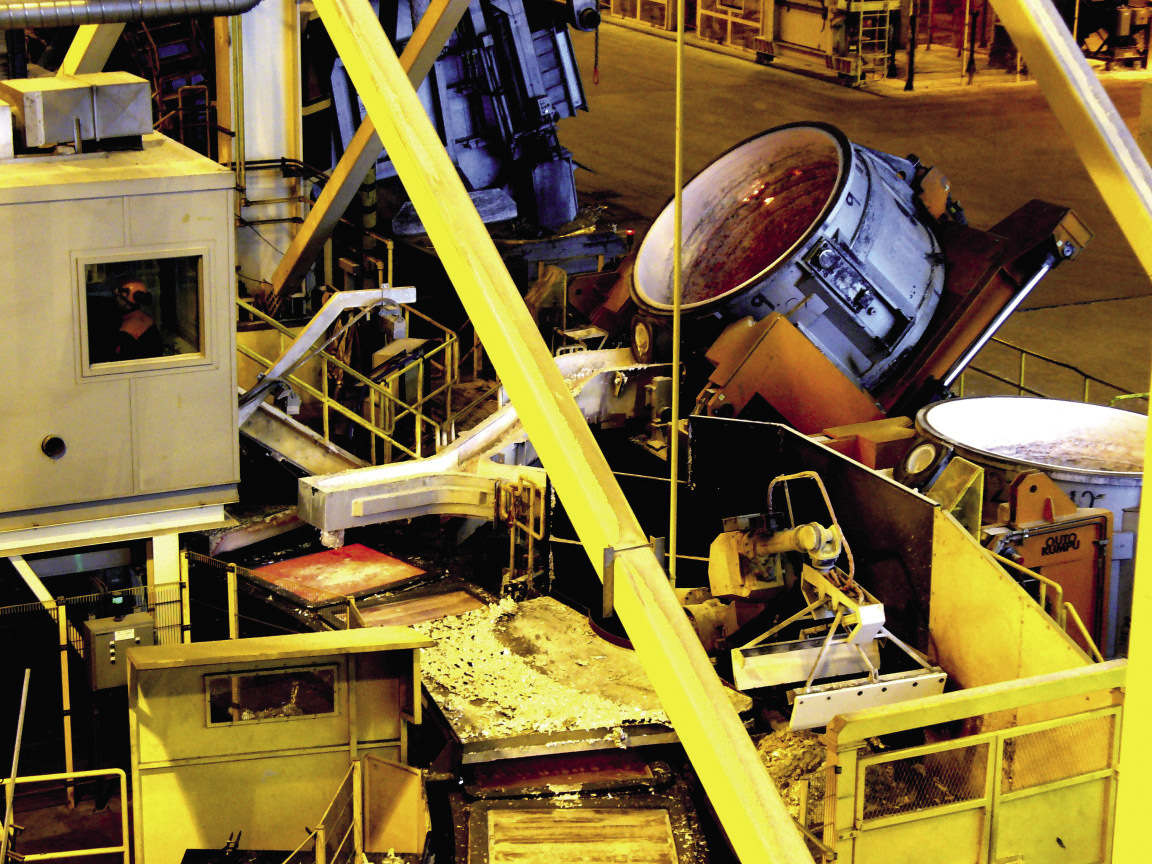
New aluminum typically begins as bauxite ore, which is sent to refineries that extract alumina, or aluminum oxide. Separating aluminum from alumina requires temperatures approaching 1000ºC, and the sending of a powerful electric current through the molten mineral.
The process is not only energy intensive, but the mineral’s oxygen combines with carbon anodes to emit CO2. The direct carbon emissions make up roughly 10% of the process’s total emissions, and electricity consumption contributes 71%, according to Sævarsdóttir’s work.
“We’re not going to get rid of these emissions unless something is done about the process,” says Sævarsdóttir.
Recycling dramatically reduces the energy required to feed the metal into circulation, and aluminum is in theory infinitely recyclable. The Aluminum Association, an industry representative body, estimates that 75% of all aluminum ever produced is still in circulation. Mining companies are inching toward investing in recycling plants, such as Rio Tinto’s Canadian plant announced in September.
In the World Bank’s two-degree scenario, the proportion of recycled aluminum will grow, but it will still only cover 61% of demand. The ASI expects to release proposed standards to address climate impacts in the next several months for consultation, but establishing a path for carbon reduction may take much longer.
“It’s such a complex, diverse supply chain that we can’t do a one-size-fits-all,” says Jones. “It’s very difficult to come up with a single pathway or methodology that’s going to work across the whole sector. So, this is the real issue at the moment.”
Search for solutions
Firms in aluminum production have chosen several routes to reduce their carbon footprint. Aluminum smelters that use renewable energy have mostly connected to hydro power, such as in Norway and Iceland, but hydro capacity is limited and depends heavily on geography. The proportion of smelters that use hydropower has decreased from 46% in 2000 to 26% in 2018, while coal now powers 61% of aluminum production.
Smelting often requires an order of magnitude more energy than other steps. To ensure they are supplied by renewable energy, some smelters in China are discussing whether to transport entire operations to areas where the grid relies on renewables, Jones says, but none have moved yet.
Smelters are designed for constant power, but German firm Trimet has transformed some of its furnaces in an aluminum smelter to adapt to variable power. While smelters need to keep materials in a molten state, engineers add flexibility that allows the smelter to work with 25% less or 25% more power than typically used. When there is excess electricity available on local grids, sometimes a result of surplus solar and wind generation, process controls ensure that electrolysis chambers only freeze on the edges, allowing smelting to continue, albeit at lower capacity. In a sense, such a smelter acts as a form of battery on the grid.
“It can really be a significant contribution to stabilizing the grid, so we should not ignore that opportunity,” says Sævarsdóttir.
Reducing emissions
In the last few years, two ventures have claimed to replace a smelter’s direct carbon emissions with oxygen. Arctus Metals in Iceland has begun trialingsmelting processes which use inert anodes that will not react with the oxygen in alumina to produce carbon dioxide. Sævarsdóttir, who is involved in the project, is also researching the possibility of using carbon capture for direct emissions.
Rio Tinto and Alcoa have partnered to create a carbon-free smelting process – via joint venture subsidiary Elysis – founded in 2018. Consumer product companies like Apple have made deals to buy from Elysis to reduce its carbon footprint. The company, based in Canada, declined to comment for this piece and has spoken to few reporters since its launch.
Alumina refiners are accustomed to frequent technical problems and interruptions in supply, which may make them more adaptable to dependence on intermittent solar or wind energy, says Jones. Alcoa announced in September a brand of alumina produced with half the carbon emissions as the industry average.
In Australia’s Northern Territory, indigenous-owned bauxite miner Gulkula relies on a combination of solar PV and battery storage for its operations. A Rio Tinto mine in Queensland relies partially on solar power, a move that is a part of a larger resource-industry trend towards the adoption of on-site PV.
“The industry is moving the right way, but there haven’t been any ‘oh wow’ moments at this stage,” says Jones.
This past summer, Sævarsdóttir presented her research on aluminum’s carbon emissions problem to new engineering students. Her goal was to entice new recruits into solving industry’s biggest greenhouse gas problems, like the direct emissions from aluminum smelting. While electricity is responsible for a quarter of the world’s emissions, industry is close behind at 21%, according the IPCC.
“Someone needs to work on the 21%. Everyone wants to work on renewable energy, but someone needs to work on this, otherwise we will not reach carbon neutrality… I think this is the biggest opportunity to help the climate.”
By Ian Morse
This content is protected by copyright and may not be reused. If you want to cooperate with us and would like to reuse some of our content, please contact: [email protected].

Please login to comment

[…] trade-off is the environmental damage associated with mining and refining materials. An example is aluminium, vital for making solar panel frames. Worldwide aluminium production accounts for 2% of all […]
[…] trade-off is the environmental damage associated with mining and refining materials. An example is aluminium, vital for making solar panel frames. Worldwide aluminium production accounts for 2% of all […]
[…] trade-off is the environmental damage associated with mining and refining materials. An example is aluminium, vital for making solar panel frames. Worldwide aluminium production accounts for 2% of all […]
[…] среда щети добив и рафиниране материали. Пример е алуминий, което е жизненоважно за направата на рамки за […]
[…] trade-off is the environmental damage associated with mining and refining materials. An example is aluminum, vital for making solar panel frames. Worldwide aluminum production accounts for 2% of all […]
[…] main trade-off is the environmental injury related to mining and refining supplies. An instance is aluminum, which is very important for making photo voltaic panel frames. Worldwide aluminum manufacturing […]
[…] trade-off is the environmental damage associated with mining and refining materials. An example is aluminium, vital for making solar panel frames. Worldwide aluminum production accounts for 2% of all […]
[…] trade-off is the environmental damage associated with mining and refining materials. An example is aluminum, vital for making solar panel frames. Worldwide aluminum production accounts for 2% of all […]
[…] trade-off is the environmental damage associated with mining and refining materials. An example is aluminum, vital for making solar panel frames. Worldwide aluminum production accounts for 2% of all […]
[…] trade-off is the environmental damage associated with mining and refining materials. An example is aluminum, which is vital for making solar panel frames. Worldwide aluminum production accounts for 2% of all […]
[…] trade-off is the environmental damage associated with mining and refining materials. An example is aluminum, which is vital for making solar panel frames. Worldwide aluminum production accounts for 2% of all […]
[…] trade-off is the environmental damage associated with mining and refining materials. An example is aluminum, vital for making solar panel frames. Worldwide aluminum production accounts for 2% of all […]
[…] business is the environmental damage associated with mining and refining materials. An example is aluminum, essential for making solar panel frames. Worldwide aluminum production accounts for 2% of all […]
[…] environnementaux associés à exploitation minière et raffinage matériaux. Un exemple est aluminium, vital pour la fabrication de cadres de panneaux solaires. La production mondiale d’aluminium […]
[…] trade-off is the environmental damage associated with mining and refining materials. An example is aluminum, vital for making solar panel frames. Worldwide aluminum production accounts for 2% of all […]
[…] trade-off is the environmental damage associated with mining and refining materials. An example is aluminium, vital for making solar panel frames. Worldwide aluminium production accounts for 2% of all […]
[…] trade-off is the environmental damage associated with mining and refining materials. An example is aluminium, vital for making solar panel frames. Worldwide aluminium production accounts for 2% of all […]
[…] trade-off is the environmental damage associated with mining and refining materials. An example is aluminium, vital for making solar panel frames. Worldwide aluminium production accounts for 2% of all […]
[…] trade-off is the environmental damage associated with mining and refining materials. An example is aluminium, vital for making solar panel frames. Worldwide aluminium production accounts for 2% of all […]
[…] trade-off is the environmental damage associated with mining and refining materials. An example is aluminium, vital for making solar panel frames. Worldwide aluminium production accounts for 2% of all […]
[…] is done about the process,” engineer Guðrún Sævarsdóttir of the University of Reykjavik told Ian Morse at PV Magazine in 2020.In the best-case scenario, emissions from aluminum production […]
[…] část procesu získávání elektřiny, emisí se nikdy nezbavíme,“ řekl už předloni pro PV Magazine inženýr Guðrún Sævarsdóttir z univerzity v […]
[…] concerning the procedure,” engineer Guðrún Sævarsdóttir of the College of Reykjavik instructed Ian Morse at PV Mag in […]
[…] con respecto al proceso”, ingeniera Guðrún Sævarsdóttir de la Universidad de Reykjavik. dijo Ian Morse en Revista fotovoltaica en […]
[…] concerning the course of,” engineer Guðrún Sævarsdóttir of the College of Reykjavik informed Ian Morse at PV Journal in […]
[…] in regards to the course of,” engineer Guðrún Sævarsdóttir of the College of Reykjavik told Ian Morse at PV Journal in […]
[…] is done about the process,” said engineer Guðrún Sævarsdóttir of Reykjavik University. Recount Ian Morse at PV Magazine in […]
[…] concerning the course of,” engineer Guðrún Sævarsdóttir of the College of Reykjavik told Ian Morse at PV Journal in […]
[…] concerning the course of,” engineer Guðrún Sævarsdóttir of the College of Reykjavik advised Ian Morse at PV Journal in […]
[…] the process,” engineer Guðrún Sævarsdóttir of the University of Reykjavik told Ian Morse at PV Magazine in […]
[…] is done about the process,” engineer Guðrún Sævarsdóttir of the University of Reykjavik told Ian Morse at PV Magazine in […]
[…] is done about the process,” engineer Guðrún Sævarsdóttir of the University of Reykjavik told Ian Morse at PV Magazine in […]
[…] is done about the process,” engineer Guðrún Sævarsdóttir of the University of Reykjavik told Ian Morse at PV Magazine in […]
[…] প্রকৌশলী গুয়ারান সভারসদোত্তির। বলেছেন ইয়ান মোর্স এ পিভি ম্যাগাজিন 2020 […]
[…] is done about the process,” engineer Guðrún Sævarsdóttir of the University of Reykjavik told Ian Morse at PV Magazine in […]
[…] is done about the process,” engineer Guðrún Sævarsdóttir of the University of Reykjavik told Ian Morse at PV Magazine in […]
[…] is done about the process,” engineer Guðrún Sævarsdóttir of the University of Reykjavik told Ian Morse at PV Magazine in […]

Research should be done on making frames out of carbon fiber. Carbon fiber is super strong and super light. Carbon fiber is currently manufactured and used for bicycle frames. Why not for panels and racking?
The more products that can be made from carbon, the more the market will grow for products to be made from carbon. The more the demand for carbon, the more research will be performed to find ways to efficiently and cost effectively capture carbon from the atmosphere and other sources.
Just think if vehicle bodies were made from carbon. Just think if bricks and concrete blocks were replaced with light-weight super strong carbon blocks! We would have the market conditions to create the demand and financial conditions to begin large-scale extraction of carbon from the atmosphere, from emission sources, and other raw materials.
Possible sources could tree and vegetation farms under solar and wind farms for carbon capture and subsequent processing to carbon fiber.

Since when did the “World Bank” become the world’s authority on “climate”?????
Does nobody on Earth ask this question?????
If the world bank is giving advice about anything it is financially based and has nothing to do with science and everything to do with enslaving the world’s population with regulations and taxes designed to make the world bank richer and you and me poor slaves to the world bank!!!!!!!

Intresting, flexible demand furnice. Bet it would wear out the furnice quicker adding emissions equipment while reducing on the fuel side.
If glass is in one piece it can be reused at least on the back side. Same goes for frames rails and mounts.

In December there is 7% increase in Indian module price – is it global?

I couldn’t disagree more with the premise that aluminum is required.
First solar for many years had no frames at all. The only reason they added frames was due to manufacturing larger modules to decrease installation labor costs.
There are other options such as composite frame materials which I don’t know enough about to be sure if they use less energy or not. But I suspect they do use less to make, and transport. And it changes the whole grounding issue of modules which could be a big cost savings. Finally it also would eliminate corrosion which is a big problem in many places.
Another option is to go back to smaller modules that would require no frames and use existing non frame mounting designs. Again I think the reason against this is just labor costs.
But shipping would go down as you could pack more panels into a pallet without frames.
There are many options to get around the issue of aluminum frames.

Carbon fibre composite materials have many benefits for lightweight structures, but they are extremely energy intensive to fabricate. They are also difficult to recycle and even when doing so have to be downgraded due to the loss of mechanical performance. Aluminium on the other hand can be infinitely recycled with no loss of integrity.

Why not carbon-fiber frames? Does carbon fiber production have a negative carbon footprint?

You ran a picture a few weeks ago of a solar installation in France mounted on untrimmed oak poles. Ordinary timber, sawn and pressure-treated, is a less striking option too. It should be good for the 30-year life of the modules.
[…] trade-off is the environmental damage associated with mining and refining materials. An example is aluminium, vital for making solar panel frames. Worldwide aluminium production accounts for 2% of all […]