Ricoh launches mini hydropower system for remote locations, usable with solar-plus-storage

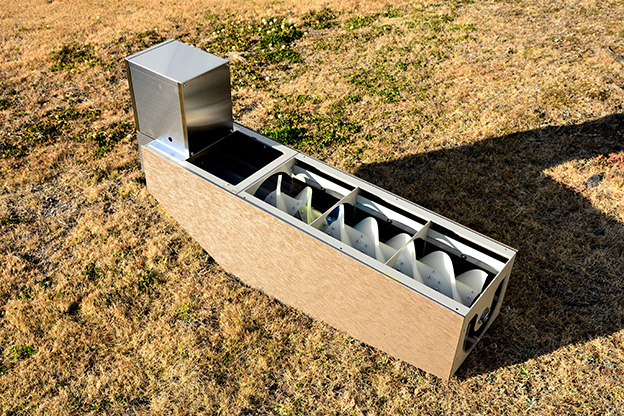
Japanese multinational imaging and electronics company Ricoh has launched a pico-hydro generation system that can be used with factory drainage systems and irrigation canals. Pico-hydro systems are all hydropower systems with a capacity of less than 5kW and are commonly used as a cheap and easy-to-deploy source of power in the world’s most inaccessible places.
“The system can also be used in combination with photovoltaics and batteries to ensure stable power supply, ” a spokesperson from the company told pv magazine. “Depending on the amount of electricity generated, it can be used for IoT devices such as sensors, lighting devices, and charging systems. A 1kW hydroelectric power generator is under development and is the output we are aiming for in the future, currently, it is a few watts or a few dozen watts.”
Called 3D-Pico Hydro Generator System, the new product will be initially sold in the Japanese market. “Service validation will begin in Japan, and the system will gradually be offered globally to markets where it is needed,” the spokesperson further explained.
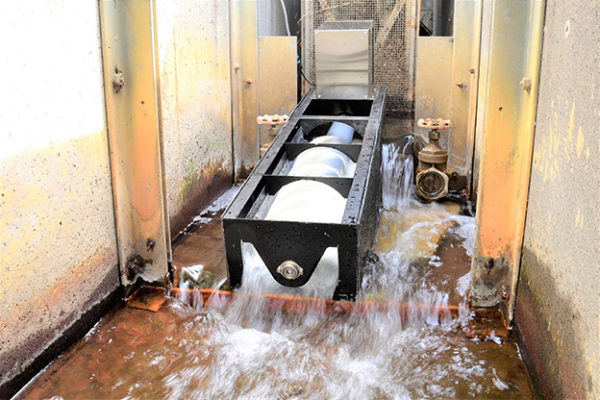
Image: Ricoh
According to the manufacturer, the system is made with 3D-printed sustainable materials based on recycled plastics and is able to generate electricity even with a small stream of water.
It was tested at the company’s Numazu Plant. “In our demonstration experiment using factory wastewater from the Ricoh Numazu Plant, we confirmed the possibility of lighting a lamp and using it as a power source for a security camera for nine months,” the company said. “We are also considering using it as a power source for disaster prevention in combination with battery storage.”
“Ricoh is also planning to improve the system so that it can also be used in microgrids,” the company’s spokesperson concluded.
There are many factors that determine the feasibility of a mini-hydropower project. These include the amount of power available from the water flow, the turbine type, the capacity of electrical loads to be supplied, and the initial and operating costs.
During the past decades, Pico-hydropower systems have been used with success in countries such as Nepal, Vietnam, Laos and Peru, as a way to provide electricity to rural locations.
*The article was updated on March 31 to specify that 1kW is the capacity Ricoh is aiming to reach for the system in the future, and not its current capacity, as we previously reported.
This content is protected by copyright and may not be reused. If you want to cooperate with us and would like to reuse some of our content, please contact: [email protected].

Please login to comment

[…] “The system can also be used in combination with photovoltaic panels and batteries to ensure a stable power supply (…) Depending on the amount of electricity produced, it can be used for IoT devices such as sensors, device lighting and charging systems. A 1kW hydroelectric generator is under development and this is the production we are aiming for in the future, currently it is a few watts or a few tens of watts.” From a company spokesperson at pv magazine […]
[…] “The system can also be used in combination with photovoltaic panels and batteries to ensure a stable power supply (…) Depending on the amount of electricity produced, it can be used for IoT devices such as sensors, devices lighting and charging systems. A 1kW hydroelectric generator is under development and this is the production we are aiming for in the future, currently it is a few watts or a few tens of watts.” From a company spokesperson at photo magazine […]
[…] “The system can also be used in combination with photovoltaic panels and batteries to ensure a stable energy supply (…) Depending on the amount of electricity produced, it can be used for IoT devices such as sensors, lighting devices and charging systems. A 1kW hydroelectric generator is being developed and this is the production we are looking for in the future, currently it is a few watts or a few tens of watts.” From a company spokesperson in pv magazine […]
[…] “Le système peut également être utilisé en combinaison avec des panneaux photovoltaïques et des batteries pour assurer une alimentation électrique stable (…) En fonction de la quantité d’électricité produite, elle peut être utilisée pour des dispositifs IoT tels que des capteurs, des dispositifs d’éclairage et des systèmes de charge. Un générateur hydroélectrique de 1kW est en cours de développement et c’est la production que nous visons à l’avenir, actuellement, c’est quelques watts ou quelques dizaines de watts.” Propos d’un porte-parole de l’entreprise à pv magazine […]

Constant watercourse near dwelling, this type of unit would suit battery storage for our purposes on remote island in New Zeasland,
We await advice of availability and price/s, subject to trials would be interested in Naytional Distributorship
[…] 来源:www.pv-magazine.com […]

Need to remember that this is “pico” power, ie. very small output.
Yes it will run most of the lights in your house, until the fridge kicks in…
Of course that is assuming that the water stream is very close to the house, as voltage losses in cabling add up quickly.

Would love to test one in Bulembu, Eswatini, Afrika

Yes well done!
But am curius about the price and it would be nice to know something about the minum Flow needed to generate elektricity, scalability, and. How many. Walter runs thru min to. Max.
We have in Germany also Lots of of old. Watermills with bypass channels that can be reactivated. And this can be in parallel to the normal Flow of a creek with minor impact for fishes and other animals and generate enough electricity for one or two housholds especialy combined with a PV System and a storage.

Awesome

Excellent news. This would find a lot of application and use among rural communities in developing world living way off grid with little or no hope of ever getting connected.
It’s worth also noting that electricity in developing/ under developed countries doesn’t come cheap. Well done Rickoh

In my eyes it can not be sustainable if plastic materials are exposed to nature. Microplastic is harmful on a yet unknown scale. Better to use steel or ceramics but of course there could be bad additives as well.
Because of unknown additives recycled plastic can be more dangerous than freshly produced one. Recycling is only safe if you know all the origins of the old plastic.
Sorry, I see your goal and steps are good but communication should be more precise and openly.

Yes I agree

Very interesting for use in the Carribean Islands.

Please inform me when pico hydro generator system is available to buy in the market.
I am from Philippines

This is going to be a boon for agriculture near water falls.
[…] source […]

Well done! This is a great job you have done

Your magazine provides me with the ability to keep constantly updated with the current innovative progress in the industry.

Could this be used in slow flowing tidal systems? Say in a residential salt water canal?

Likely no, the shaft needs to spin rapidly to generate appropriate electricity.

Would be a serious game changer and make a huge difference to so many
Projected prices and an it’s output be up graded?

1kW seems quite a lot of power to drive a camera.
Yes I agree. Water power depends on flow of water and the head of water above the device. Basically the product of these two determines the power generated

Why can someone invent a similar system in a water main or even the sewage system in a house. Every little bit helps.
[…] 원 문 보 기 […]
[…] ismét egy meglepő, de kézenfekvő megoldással rukkolt elő. Miután márciusban bemutattak egy piko-hidrogenerátort, melyet ipari üzemek vízelvezető rendszeréhez vagy öntözőcsatornák lokális […]