What’s in the Inflation Reduction Act for the solar industry?
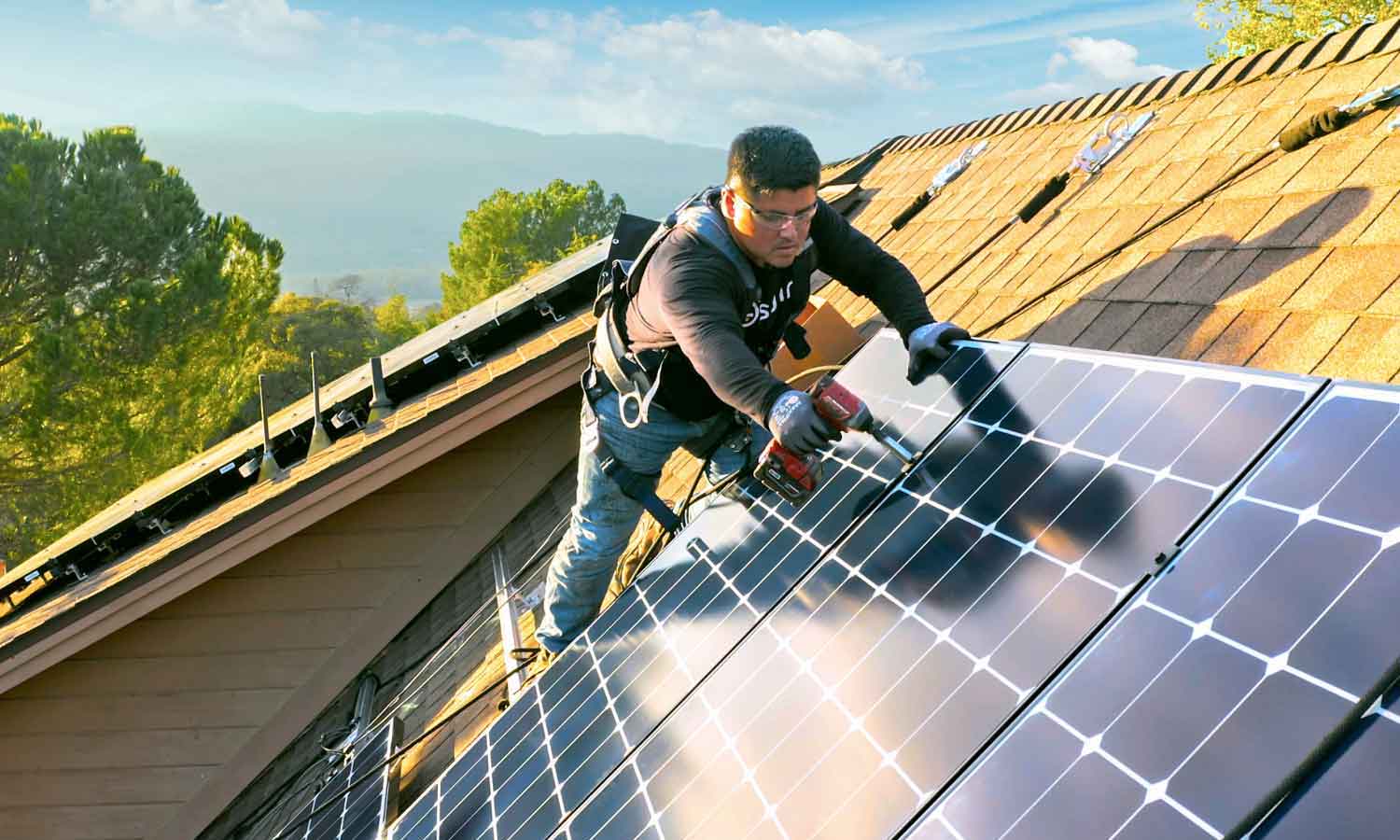
From pv magazine USA
This past Sunday, the United States Senate passed the Inflation Reduction Act, and today the House of Representatives votes on the bill. It is now on its way to the President’s desk for a final signature as soon as next week.
The bill – known technically as H.R. 5376 – Inflation Reduction Act of 2022 – is 730 pages of dense legalese. The document covers a wide variety of topics including healthcare, corporate taxes, staffing at the IRS, and – of course – energy related legislation.
With that, we at pv magazine USA will try our best to extract and point to the pieces of the legislation that will directly affect our industry.
Investment Tax Credit
The Investment Tax Credit has been increased from 26% to 30%, and may now be transferred or sold to other taxpayers. The 30% applies to both business and residential projects, including projects installed in 2022, and will last until the end of 2032.
Everyone should learn how to utilize a transferable credit. While transferable credits are not as simple as cash from the government via Direct Pay, they are not nearly as complex as tax equity structures.
Energy storage projects were previously ineligible for tax credits unless they were connected directly to solar power projects. The Inflation Reduction Act removes these requirements, and allows energy storage projects to receive the same 30% tax credit, even if they are stand-alone facilities. Batteries connected to a solar power project will continue to qualify for the credit, even if they are no longer being charged by solar power.
Interconnection costs will also be included in the tax credit, for projects smaller than 5 MWac.
The business tax credit can be found starting on page 263, while the residential tax credit update can be found starting on page 351.
Starting in 2025, the Investment Tax Credit will be retired and turned into a much broader, technology agnostic credit, that applies not only to solar power, but to many emission reducing techniques. The same terms apply for solar, which also gets a 30% transferable tax credit that lasts until September 30, 2031. After 2032, the credit will begin to decrease. This technology agnostic tax credit can be found starting on page 464.
For larger projects, there are additional considerations:
Prevailing wage & apprenticeship
For projects of more than 1 MWac and above must pay attention to employment requirements. By default, the tax credit is 6%. To be eligible for the additional 24%, laborers and mechanics installing the solar power projects must be paid prevailing wages, and must be part of an electrical apprenticeship program. These tax credits will begin to apply to projects in 2023.
Additionally, there are requirements for the ratio of apprentices to journeyworkers, which are specified by the Department of Labor or the applicable State apprenticeship agency. Contractors or subcontractors who employ more than 4 individuals performing construction, alteration, or repair work must employ at least one qualified apprentice to perform such work.
Violations will result in fines to the Secretary of Labor of $5,000 for each laborer or mechanic who is underpaid. If the underpayment is found to be intentional, the fine doubles to $10,000 per laborer or mechanic. These details can be found starting on page 234.
Domestic content – 10% tax credit adder
Solar power projects eligible for the full 30% tax credit can increase their tax credit by an additional 10% – to 40% in total – by purchasing domestically produced hardware. Per the document, 100% of steel and iron must be US manufactured in the United States. For manufactured goods – like solar panels, inverters, and electrical gear – the goods must initially be 40% US manufactured, though this percentage will increase in the future.
Historically, for goods to be classified as Made in the USA, they must be composed of at least 55% domestic content. The bill lists some exceptions to these requirements. Items that are not of satisfactory quality, or are not produced in sufficient quantities, may be imported. Items that would increase the project cost by greater than 25% may be sourced outside the US as well. These requirements, and exceptions, will apply to all project sizes.
This report from the Congressional Research Service offers more refined answers.
Project siting – 10% tax credit adder
Projects that are located in former ‘energy communities’ can earn an additional 10% tax credit. Energy communities are first defined as brownfields, and secondly as locations associated with fossil fuels over the last generation.
If there have been significant extraction jobs associated with coal, oil, or natural gas after December 31,1999, then the census tract – and its connecting census tracts – are eligible. If a coal power plant or mine has closed in the same window, the area and its surrounding tracts are also eligible. Language describing energy communities can be found starting on page 250.
Clean electricity production credit
For a long time, the wind industry has been given a tax credit on a per kilowatt-hour basis. Prior to 2007, the solar industry was also eligible for this production credit. The Production Tax Credit is now fully applicable to the solar power industry. In this document, it is titled the ‘Clean Electricity Production Credit’.
If a solar power project meets the prevailing wage requirements, then it will receive a tax credit of 2.5 cents/kWh for the first ten years of a project’s life. If a project does not meet prevailing wage standards, it will earn only 0.3 cents/kWh before adjustment for inflation. Going forward, the production credit increases as it is adjusted for inflation. Language describing the production credit can be found starting on page 442.
Domestic solar hardware manufacturing
The Ossoff Manufacturing Credits made it into the bill – and then some. There are tax credits for manufacturing the various solar panel, inverter, and racking components, as well.
For solar modules the credits are expected to include:
- Solar Cells – 4 cents per direct current watt of capacity
- Solar wagers – $12 per square meter
- Solar grade polysilicon – $3 per kilogram
- Polymeric backsheet- 40 cents per square meter
- Solar modules – 7 cents per direct current watt of capacity
For inverters the credit would be applied per watt of alternating current:
- Central inverter – 0.25 cents
- Utility inverter – 1.5 cents
- Commercial inverters – 2 cents
- Residential inverters – 6.5 cents
- Microinverters – 11 cents
Torque tubes for racking will receive 87 cents per kilogram, while structural fasteners get $2.28 per kilogram. Language describing the production credit can be found starting on page 414.
60% tax credit opportunity?
There is also a 10% adder for solar power projects that sell their electricity via community solar projects to low-income individuals. If we add the 30% tax credit base, 10% for domestic content, 10% for being located in a former fossil fuel energy community, and 10% for selling the electricity via community solar to low income families – the tax credit could potentially reach 60%.
Additional items
There are additional tax credits for EVs, electrical panels, heat pumps, and many other items directly related to our industry that pv magazine USA will cover in the future.
Not all of the details of the legislation are fully developed, as there are rules that the IRS and Treasury Department will need to develop, publicize, and provide guidance on for more specific detailed tax related questions. This article is not intended to provide legal or financial advice, so please seek out professional opinions before developing any solar power or energy storage facilities.
This content is protected by copyright and may not be reused. If you want to cooperate with us and would like to reuse some of our content, please contact: [email protected].

Please login to comment

[…] 2022 was a year of contrasting events. On one hand, the euphoria of the Biden administration’s Inflation Reduction Act (IRA) overwhelmed all other industry dynamics, and is set to bolster the sector for decades. On the […]
[…] 2022 was a year of contrasting events. On one hand, the euphoria of the Biden administration’s Inflation Reduction Act (IRA) overwhelmed all other industry dynamics, and is set to bolster the sector for decades. On the […]
[…] 2022 was a year of contrasting events. On one hand, the euphoria of the Biden administration’s Inflation Reduction Act (IRA) overwhelmed all other industry dynamics, and is set to bolster the sector for decades. On the […]
[…] of a “robust push” in direction of world decarbonization and incentives from the North American Inflation Reduction Act. “M&A exercise, then again, has confronted hostile results, particularly within the realm […]
[…] with the passage of the Inflation Reduction Act (IRA), fewer than 5% of domestic homes are solar-powered today. To find out why, SunPower Corporation […]
[…] with the passage of the Inflation Reduction Act (IRA), fewer than 5% of domestic homes are solar-powered today. To find out why, SunPower Corporation […]
[…] with the passage of the Inflation Reduction Act (IRA), fewer than 5% of domestic homes are solar-powered today. To find out why, SunPower Corporation […]
[…] location on a brownfield/coal site qualifies it for an additional 10% tax credit adder under the US Inflation Reduction Act. The filing also implies that the project might also be eligible for a 10% domestic content tax […]
[…] plot on a brownfield/coal plot qualifies it for an further 10% tax credit score adder under the US Inflation Discount Act. The filing moreover implies that the venture would possibly well moreover be eligible for a 10% […]
[…] location on a brownfield/coal site qualifies it for an additional 10% tax credit adder under the Inflation Reduction Act. Furthermore, the filing implies that the project might also be eligible for a 10% domestic content […]
[…] Reduction Act, the changes to the solar tax incentives are as follows according to an article in PV Magazine: “The Investment Tax Credit has been increased from 26% to 30%, and may now be transferred or […]
[…] August 2022, no Republican votes were cast in favor of President Biden’s IRA climate law. However, now that the legislation is in effect and cash is on the table, leaders of conservative […]
[…] Source [1] […]
[…] More information about the IRA Solar Incentives can be found here: PV Magazine Article […]
[…] view on this solar stock include underappreciated pricing power and potential benefit from the Inflation Reduction Act. Sunrun is expected to lose 11 cents a share this quarter versus 42 cents per share a year […]
[…] view on this solar stock include underappreciated pricing power and potential benefit from the Inflation Reduction Act. Sunrun is expected to lose 11 cents a share this quarter versus 42 cents per share a year […]
[…] view on this solar stock include underappreciated pricing power and potential benefit from the Inflation Reduction Act. Sunrun is expected to lose 11 cents a share this quarter versus 42 cents per share a year […]
[…] view on this solar stock include underappreciated pricing power and potential benefit from the Inflation Reduction Act. Sunrun is expected to lose 11 cents a share this quarter versus 42 cents per share a year […]
[…] view on this solar stock include underappreciated pricing power and potential benefit from the Inflation Reduction Act. Sunrun is expected to lose 11 cents a share this quarter versus 42 cents per share a year […]
[…] view on this solar stock include underappreciated pricing power and potential benefit from the Inflation Reduction Act. Sunrun is expected to lose 11 cents a share this quarter versus 42 cents per share a year […]
[…] view on this solar stock include underappreciated pricing power and potential benefit from the Inflation Reduction Act. Sunrun is expected to lose 11 cents a share this quarter versus 42 cents per share a year […]
[…] view on this solar stock include underappreciated pricing power and potential benefit from the Inflation Reduction Act. Sunrun is expected to lose 11 cents a share this quarter versus 42 cents per share a year […]
[…] view on this solar stock include underappreciated pricing power and potential benefit from the Inflation Reduction Act. Sunrun is expected to lose 11 cents a share this quarter versus 42 cents per share a year […]
[…] view on this solar stock include underappreciated pricing power and potential benefit from the Inflation Reduction Act. Sunrun is expected to lose 11 cents a share this quarter versus 42 cents per share a year […]
[…] view on this solar stock include underappreciated pricing power and potential benefit from the Inflation Reduction Act. Sunrun is expected to lose 11 cents a share this quarter versus 42 cents per share a year […]
[…] view on this solar stock include underappreciated pricing power and potential benefit from the Inflation Reduction Act. Sunrun is expected to lose 11 cents a share this quarter versus 42 cents per share a year […]
[…] view on this solar stock include underappreciated pricing power and potential benefit from the Inflation Reduction Act. Sunrun is expected to lose 11 cents a share this quarter versus 42 cents per share a year […]
[…] view on this solar stock include underappreciated pricing power and potential benefit from the Inflation Reduction Act. Sunrun is expected to lose 11 cents a share this quarter versus 42 cents per share a year […]
[…] view on this solar stock include underappreciated pricing power and potential benefit from the Inflation Reduction Act. Sunrun is expected to lose 11 cents a share this quarter versus 42 cents per share a year […]
[…] view on this solar stock include underappreciated pricing power and potential benefit from the Inflation Reduction Act. Sunrun is expected to lose 11 cents a share this quarter versus 42 cents per share a year […]
[…] view on this solar stock include underappreciated pricing power and potential benefit from the Inflation Reduction Act. Sunrun is expected to lose 11 cents a share this quarter versus 42 cents per share a year […]
[…] view on this solar stock include underappreciated pricing power and potential benefit from the Inflation Reduction Act. Sunrun is expected to lose 11 cents a share this quarter versus 42 cents per share a year […]
[…] view on this solar stock include underappreciated pricing power and potential benefit from the Inflation Reduction Act. Sunrun is expected to lose 11 cents a share this quarter versus 42 cents per share a year […]
[…] view on this solar stock include underappreciated pricing power and potential benefit from the Inflation Reduction Act. Sunrun is expected to lose 11 cents a share this quarter versus 42 cents per share a year […]
[…] view on this solar stock include underappreciated pricing power and potential benefit from the Inflation Reduction Act. Sunrun is expected to lose 11 cents a share this quarter versus 42 cents per share a year […]
[…] view on this solar stock include underappreciated pricing power and potential benefit from the Inflation Reduction Act. Sunrun is expected to lose 11 cents a share this quarter versus 42 cents per share a year […]
[…] view on this solar stock include underappreciated pricing power and potential benefit from the Inflation Reduction Act. Sunrun is expected to lose 11 cents a share this quarter versus 42 cents per share a year […]
[…] view on this solar stock include underappreciated pricing power and potential benefit from the Inflation Reduction Act. Sunrun is expected to lose 11 cents a share this quarter versus 42 cents per share a year […]
[…] view on this solar stock include underappreciated pricing power and potential benefit from the Inflation Reduction Act. Sunrun is expected to lose 11 cents a share this quarter versus 42 cents per share a year […]
[…] view on this solar stock include underappreciated pricing power and potential benefit from the Inflation Reduction Act. Sunrun is expected to lose 11 cents a share this quarter versus 42 cents per share a year […]
[…] expect the Inflation Reduction Act to accelerate U.S. solar demand further. Under the new IRA, the investment tax credit has increased to 30%, from 26%, through 2032. Before the IRA, energy storage projects were […]
[…] the bill contains tax incentives for domestic fabrication, including an increase in the investment tax credit available, from 30% to 40% for projects using domestic content, as well as production tax credits […]
[…] dell’agosto 2022, con i generosi sussidi alle imprese legati al local content (per il solare vedi pv-magazine, 2022). I soli interventi in campo energetico e climatico – meno del 30 per cento dell’Ira […]
[…] the bill contains tax incentives for domestic fabrication, including an increase in the investment tax credit available, from 30% to 40% for projects using domestic content, as well as production tax credits […]
[…] with the support measures in the Inflation Reduction Act (IRA). That policy package offers incentives ranging from $0.127 per Watt-peak of solar generation capacity manufactured to $0.197/Wp, to be […]
[…] with the support measures in the Inflation Reduction Act (IRA). That policy package offers incentives ranging from $0.127 per Watt-peak of solar generation capacity manufactured to $0.197/Wp, to be […]
[…] and solar energy generation requires up to six times more copper per installed MW. Considering the impact of IRA, many renewable companies such as, First Solar (NASDAQ:FSLR) and Enphase Energy (NASDAQ:ENPH) have […]
[…] and solar energy generation requires up to six times more copper per installed MW. Considering the impact of IRAmany renewable companies such as, First Solar (NASDAQ:FSLR) and Enphase Energy (NASDAQ:ENPH) have […]
[…] for as much as six occasions extra copper in step with put in MW. Taking into consideration the affect of IRA, many renewable firms akin to, First Sun (NASDAQ:FSLR) and Enphase Power (NASDAQ:ENPH) have […]
[…] and solar energy generation requires up to six times more copper per installed MW. Considering the impact of IRA, many renewable companies such as, First Solar (NASDAQ:FSLR) and Enphase Energy (NASDAQ:ENPH) have […]
[…] and solar energy generation requires up to six times more copper per installed MW. Considering the impact of IRA, many renewable companies such as, First Solar (NASDAQ:FSLR) and Enphase Energy (NASDAQ:ENPH) have […]
[…] solar generation require up to Six times more than copper per megawatt installed. Considering the IRA effectmany renewable energy companies such as, First Solar (NASDAQ:FSLR) and Enphase Energy (NASDAQ:ENPH) […]
[…] and solar energy generation requires up to six times more copper per installed MW. Considering the impact of IRA, many renewable companies such as, First Solar (NASDAQ:FSLR) and Enphase Energy (NASDAQ:ENPH) have […]
[…] photo voltaic power era requires as much as six times more copper per put in MW. Contemplating the impact of IRA, many renewable corporations resembling, First Solar (NASDAQ:FSLR) and Enphase Power (NASDAQ:ENPH) […]
[…] voltaic vitality era requires as much as six times more copper per put in MW. Contemplating the impact of IRA, many renewable corporations comparable to, First Solar (NASDAQ:FSLR) and Enphase Vitality […]
[…] power technology requires as much as six instances extra copper per put in MW. Contemplating the influence of IRA, many renewable firms equivalent to, First Photo voltaic (NASDAQ:FSLR) and Enphase Vitality […]
[…] and solar energy generation requires up to six times more copper per installed MW. Considering the impact of IRA, many renewable companies such as, First Solar (NASDAQ:FSLR) and Enphase Energy (NASDAQ:ENPH) have […]
[…] voltaic vitality era requires as much as six times more copper per put in MW. Contemplating the impact of IRA, many renewable corporations similar to, First Solar (NASDAQ:FSLR) and Enphase Vitality […]
[…] and solar energy generation requires up to six times more copper per installed MW. Considering the impact of IRA, many renewable companies such as, First Solar (NASDAQ:FSLR) and Enphase Energy (NASDAQ:ENPH) have […]
[…] and solar energy generation requires up to six times more copper per installed MW. Considering the impact of IRA, many renewable companies such as, First Solar (NASDAQ:FSLR) and Enphase Energy (NASDAQ:ENPH) have […]
[…] solar industry has boomed in recent years, and is slated for a big boost from the Democrats’ recently passed climate bill. Yet solar still […]
[…] example, solar power projects can qualify for a 30% tax credit, but if the hardware used is made in the US, the credit is bumped to 40%. There are also […]
[…] an instance, solar energy projects can qualify for a 30% tax credit, however if the hardware feeble is made within the US, the credit is bumped to 40%. There are […]
[…] an illustration, checklist voltaic energy initiatives can qualify for a 30% tax credit rating, nevertheless if the hardware mature is made within the US, the credit rating is bumped to 40%. […]
[…] example, solar power projects can qualify for a 30% tax credit, but if the hardware used is made in the US, the credit is bumped to 40%. There are also […]
[…] example, solar power projects can qualify for a 30% tax credit, but if the hardware used is made in the US, the credit is bumped to 40%. There are also […]
[…] example, solar power projects can qualify for a 30% tax credit, but if the hardware used is made in the US, the credit is bumped to 40%. There are also […]
[…] example, solar power projects can qualify for a 30% tax credit, but if the hardware used is made in the US, the credit is bumped to 40%. There are also […]
[…] example, solar power projects can qualify for a 30% tax credit, but if the hardware used is made in the US, the credit is bumped to 40%. There are also […]
[…] that’s manufactured throughout the US.For instance, solar energy initiatives can qualify for a 30% tax credit, but when the {hardware} used is made within the US, the credit score is bumped to 40%. There are […]
[…] example, solar power projects can qualify for a 30% tax credit, but if the hardware used is made in the US, the credit is bumped to 40%. There are also […]
[…] example, solar power projects can qualify for a 30% tax credit, but if the hardware used is made in the US, the credit is bumped to 40%. There are also […]
[…] example, solar power projects can qualify for a 30% tax credit, but if the hardware used is made in the US, the credit is bumped to 40%. There are also […]
[…] example, solar power projects can qualify for a 30% tax credit, but if the hardware used is made in the US, the credit is bumped to 40%. There are also […]
[…] example, solar power projects can qualify for a 30% tax credit, but if the hardware used is made in the US, the credit is bumped to 40%. There are also […]
[…] example, solar power projects can qualify for a 30% tax credit, but if the hardware used is made in the US, the credit is bumped to 40%. There are also […]
[…] example, solar power projects can qualify for a 30% tax credit, but if the hardware used is made in the US, the credit is bumped to 40%. There are also […]
[…] example, solar power projects can qualify for a 30% tax credit, but if the hardware used is made in the US, the credit is bumped to 40%. There are also […]
[…] example, solar power projects can qualify for a 30% tax credit, but if the hardware used is made in the US, the credit is bumped to 40%. There are also […]
[…] example, solar power projects can qualify for a 30% tax credit, but if the hardware used is made in the US, the credit is bumped to 40%. There are also […]
[…] example, solar power projects can qualify for a 30% tax credit, but if the hardware used is made in the US, the credit is bumped to 40%. There are also […]
[…] example, solar power projects can qualify for a 30% tax credit, but if the hardware used is made in the US, the credit is bumped to 40%. There are also […]
[…] solar industry has boomed in recent years, and is slated for a big boost from the Democrats’ recently passed climate bill. Yet solar still only accounts for about 3 […]
[…] it up for scalability, and offering an attractive real yield on staking.Image: xresch/PixabayThe Production Tax Credit (PTC) has been reinstated for solar projects under the IRA. This allows solar projects to choose between the PTC and the Investment Tax Credit (ITC) to […]
[…] solar industry has boomed in recent years, and is slated for a big boost from the Democrats’ recently passed climate bill. Yet solar still only accounts for about 3 […]
[…] solar industry has boomed in recent years, and is slated for a big boost from the Democrats’ recently passed climate bill. Yet solar still only accounts for about 3 […]
[…] solar industry has boomed in recent years, and is slated for a big boost from the Democrats’ recently passed climate bill. Yet solar still only accounts for about 3 […]
[…] IRA will give tax credits to solar power projects that purchase domestically produced hardware. It will provide direct tax […]
[…] it up for scalability, and offering an attractive real yield on staking.Image: xresch/PixabayThe Production Tax Credit (PTC) has been reinstated for solar projects under the IRA. This allows solar projects to choose between the PTC and the Investment Tax Credit (ITC) to […]
[…] it up for scalability, and offering an attractive real yield on staking.Image: xresch/PixabayThe Production Tax Credit (PTC) has been reinstated for solar projects under the IRA. This allows solar projects to choose between the PTC and the Investment Tax Credit (ITC) to […]
[…] it up for scalability, and offering an attractive real yield on staking.Image: xresch/PixabayThe Production Tax Credit (PTC) has been reinstated for solar projects under the IRA. This allows solar projects to choose between the PTC and the Investment Tax Credit (ITC) to […]
[…] it up for scalability, and offering an attractive real yield on staking.Image: xresch/PixabayThe Production Tax Credit (PTC) has been reinstated for solar projects under the IRA. This allows solar projects to choose between the PTC and the Investment Tax Credit (ITC) to […]
[…] it up for scalability, and offering an attractive real yield on staking.Image: xresch/PixabayThe Production Tax Credit (PTC) has been reinstated for solar projects under the IRA. This allows solar projects to choose between the PTC and the Investment Tax Credit (ITC) to […]
[…] Manufacturing Tax Obligation Credit Scores (PTC) has actually been renewed for solar tasks under th… This permits solar tasks to select in between the PTC as well as the Financial Investment Tax […]
[…] Production Tax Credit (PTC) has been reinstated for solar projects under the IRA. This allows solar projects to choose between the PTC and the Investment Tax Credit (ITC) to […]
[…] Production Tax Credit (PTC) has been reinstated for solar projects under the IRA. This allows solar projects to choose between the PTC and the Investment Tax Credit (ITC) to […]
[…] Production Tax Credit (PTC) has been reinstated for solar projects under the IRA. This allows solar projects to choose between the PTC and the Investment Tax Credit (ITC) to […]

Hello. Is the 100% bonus depreciation still available for commercial solar projects?
[…] Solar: What’s in the Inflation Reduction Act for the solar industry? | pv magazine […]

I see no instances in the legislation that states any increases in the tax credit to 30% and/or the extension of this credit nor non-residential systems. I reviewed the pieces of the legislation that were pointed out (pg. 263-351) and I found no such clear statement(s) as is provided for the Residential Clean Energy Credit on page 351 which fully and clearly explains the 30% bump and prolonging of the phase-out. The official summary also clearly mentions residential but not commercial.
Can you help me understand? Can you show me the language that prompted you to make the claim that the ITC for businesses would also improve back to 30% and be extended? It’s a lot of text so I could just be missing it but I’m having trouble here.
Thank you.
[…] continent as a potential production location due to the attractive tax credits for solar in the U.S. Inflation Reduction Act, as well as physical proximity to its medium-voltage (MV) power stations. Such a factory would […]
[…] continent as a potential production location due to the attractive tax credits for solar in the U.S. Inflation Reduction Act, as well as physical proximity to its medium-voltage (MV) power stations. Such a factory would […]
[…] continent as a potential production location due to the attractive tax credits for solar in the U.S. Inflation Reduction Act, as well as physical proximity to its medium-voltage (MV) power stations. Such a factory would […]
[…] קהילתית. כאן החוק מפתיע בנדיבותו ויכול להגיע לעד 60% הנחה במס הכנסה לאזרחי ארה"ב שישתמשו באנרגיה סולארית […]
[…] are some other, more esoteric, credits that industry standard PV Magazine explains, and there are sure to be all sorts of regulations down the road, as bureaucrats get their […]
[…] Fitzgerald Weaver, J. (2022, August 15). What’s in the Inflation Reduction Act for the solar indus… […]

I continue to see all of these Solar Power projects for residential homes to be available for Federal Tax Credits. My issue is I am retired, and on a fixed income. I live in a 924 sq. foot home and my electric bill is averaged at $400.00/month. Because I worked very hard during my working career to be able to retire and have NO Federal Tax obligation and I live in Texas, which has No State Tax, I am not qualified for any of the Solar Assistance for the federal Government. Is there any assistance from the government that will help me go as Green as the President of the US is demanding from us all?

Raymond, look into the details, there is a “direct pay” option that will be available to non taxable entities(colleges, schools etc.) I believe it extends to others without tax liability to address equity etc. My thought is that you may be in a good position moving forward.
[…] was lower. However, due to the passage of the Inflation Reduction Act on August 16th, 20222, the ITC now allows you to deduct 30% of the cost of your solar installation from your federal […]
[…] Source link […]
[…] and associated equipment will be classified as domestic content, potentially qualifying for the 10% Inflation Reduction Act tax credit adder. However, the definitive guidance from the Internal Revenue Service is still […]