Lithium-ion batteries differ in terms of risk
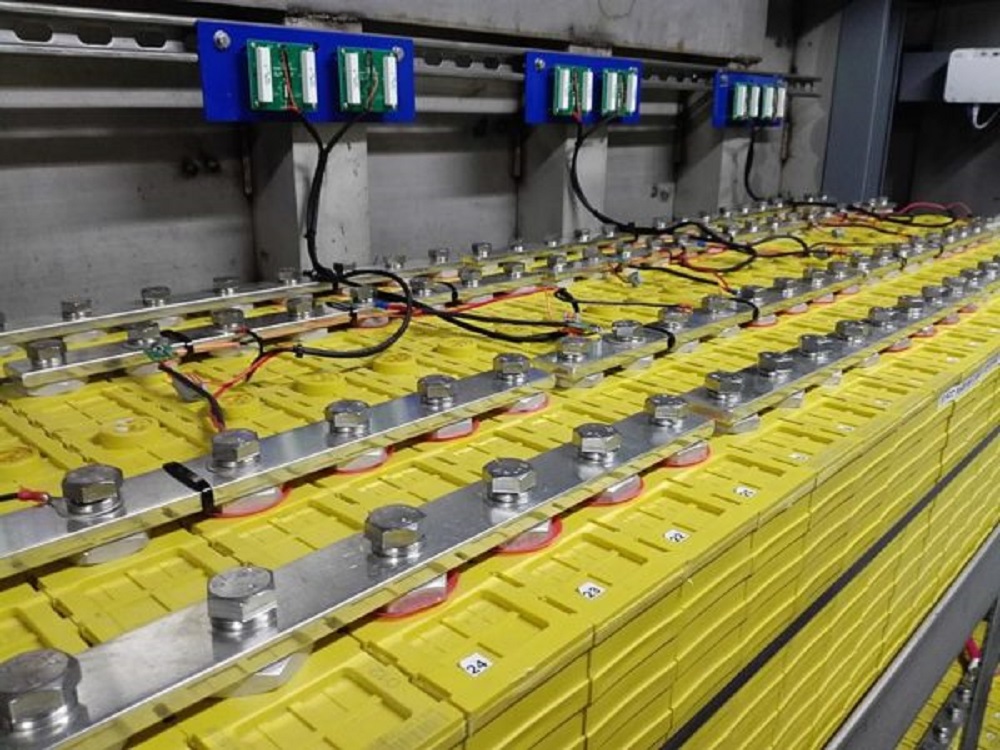
From pv magazine USA
Lithium-ion battery deployment is proliferating exponentially in the United States. Every phone, power tool and electric vehicle come with a lithium battery today, not to mention the 100 GWh or so of lithium batteries operating at the utility scale.
This makes a lot of consumers nervous. As this trend unfolds, stories litter the media landscape about lithium-ion batteries catching fire, and even exploding. It’s a valid concern, and the time for consumers to understand a basic truth about lithium-ion batteries is long past due.
The crucial point that’s either unknown or omitted in every one of the hundred horror stories you can find online about EV, utility and home battery fires, is that “lithium-ion” is a catch-all term. It doesn’t describe a particular type of battery. There are more than a dozen lithium-ion battery chemistries. Six of them have made it outside the laboratory. Three of them can be found on the market. Two of those are incredibly common, and the differences between them are so substantial that comparing them will serve as an excellent primer for the subject.
NMC options
The first chemistry is lithium nickel manganese cobalt oxide or NMC. Up until about 2020, these were the undisputed leader of the market share of lithium batteries. In 2022, they still comprised some 60% of the market share. However, after so many (largely unreported) battery fires in early models of electric vehicles (EVs), and the subsequent shift by Tesla and a few other major EV manufacturers to the exclusive use of lithium iron phosphate (LFP) chemistry last year, this is expected to halve in short order.
NMC has an energy density roughly 10% (depending on manufacturer) better than LFP. In addition, they are significantly lighter than LFP in weight per kWh. This is largely responsible for its early adoption by industry. However, NMCs lacklustre safety record, lifespan, and its increasing material cost has recently made LFP the preferred choice of nearly every industry sector in the last year.
The dangers of lithium-ion about which the public has been so repetitiously warned, are almost exclusively the dangers of NMC. A very low thermal runaway temperature reached in many real-world scenarios is primary. With temperatures breaking records every year in most parts of the country, ambient temperatures of 110°, or even 120°F are almost commonplace now in regions that had never seen them before the 2000s.
With most of the country’s grid suffering from insufficient and decaying infrastructure, coupled with increased demand for air conditioning in hot weather, a ‘perfect storm’ is created much more commonly now wherein NMC batteries attached to utility grids (whether in a garage or a utility storage facility) are called upon to export their maximum power capacities during the hottest ambient temperatures. Thus, their (alarmingly low) thermal runaway temperatures are reached, and you get cell explosion and battery fires.
Calls for evacuations in response to the larger of these incidents, aside from risks of explosion in the immediate vicinity, are issued by fire personnel because the gas emissions during an NMC cell rupture event are extremely toxic, containing several fluorine gasses as well as cobalt and manganese cenospheres well above toxic limits.
LFP chemistry
LFP or lithium iron phosphate, also known as LiFePO4, is a completely different chemistry. With a much higher thermal runaway temperature, (some 20° C higher depending on manufacture), the potential for cell rupture due to thermal runaway is well outside of normal operating conditions, even on the hottest of days.
Further, (and it seems obvious but still bears mention) iron doesn’t burn like manganese. Actual fires due to battery failure, on those rare occasions that they do occur, are limited to wires, and sometimes battery management system (BMS) printed circuit boards. Assuming that the battery casing conforms to NEMA or IP standards, cell fires cannot escape the case unless it’s been punctured.
Also, the findings of several experiments where cell explosion is forced, have confirmed using gas chromatography that the release of gasses during a cell rupture event are by far the least toxic (containing no transition metal aerosols in contrast with NMC) of the common three lithium chemistries.
If the decarbonisation of US energy infrastructure within our generation is a real goal, and not just election-cycle pillow talk, then the continued deployment of LiFePO4 batteries in tandem with the ongoing rapid deployment of solar and hydro renewable resources are absolutely paramount.
Let’s not do the public further injustice by promulgating terms like “lithium-ion batteries” that for lack of distinction are turning us all away from the LFP solution that may yet afford a small chance of success, for fear of the early NMC deployment that even the profit-first-and-only markets have admitted was probably a bad idea.

David Bly is an independent consultant on all things solar and battery storage. He can be found at terravolt.net.
This content is protected by copyright and may not be reused. If you want to cooperate with us and would like to reuse some of our content, please contact: [email protected].

Please login to comment

[…] De pv magazine Estados Unidos […]

David, an absolutely fantastic article, showcasing safety 1st! I believe the use of NMC will decline even more as the LFP cathode variant M3P is adopted by more EV manufacturers. The energy density of this new cathode is close to that of NMC and is less expensive which we’ll all like.

The other key difference between LFP and NMC during a thermal event is that NMC releases Oxygen when it thermally decomposes, increasing the intensity of fire when it occurs. LFP does not release Oxygen when it decomposes.
[…] Da pv magazine USA […]

At last, an article pinpointing the significant difference between LFP and NMC.

Tesla predominantly uses NCA (nickel, cobalt, aluminium) batteries, only using LFP in its entry level models. Having said that it should always be remembered that BEVs are 20 times less likely to catch fire than ICE vehicles and firefighters are well versed in extinguishing them, so they’re actually safer than the car you drive today! There are an increasing number of variants of LFP batteries, such as M3P from CATL which continue to close the efficiency gap to NCM/NCA chemistries and it would seem that we’ll also have solid state batteries in a couple of years which are even safer than LFP and even more efficient than NCA/NCM.
[…] Read the full article here […]
Iron does burn – it will quite happily be oxidised into iron-oxides, given the temperature of the iron reaches ignition temp of 1315 degC
Some quick Googling shows that even small fires ( evev a candle ) can have sufficient flame-core temps in that range – you can see this by watching the colour of the flame.