Unlimited low-cost energy storage
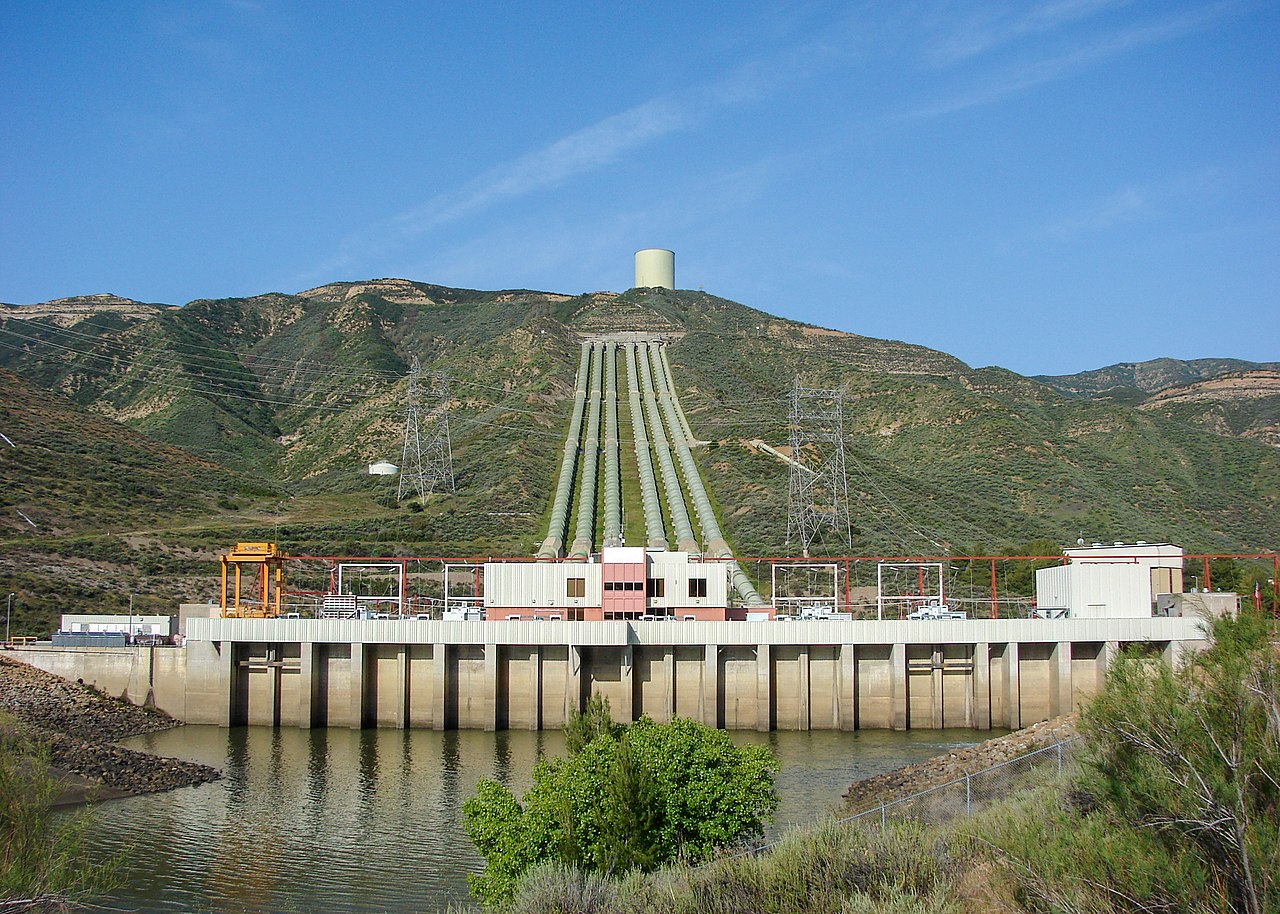
Pumped Hydro Energy Storage (PHES) provides a vastly available, highly mature, lowest-cost, lowest-impact, longest-lifetime solution to dunkelflaute.
PHES constitutes 95% of global energy storage. The world has 820,000 PHES sites with a combined storage of 86 million GWh, which is equivalent to the usable storage in 2,000,000,000,000 electric vehicle batteries.
PHES and batteries are a complete energy storage solution for solar and wind electricity. Batteries take care of short-term high-power storage (a few hours) while PHES covers storage for overnight or days or seasons.
Premium quality PHES provides energy storage in the size range 5-5000 GWh at a capital cost that is 5-10X lower than batteries (US$8-40) and with a lifetime that is 10X longer (150 years). Premium sites have large head (400-1600 m); large water-rock ratio (10-50) and short pressure tunnels (a few km).
PHES cost is falling as fast as batteries because the Global PHES Atlas uncovered hundreds of thousands of superb off-river sites.
No new dams on rivers are needed. Minimal mining is required compared with mining for battery metals. Reservoir walls are built by scooping rock from the bed of the reservoirs. Increasing the energy storage volume costs little: scoop more rock to make the walls a bit higher.
Water requirements for PHES are very small compared with equivalent batteries (including mining and refining). Land requirements for PHES are also very small. Premium-quality PHES stores 5-+100 GWh per km2, compared with utility batteries at around 15 GWh/km2.
Land and water requirements to provide all the storage needed for an affluent and fully electrified and decarbonised economy relying on solar and wind energy are in the range of 2 m2 per person and 2 litres per person per day, respectively.
Local economic content for PHES is high: construction of reservoirs, tunnels, powerhouses and transmission. In contrast, most countries import batteries.
Nearly everyone has PHES or can find it nearby. Europe has unlimited PHES potential in Norway, the Alps and southern Europe.
Dry US states such as Texas and New Mexico have great sites to store their excellent solar and wind energy overnight in a 15 GWh site, or for a season in a 5000 GWh site. California, like all the western states, has an embarrassment of excellent sites, vastly more than it would ever need. The Appalachian states in Alabama up into Canada are also well endowed.
Southeast and East Asia, Central and South America, Africa and the Middle East have vast numbers of excellent sites right where most people live. India has thousands of excellent sites, not just in the Himalayas, but also in the south. PHES construction in India is taking off in concert with rapidly increasing deployment of solar and wind.
Even flat and arid Australia has many excellent sites. Australia will soon have 400 GWh of PHES storage (15 kWh per person), constructed at a cost of one cent per person per day over its 150-year lifetime. This is equivalent to 8000 GWh in Europe or 5000 GWh in the USA. Australia is moving quickly to increase storage and transmission because it has the highest solar generation per person.
And then there is China, perhaps the best-endowed country in the world, to match its vast scale of solar and wind deployment. China has a PHES completion-pipeline of 16 GW per year, coupled with hundreds of GWh of energy storage.
Solar coupled with PHES is ideal for providing 24/7 power to data centres. For example, a 1 GW data centre in New Mexico can be powered by 5 GW of SE and SW facing solar panels with high tilt (for winter). Hybrid storage is provided by 2 GW of 25-hour PHES (50 GWh) plus 1 GW of 4-hour batteries (4 GWh, to harvest peak power around noon). The PHES storage can be trickle-recharged from the grid outside peak periods, and both PHES and batteries are remunerated for helping to stabilize the grid during stress periods.
Together, PHES and batteries are gas-killers. Batteries eat the high-value revenue streams for ancillary services and morning and evening peaks. Pumped hydro soaks up excess solar and wind at low or negative cost and delivers power when prices are high during wet and windless nights, weeks and seasons.
Dunkelflaute and excessive summer solar are ever-increasing problems. PHES provides an excellent off-the-shelf solution in combination with batteries, as described in a recent review paper here.
There is plenty of PHES deployment activity in places like China, India and Australia. Why isn’t much new PHES happening in Europe and the United States? Nant de Drance in Switzerland was recently completed, but it only has 5% of the energy storage volume under construction in Australia, which only has 5% of the population of Europe!
Some people have the misperception that PHES requires new dams on rivers, lots of land, lots of water, and high cost – all of which is wrong. There also seems to be partial paralysis over construction of new transmission to share solar, wind and storage between regions and states.
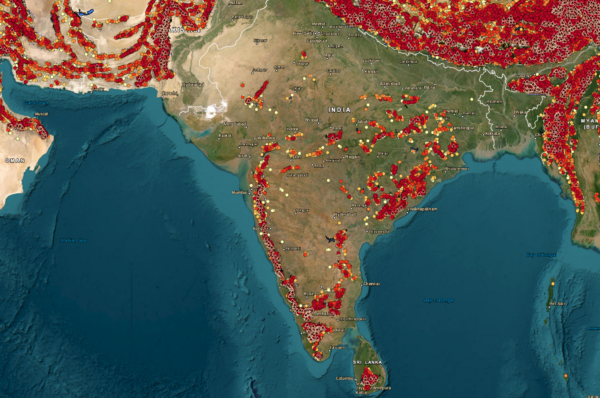
Image: ISES

Image: ISES
Authors: Prof. Ricardo Rüther (UFSC), Prof. Andrew Blakers /ANU
ISES, the International Solar Energy Society is a UN-accredited membership NGO founded in 1954 working towards a world with 100% renewable energy for all, used efficiently and wisely.
The views and opinions expressed in this article are the author’s own, and do not necessarily reflect those held by pv magazine.
This content is protected by copyright and may not be reused. If you want to cooperate with us and would like to reuse some of our content, please contact: [email protected].
Please login to comment

How does one get started on costing and specifying such a hydro pumped system. In South Africa we have many closing and abandoned deep mines ready to be converted into pumped hydro plants with no. EIA required, water underground, shafts abandoned, and connectivity to grid easily established with abandoned substations and unused power lines. Who can help to fund the feasibility studies to cost he development?

Every once and then, these authors come with the same message (for over a couple of years by now). The dissonance between the reality and their PHES-mania they explain as plain irrationality on the part of policymakers. Wouldn’t it make more sense for them to investigate which counterarguments are, in practice, on the field, leveled against PHES? Why do so many researchers say we need a hydrogen economy for energy storage, that hydrogen or ammonia or e-methanol are the LDES-backbone of a green economy? Such 1000 GWh season-storage PHES sites that they propose, wouldn’t there be problems with erosion (soil which is naked for half of the year and submerged the other half) and methane (from submerged rotting organic debris) ? Their famous PHES atlas, I suspect it only looks to potential sites based on topographic criteria and does not take into account geological suitability (danger for avalanches, quakes…) ? I don’t understand how the authors can claim PHES does not need a lot of water: how can one address evaporation in drought-stricken regions (a liner or floating objects seems a difficult scenario since the water-surface constantly shrinks and expands during the pumping operations) ?
It’s interesting how you’ve expressed legitimate worries about the feasibility of large-scale PHES adoption. The emphasis on counterarguments and the need to address concerns such as erosion, methane emissions, and water consumption in drought-prone areas is critical. Exploring alternatives to energy storage, such as hydrogen or ammonia, provides a new viewpoint on sustainable solutions. When proposing large-scale PHES initiatives, researchers should conduct rigorous field investigations that take geological risks and environmental implications into account.