Huawei unveils grid-forming PCS
Huawei Digital Power has launched a new generation of smart string grid-forming power conversion system (PCS) at SNEC 2026 in Shanghai, expanding its grid-forming technology portfolio across energy storage, PV and load-side applications.
The company presented the solution during its FusionSolar strategy and product launch event on June 3 under the theme “Building the green power driving force for an intelligent world.” The announcement also covered the FusionSolar Agent energy AI architecture.
The new PCS platform includes a 430 kW smart string grid-forming PCS, an intelligent sub-array controller, an intelligent plant controller and an intelligent plant management system. Huawei said the system is designed as a core control unit for energy storage plants, integrating battery management and grid-stability functions.
The 430 kW PCS uses a 1,000 V AC architecture and supports a DC operating voltage range of 550 V to 1,500 V. According to Huawei, the wide voltage range enables compatibility with lithium-ion, sodium-ion and other battery chemistries. The company claims a system cycle efficiency of 97.8%, compared with an industry average of 96.7%, while the power converter efficiency reaches 99.35%.
The system supports six grid-forming functions: short-circuit current support, virtual inertia, wide-band oscillation suppression, fast primary frequency regulation, minute-level black start capability and seamless on-grid/off-grid switching. It also features string-level DC management to improve availability and operational visibility.
Zhou Tao, president of Huawei Digital Power’s Smart PV & ESS product line, said the string grid-forming PCS is “not simply a power converter but an intelligent brain for energy storage plants, combining string architecture with dual-stage power conversion to improve reliability, voltage compatibility and grid support capability.”
Huawei is also promoting a 4S architecture around the PCS, covering PCS, BMS, EMS and TMS. The company said it is working with more than 20 DC-side ecosystem partners and more than 10 AC-side partners, and has already deployed several demonstration projects.
The second launch was an updated version of the FusionSolar Agent architecture. First introduced in 2025, the latest version shifts from a digital platform approach to an energy-domain AI agent model. The architecture focuses on four areas: value, capability, safety and interaction, and is designed to support full lifecycle management of renewable power plants, including sensing, analysis, decision-making, coordination and continuous optimization.
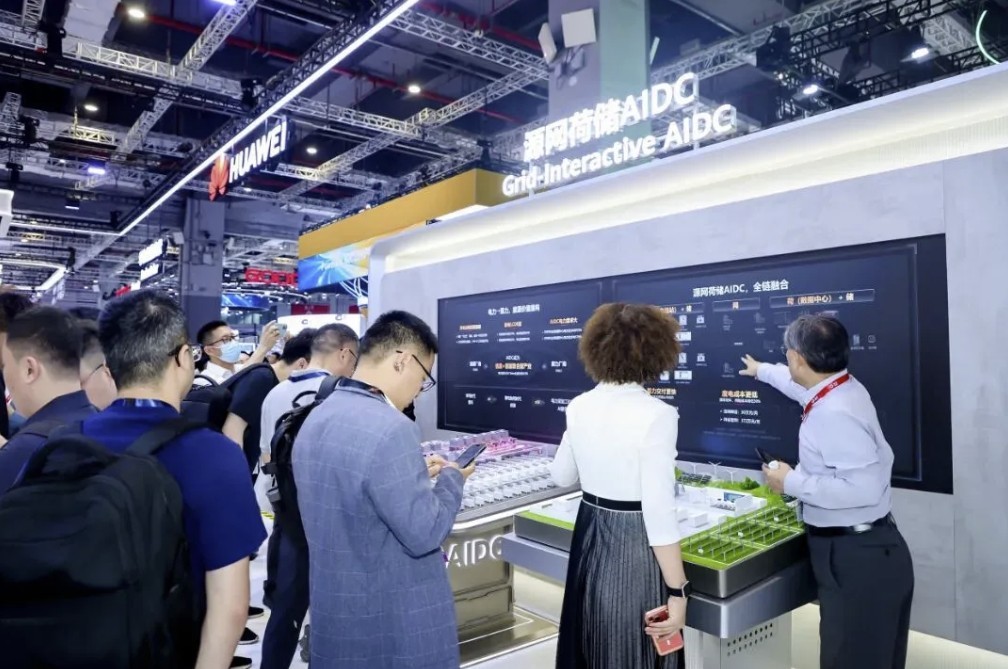
Huawei also showcased its wider FusionSolar portfolio at SNEC, including FusionSolar 9.0, a 460 kW smart string inverter, smart microgrid solutions, commercial and industrial source-grid-load-storage systems, residential PV-storage systems and an AIDC source-grid-load-storage solution for AI data centers.
The company said these developments reflect a broader industry shift in renewable energy from capacity expansion toward system-level value optimization.
This content is protected by copyright and may not be reused. If you want to cooperate with us and would like to reuse some of our content, please contact: [email protected].

Please login to comment