Hot weather and clear skies give Europe a bumper May
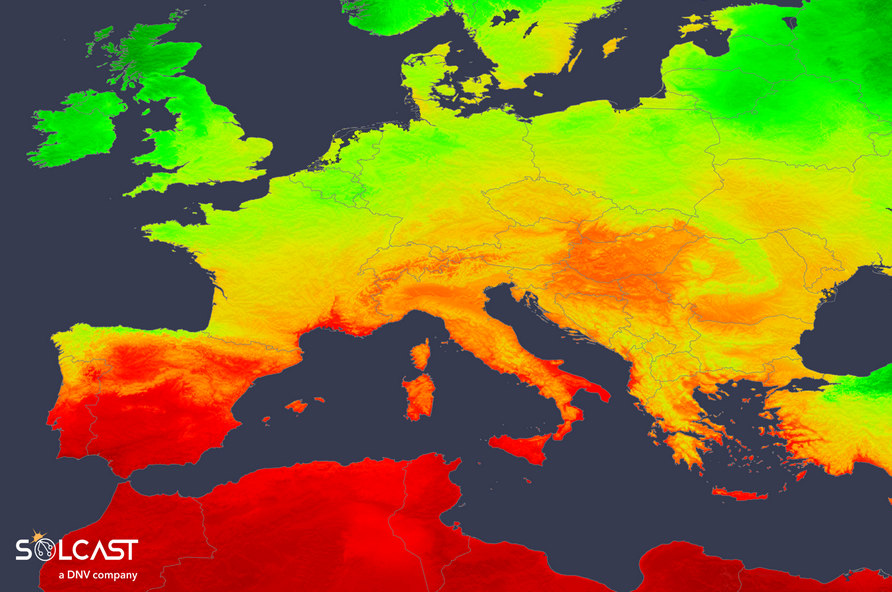
A sharp contrast between persistent heat and a mid-month cold outbreak defined Europe’s weather in May, shaping solar conditions across the continent, according to
analysis using the Solcast API. A blocking high over Central and Western Europe brought clear skies, elevated irradiance and unusually high temperatures across much of the
continent later in the month. In contrast, Arctic air pushed south in the middle of the month, bringing cloud and thunderstorms that cut into what was otherwise a strong month for solar resource. While much of Europe finished sunnier than normal, areas beyond the blocking high saw below-average irradiance.
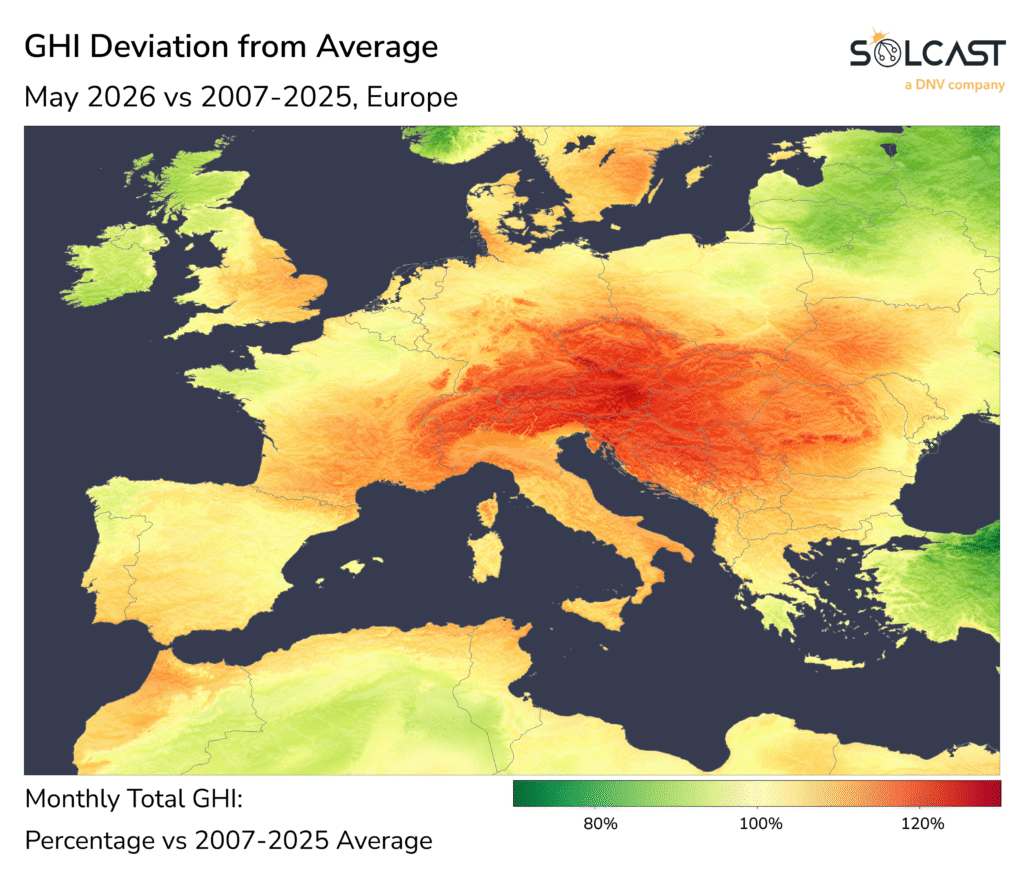
The dominant feature through the last part of the month was a blocking high that trapped warm air from Africa over much of Europe. This limited cloud development and produced sunnier-than-usual conditions from Spain to Ukraine. The clearer skies coincided with record temperatures, with multiple countries reporting records broken by several degrees and daily temperatures up to 10 C above average. For solar conditions, the strongest irradiance anomalies were centred around Austria, where levels reached as much as 25% above normal.
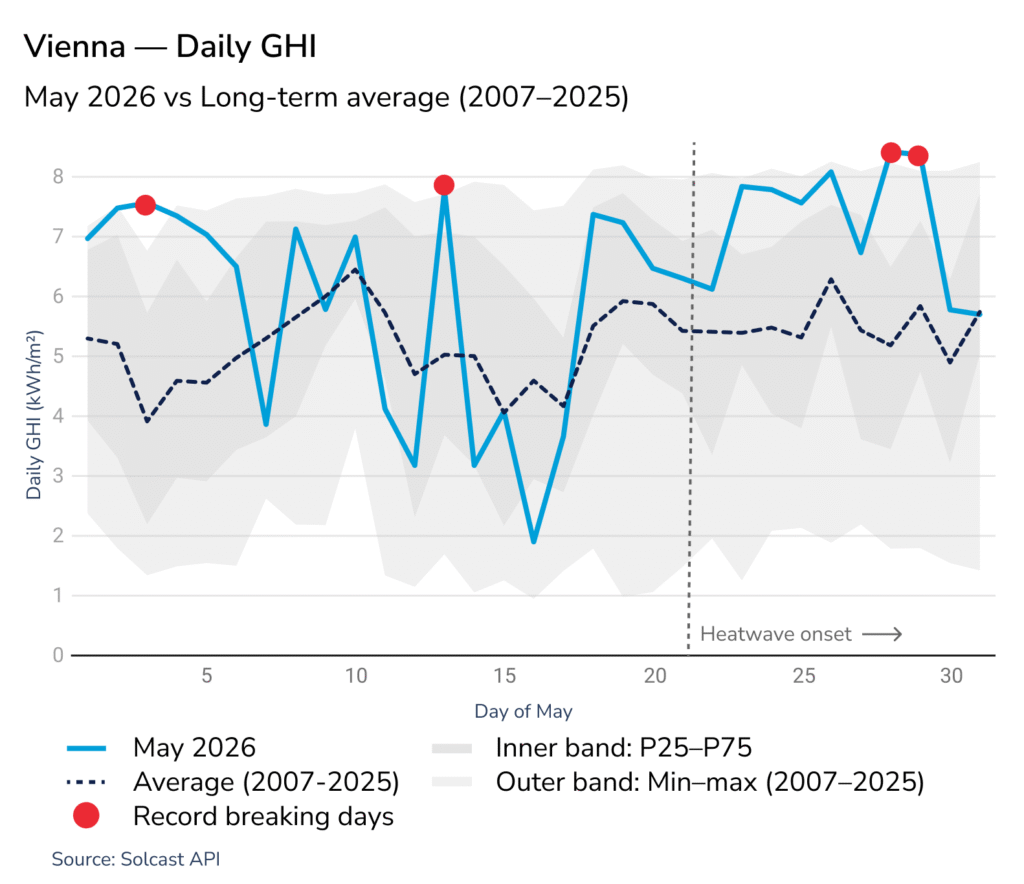
This pattern differed from the middle of the month as a cold upper-level system pulled Arctic air south toward the Mediterranean and into Africa. That colder air disrupted the warm conditions established earlier in the month, bringing more cloud and heavy thunderstorms. This reduced irradiance across affected areas and interrupted what had been a sunny start to May. As a result, despite the later heatwave, 2026 ranked only as the seventh hottest month on record.
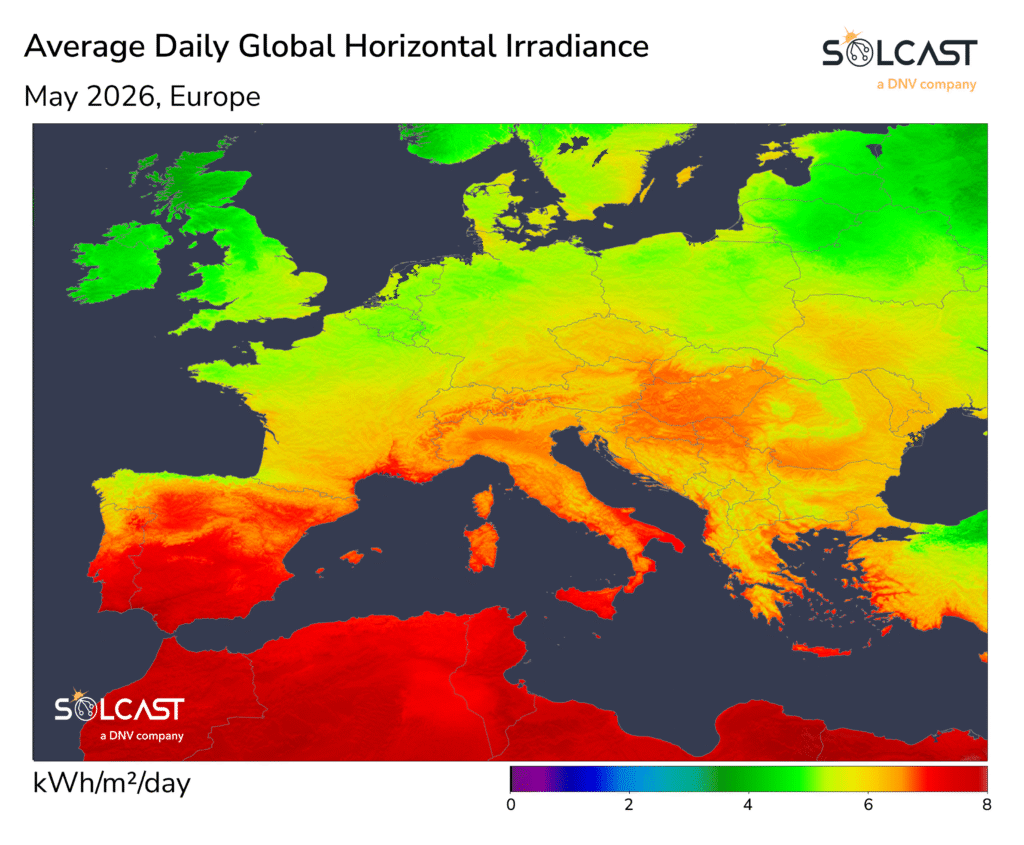
The benefits of the blocking high were not evenly distributed. Areas further from the centre of the heat dome saw weaker irradiance outcomes and more unsettled conditions. Scotland and Ireland finished around 5% below average, while parts of Norway recorded the largest deficits at about 15% below normal. These regions sat closer to the edge of the blocking pattern, where cloud and storm activity were more likely to develop even while central Europe remained comparatively clear.
Solcast produces these figures by tracking clouds and aerosols at 1-2km resolution globally, using satellite data and proprietary AI/ML algorithms. This data is used to drive irradiance models, enabling Solcast to calculate irradiance at high resolution, with typical bias of less than 2%, and also cloud-tracking forecasts. This data is used by more than 350 companies managing over 300 GW of solar assets globally.
The views and opinions expressed in this article are the author’s own, and do not necessarily reflect those held by pv magazine.
This content is protected by copyright and may not be reused. If you want to cooperate with us and would like to reuse some of our content, please contact: [email protected].
Please login to comment