Airengy, Hagag Europe to build 5 GWh compressed-air energy storage plant in Romania

From ESS News
Two Tel Aviv Stock Exchange-listed companies, Airengy and Hagag Europe, are investing approximately €55 million ($63.6 million) to develop a compressed air power plant in Romania.
The project will use Airengy’s proprietary long duration ‘AirBattery’ technology for compressed air energy storage (CAES) in salt caverns. The Romanian plant will be developed in two phases, reaching a discharge capacity of 25 MW and a storage capacity of up to 5 GWh.
Hagag Europe and Airengy will each own 40% through a special purpose company. An unnamed third party will own the remaining 20%. Airengy will take on planning, design, construction and operation of the project and its AirBattery system.
Phase one will initially add around 200 MWh of storage capacity, at an estimated construction cost of €4.5 million.
Joshua Tzvi, VP Business Development Technologies, Airengy told ESS News it estimates construction will begin in 2027 with commercial operation expected in early 2028.
The AirBattery has already been deployed on a smaller scale. The Romania project and investment by Hagag Europe represents a major vote of confidence in commercializing the technology, which Airengy developed to complement lithium-ion battery systems.
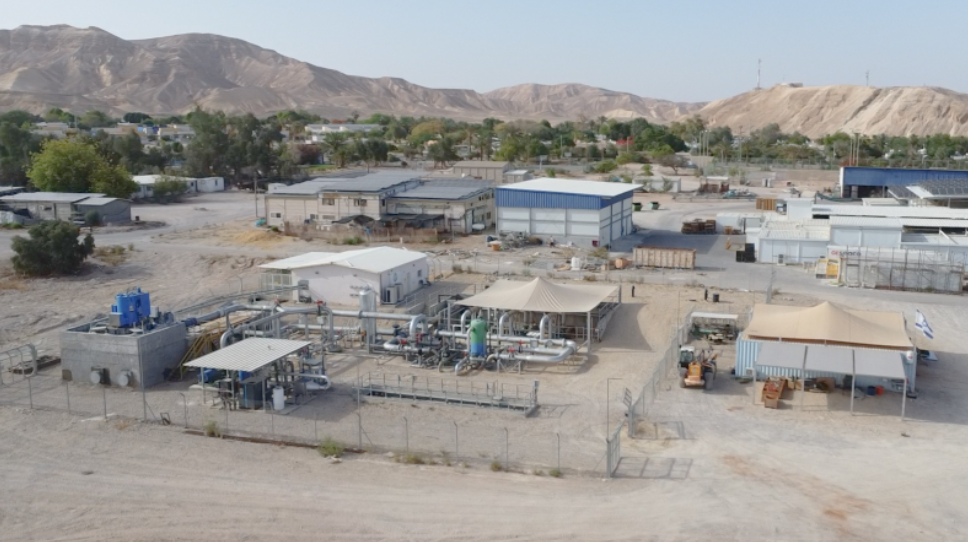
“We started with a 10 kW scale pilot in central Israel, and we are currently operating a 250 kW plant in southern Israel,” explained Tzvi.
During the charging phase, excess electricity is used to compress air, which is then injected and stored in underground salt caverns. During discharge, the compressed air is released from the cavern into a dedicated hydraulic system. The expanding air applies pressure on water, which is routed through a turbine to generate electricity fed into the grid. The entire process uses only water and air, with no polluting materials or rare metals, enabling operation for decades with low wear and minimal operating and maintenance costs, Airengy maintains. The technology is also climate agnostic, said Tzvi.
When asked why Romania is an ideal location for such a project, Tzvi pointed to the market’s local cost structure. He said Airengy had been focusing on outreach in markets with highly decarbonized grids, established salt cavern gas storage and complementary policy frameworks.
He said Hagag Europe’s involvement was a key consideration in pursuing the opportunity in Romania. Hagag Europe will secure usage rights for the salt caverns as part of its expansion into the Romanian energy infrastructure market. Besides energy, the company is also active in real estate.
“Hagag brought to our attention that there are many unutilized salt caverns in Romania,” said Tzvi. “Some of these caverns already have a grid connection and industrial facilities nearby, which could be ideal to expedite the stepping-stone facility.”
Tzvi said Airengy is also active in other European markets like Germany and the United Kingdom. It has a collaboration with Kistos Energy Storage in the UK and it is working with natural gas storage company SEFE in Germany to evaluate a large-scale project site.
This content is protected by copyright and may not be reused. If you want to cooperate with us and would like to reuse some of our content, please contact: [email protected].

Please login to comment