KIT, DLR publish dataset from German solar power tower

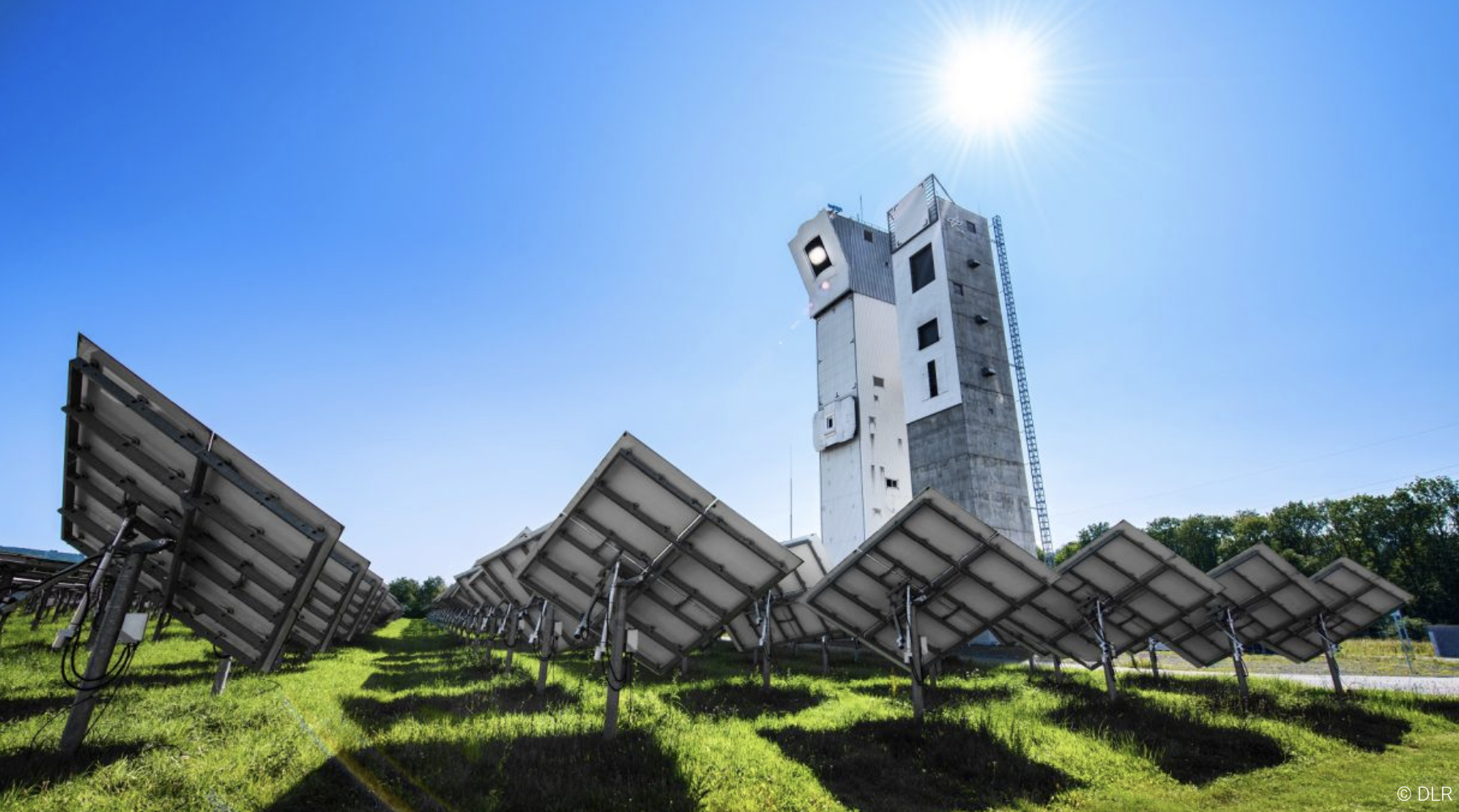
Researchers from the Karlsruhe Institute of Technology (KIT) and German Aerospace Center (DLR) are releasing freely-accessible operational data from the Jülich Solar Tower test power plant, located in western Germany.
Rather than converting sunlight into electricity, solar tower power plants generate heat that can be stored, used directly for electricity generation or utilized in industrial processes. They feature an array of movable mirrors, called heliostats, that direct light onto a receiver located at the top of a central tower.
Dr. Kaleb Phipps, from KIT’s Scientific Computing Center, said that operating solar power tower plants safely and efficiently is a complex and expensive task.
“To develop and reliably test new processes, researchers need real-world operational data,” Phipps said, “Our PAINT database provides this information in an open and structured format.”
Billed as the first of its kind, the database comprises 849 gigabytes of operational data from the Jülich Solar Tower from 2021 to 2024.
The dataset includes information on the exact positions of the 2,014 mirrors, their dimensions and their possible rotation and tilting movements. It also features over 218,000 images that can be used to verify whether the mirrors are directing the light precisely to the intended point, as well as data on warping of mirror surfaces. Weather data for the entire period can also be retrieved.
The researchers explain that the database is designed to help investigate challenges associated with the operation of solar towers, such as the alignment of heliostats, which can be impacted by factors such as wind, wear and tear or imprecise control.
“We would like to continue the development of PAINT in collaboration with other research institutions and power plant operators,” Phipps added. “As data from different facilities will be added in the future, it will be possible to develop a common standard for open operational data in solar tower research. This would speed up the development and promote a widespread adoption of this technology.”
The database is presented in the research paper The PAINT database for operational concentrating solar power plant data following FAIR data principles, available in the journal nature energy.
In the paper’s conclusion, the researchers write that the release of the database is “the catalyst for a paradigm shift in open concentrating solar power research.”
“By establishing community standards, PAINT provides a scalable framework for integrating additional data sources and modalities,” the researchers add. “This future expansion is critical to enhancing the dataset’s applicability and transferability across diverse plant designs, serving as a cornerstone for sustained global collaboration.”
This content is protected by copyright and may not be reused. If you want to cooperate with us and would like to reuse some of our content, please contact: [email protected].

Please login to comment