European PPA prices rebound as hybrids grow, storage slows

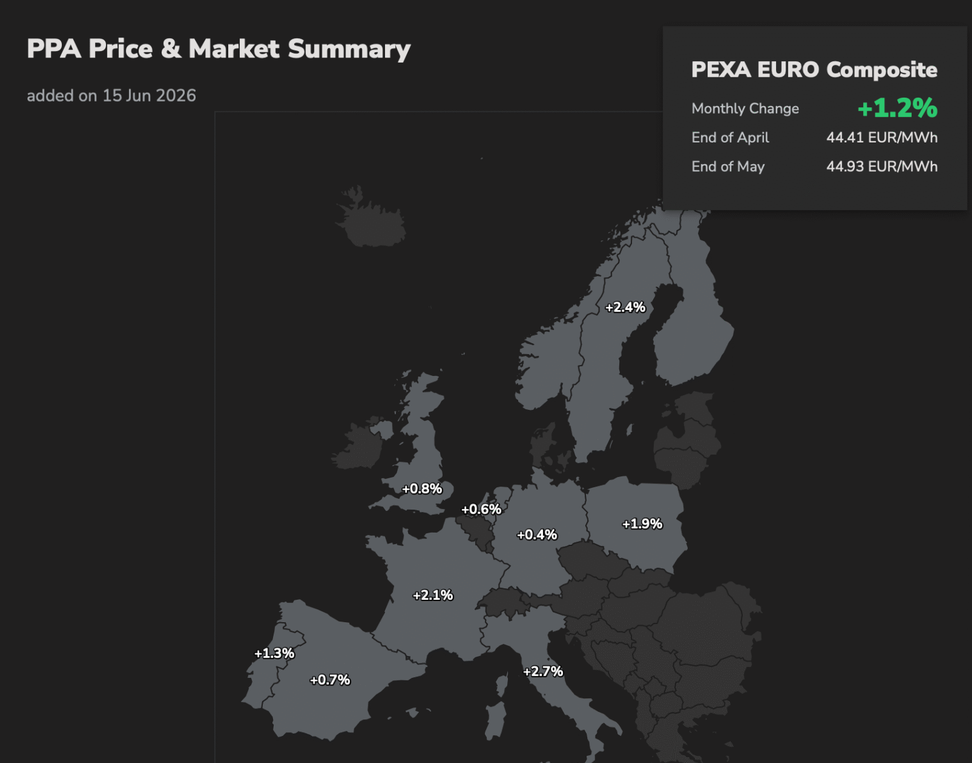
The European power purchase agreement (PPA) market continued its moderate upward trend in May, driven by energy market dynamics and growing interest in contracts combining multiple renewable technologies. According to the latest data from Swiss consultancy Pexapark, the EURO Composite Index closed the month at €44.9 ($51.09)/MWh, up 1.2% from April.
Prices increased across all analyzed markets, with Italy leading gains at 2.7%, primarily driven by Cal-27 electricity futures. The Nordic region recorded the second-largest increase, supported by higher gas prices and hydroelectric reserves that remain below historical levels.
Although electricity market movements were less pronounced than in March and April, price trends continued to be shaped by geopolitical factors.
Multi-technology contracts gain momentum
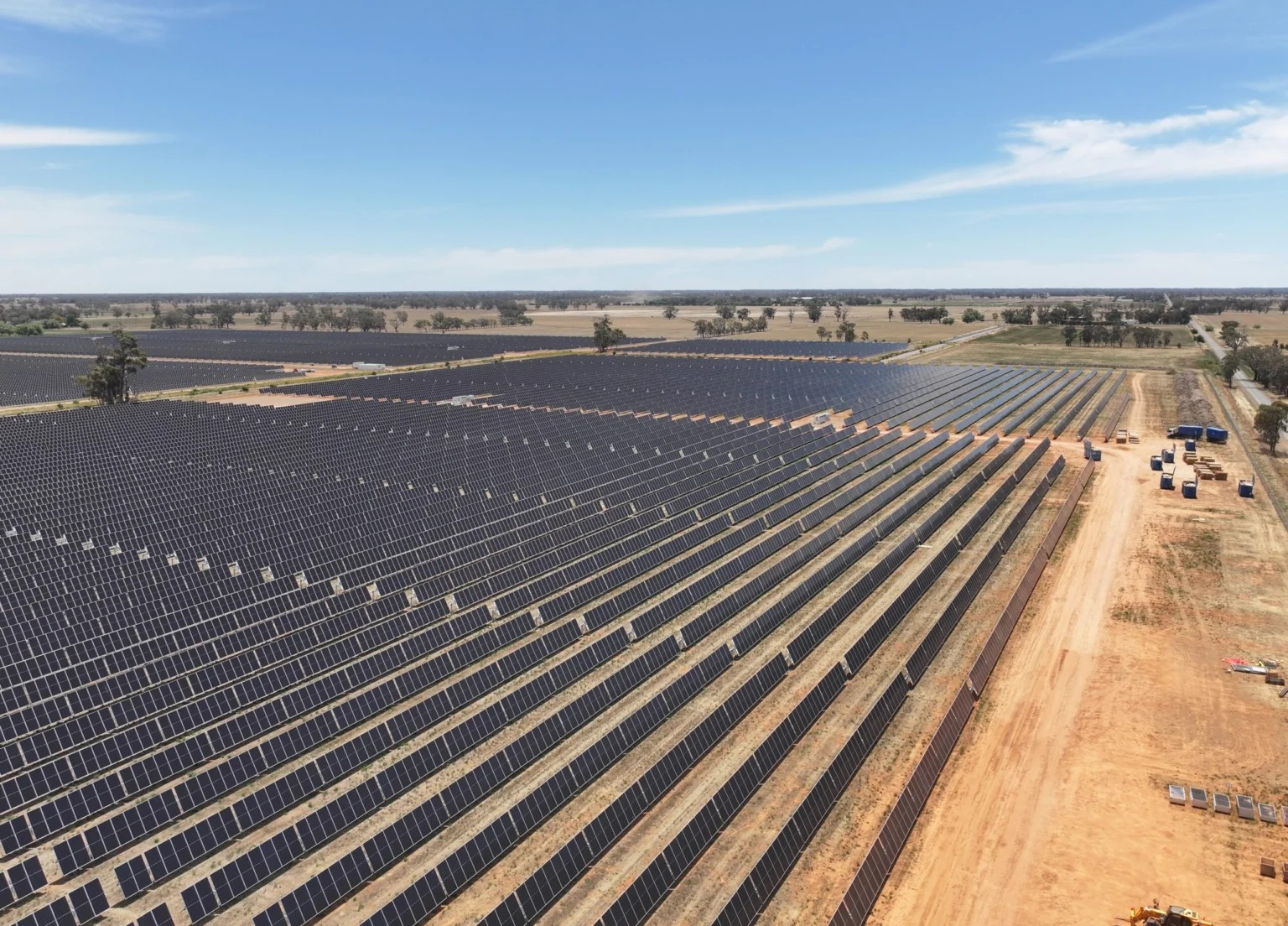
Seventeen PPA agreements representing 713 MW of contracted capacity were publicly announced in May. The largest transaction was signed by Trafigura and Nadara for five solar plants and 11 onshore wind assets in Spain, with a combined capacity of 434 MW under a 10-year agreement.
The deal is the largest multi-technology PPA announced in Europe since the second quarter of 2024 and reflects a growing market trend. So far in 2026, developers have announced 1.1 GW of multi-technology PPAs, compared with 435 MW during the same period last year.
Storage contracting activity slows
The European energy storage market recorded more moderate activity in May. Four battery energy storage system (BESS) agreements were announced, representing 350 MW and 1.3 GWh of capacity.
Despite the monthly slowdown, the first half of 2026 has delivered record levels of Flexibility Purchase Agreements (FPAs). Most of the capacity announced in May was linked to merchant business models, with projects in Germany and Latvia.
Poland accounted for the month’s only FPA, a 10-year agreement covering a standalone 300 MW/1,200 MWh battery system backed by a guaranteed minimum revenue mechanism combined with profit sharing.
On the regulatory front, Romania approved new rules to tighten grid access requirements and curb speculative capacity applications. The measures increase the financial guarantees required from developers and introduce new mechanisms to ensure projects progress toward construction.
Romania has also proposed a dedicated support scheme for standalone battery storage projects funded by the Modernization Fund. The program offers grants of up to €69,000 per installed MWh for projects with a minimum storage duration of two hours.
In the United Kingdom, the government introduced changes to both the Contracts for Difference (CfD) scheme and the capacity market. The reforms are intended to strengthen renewable energy supply chains, facilitate the deployment of low-carbon technologies, and adapt security-of-supply mechanisms to an increasingly decarbonized electricity system.

Please login to comment