GameChange targets 30% of revenue from beyond solar trackers within three years

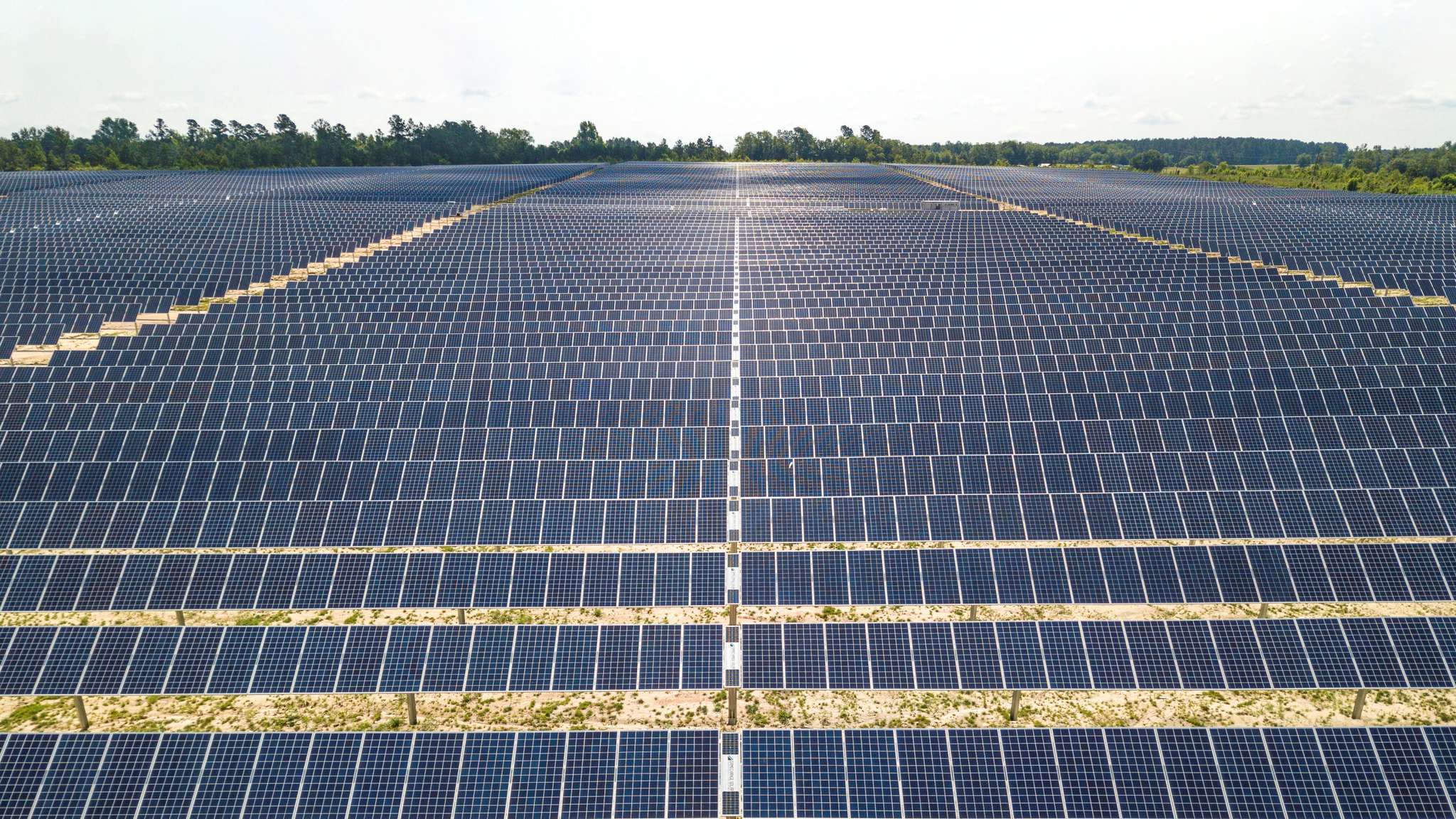
There’s more to GameChange than solar trackers, according to international CEO Vikas Bansal. The company has been on an expansion drive, which has included establishing new transformer manufacturing capacity eBOS solutions and robotic asset monitoring as part of a broader push to diversify the business.
“We are transforming as a company from GameChange Solar, which is focused more on racking and trackers, to becoming an energy infrastructure platform” said Bansal.
The executive told pv magazine that GameChange Energy now has roughly 11% of the global market share in trackers, and the company holds the number one position in India, Asia Pacific and Africa as well as a number two globally, according to Wood Mackenzie’s Global Tracker Market Share Report 2026. Trackers and racking will therefore remain core, but Bansal predicted that within two to three years, 30% of GameChange revenues will come from its new product lines.
In June 2026, GameChange announced it would consolidate its solar tracker, transformer, eBOS and remote robotic asset monitoring products divisions under a single brand – GameChange Energy.
The shift started in 2024 in response to customer feedback, according to Bansal, who said clients were struggling to find reliable transformer suppliers, which led GameChange to enter the market. The company now manufactures medium-voltage transformers in India and is building a second facility for high-voltage units under a technology transfer deal with a Ukranian partner. Bansal said he expects the first transformers under that collaboration will hit the market in 2027. GameChange also acquired the electronic balance of system (eBOS) division of manufacturer Terrasmart in February 2026, and has plans for more product launches over the next three-to-six months.
Bansal told pv magazine that his ambition is to see GameChange control an electron’s entire journey. “You have your electron, and this electron should travel most of the path on GameChange Energy technology,” he said. “We don’t want to get into the PV module manufacturing business,” Bansal added, but he does want to see GameChange Energy play a role in almost everything downstream from the panel.
Asked whether those points toward bundled solar-plus storage-plus-transformer packages for data center and hybrid projects, Bansal confirmed this was the direction of travel although still in development.
Bansal will hope to mirror the progress it has made in the tracker market, where the CEO credits company success to some innovative design decisions, such as developing its own actuator and controls rather than assembling a product from off-the-shelf parts.
“We said, we want this to be reliable – plants are meant to run for 25, 30, 40 years,” said Bansal, comparing GameChange’s tracker design to the linear actuators used in aircraft landing gear. The CEO claimed owning the full stack rather than relying on third-party suppliers for parts allowed its trackers to support plant uptime to around 99.7%.
“You don’t want to buy a tracker which works sometimes,” said Bansal. “You want to buy a tracker which works every day.”
Tracker design doesn’t happen in isolation, and GameChange Energy has had to adapt to evolution in the PV module industry. Panels have been getting bigger, thinner and lighter, and thin glass does present challenges. Bansal said GameChange Energy has tested upward of 200 module types for compatibility.
While solar tracker design is now governed by formal standards and certification pathways, the executive said, a significant share of the company’s, R&D spend goes into field validation and qualification testing– including seismic shake-table testing to model earthquake performance in markets such as the United Stated, Japan, Chile and Mexico.
“Nobody has done that kind of testing,” said Bansal. “How will the entire system behave when there is an earthquake?”
Looking to the future, Bansal said the United States remains the company’s most important market, driven partly by AI and data center demand. Growth in Australia and market expansion in Latin America, with the new recent announced offices in Mexico and the company’s market entry in Peru, with first orders for the latter expected by the end of the year or early 2027. European activity is concentrated on the Iberian Peninsula, but expansion is on the radar including in major markets such as Germany, Ireland and Eastern Europe.
Increased deployment of hybrid solar-plus-storage plants can also support the argument for trackers, Bansal said. The ability of trackers to flatten the generation curve can reduce how much energy storage capacity a project needs, he argued, providing more options for developers. “If you flatten the curve using trackers, you use less BESS – which means overall system cost comes down.”
This content is protected by copyright and may not be reused. If you want to cooperate with us and would like to reuse some of our content, please contact: [email protected].

Please login to comment