New Zealand’s largest solar farm comes online

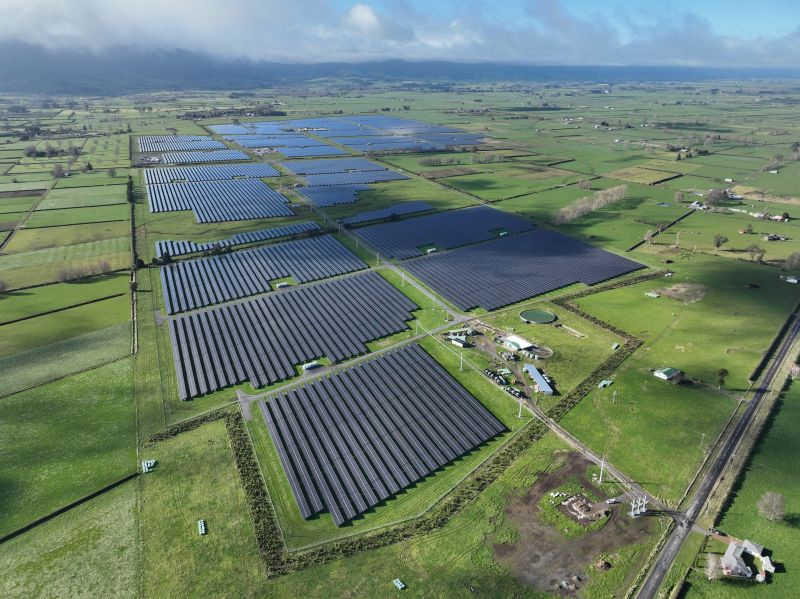
New Zealand’s largest solar farm to date has begun exporting electricity to the national grid after project owner Harmony Energy and joint venture partner Igneo Infrastructure Partners announced the successful energization of the 150 MW Tauhei Solar Farm on the North Island.
Harmony Energy New Zealand Managing Director Garth Elmes said the energization milestone has been achieved “well ahead of schedule,” coming 15 months after construction started and just two months after the last of almost 330,000 solar panels was installed.
“We are excited to have reached this significant milestone,” he said. “The Tauhei Solar Farm is an important project that will bolster the supply of affordable renewable energy.”
The milestone also marks a significant step in New Zealand’s solar journey with the 150 MW Tauhei project, built across a 182-hectare site near Hamilton in the North Island’s northeast.
It overtakes the 47 MW Lauriston Solar Farm developed by New Zealand government-backed energy utility Genesis and joint venture partner FRV Australia near Christchurch on the South Island.
Commercial operations are expected by October 2026, about four months ahead of schedule. Once operational, it will generate an estimated 280 GWh of renewable electricity per year, enough to power approximately 35,000 homes.
The facility is supported by a power purchase arrangement (PPA) with gentailer Meridian Energy, which has signed a deal to purchase 100% of the output for the first 10 years of operation. Meridian will also purchase early generation prior to full operation under a separate PPA.
In addition to solar energy output, Harmony said the majority of the site will remain in productive farming, switching from dairy to sheep farming. The panels will provide shelter and shade for the sheep, while also helping to retain moisture in the ground during the hottest months of the year.
This content is protected by copyright and may not be reused. If you want to cooperate with us and would like to reuse some of our content, please contact: [email protected].

Please login to comment