World’s largest LFP grid-forming goes online in China

From ESS News
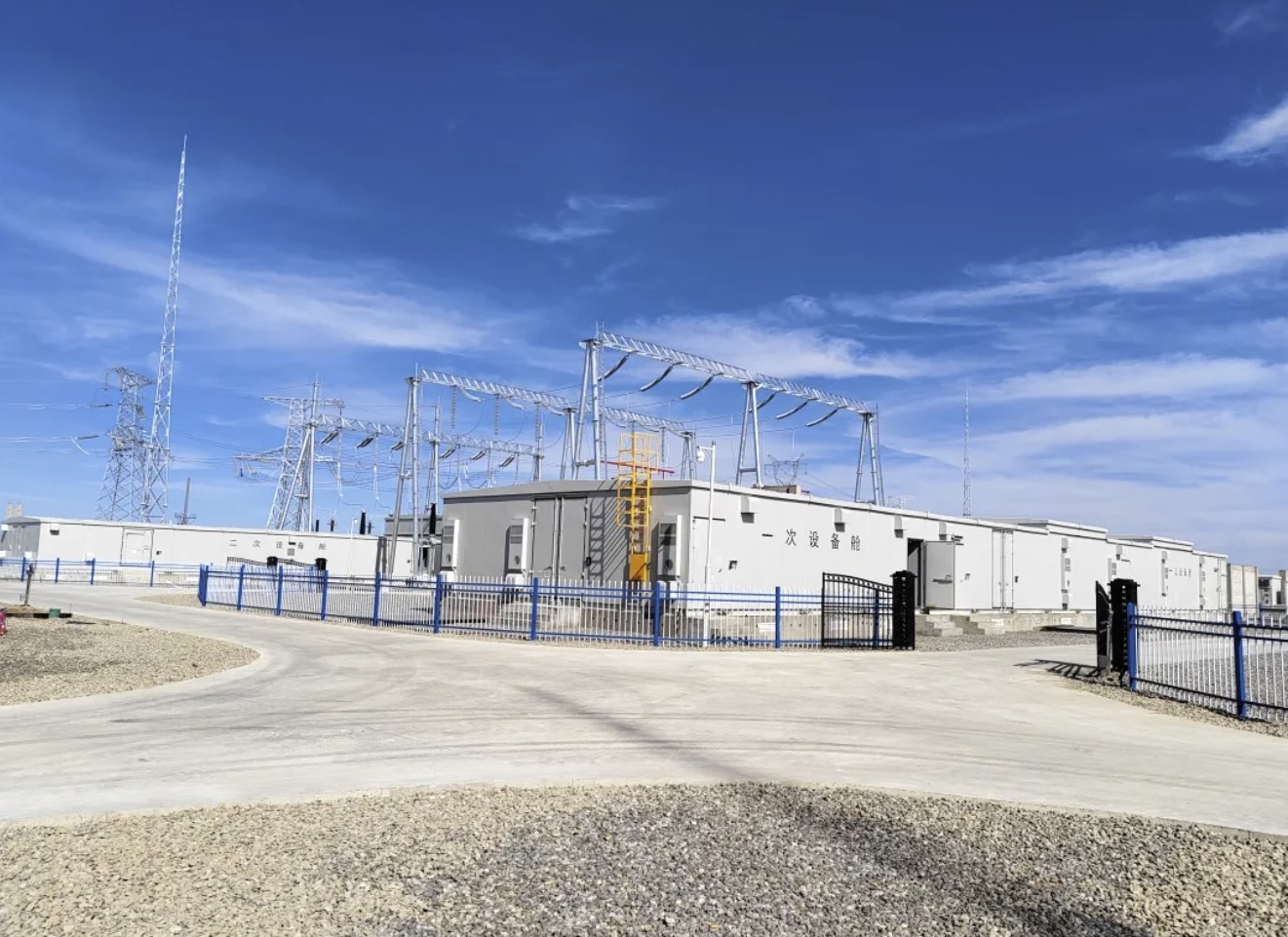
A 1 GW/4 GWh battery energy storage project in China’s Inner Mongolia Autonomous Region was connected to the grid on August 3rd 2026, adding a gigawatt-scale grid-forming energy storage facility to one of the country’s major renewable energy regions.
The DongSu Substation New Energy Storage Special Action project is located near Mandulatu in Sonid Left Banner, Xilingol League. Chinese industry sources reported that the plant completed its initial energization and grid connection successfully on the first attempt.
Wanbang Digital Energy invested approximately CNY 3 billion (USD 445 million) in the project, which occupies around 28 hectares. Local government sources have described the facility as the world’s largest single-site grid-forming LFP battery storage plant and said this four-hour LFP station is expected to discharge around 1 TWh of electricity annually.
The scale of the DongSu project is therefore significant not only in terms of stored energy, but also in the deployment of grid-forming technology at the gigawatt level.
Unlike conventional grid-following inverters, which rely on an existing voltage and frequency reference, grid-forming inverters can establish and maintain those references themselves. Such systems can provide voltage and frequency support and improve the stability of grids with high penetrations of inverter-based wind and solar generation. Grid-forming resources can also be designed to support black-start operation following a major grid outage.
For Inner Mongolia, where large-scale wind and solar development is placing growing demands on transmission networks and system flexibility, those capabilities make storage much more important than merely energy-shifting function. A project of this size can combine four-hour peak shifting with fast grid-support functions, helping the system accommodate variable renewable generation while reducing its dependence on conventional synchronous generation for stability services.
The commissioning also comes as China moves to accelerate deployment of grid-forming technology. The country’s renewable energy plan for the 2026-2030 period, released in July, calls for greater use of grid-forming equipment, high-accuracy power forecasting and integrated dispatch, alongside the development of more “system-friendly” wind and solar projects.
This content is protected by copyright and may not be reused. If you want to cooperate with us and would like to reuse some of our content, please contact: [email protected].

Please login to comment