Türkiye’s PV module manufacturing capacity tops 13.4 GW

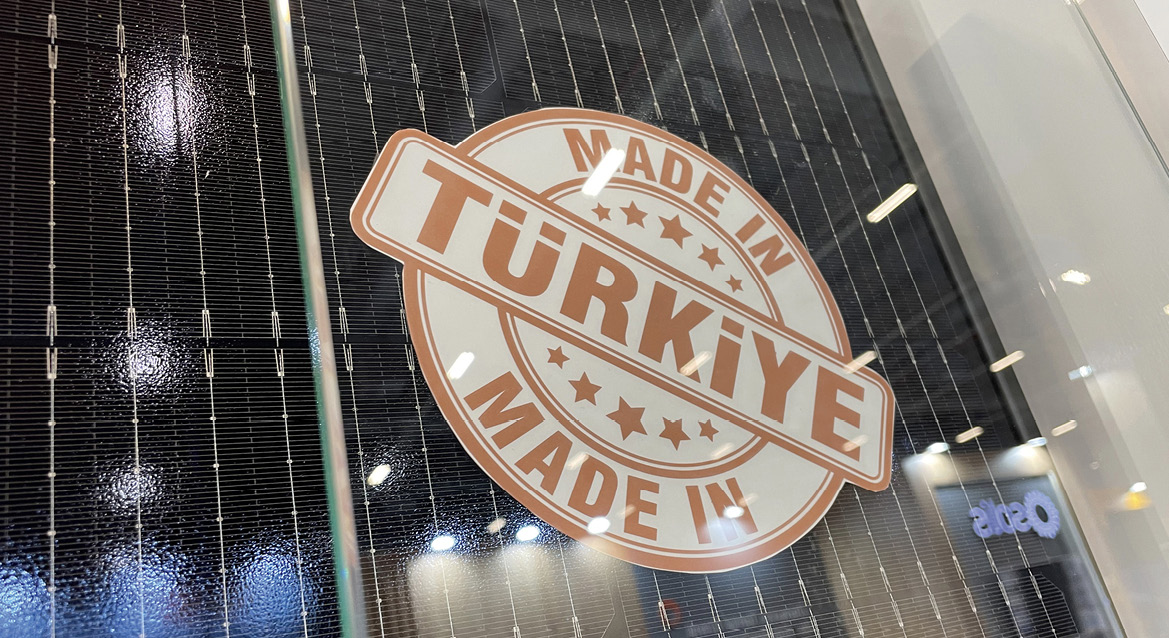
Turkey now has more operational solar module manufacturing capacity than Italy, Germany, Spain, France, and the Netherlands combined, according to Sinovoltaics’ newly updated pan-European Solar Supply Chain Map. The map covers 178 production sites and projects across approximately 25 countries.
“Turkey’s current operational module manufacturing capacity stands at approximately 13.2 GW,” Sinovoltaics CEO Dricus de Rooij told pv magazine. “This is spread across more than 20 manufacturers, led by Smart Technologies (2.4 GW) Kalyon PV (2.1 GW), CW Enerji (1.8 GW), Kıvanç Enerji (1.2 GW), and Schmid-Pekintaş (1.2 GW), alongside a broad base of smaller producers.”
According to Sinovoltaics, the combined current module manufacturing capacity of all European countries does not exceed 9.7 GW.
With Turkey having annual domestic PV demand of approximately 4 GW, most of its current capacity is intended for export.
“The gap, however, reflects a mix of exports and underutilized capacity, not exports alone,” de Rooij explained. “Several Turkish manufacturers have disclosed export activity, particularly toward the US market. Current US trade policy favors Turkey as a sourcing origin: Chinese-origin products face steep Section 301 tariffs, while Southeast Asian transshipment points such as Vietnam, Malaysia, Thailand, and Cambodia face their own anti-dumping and countervailing duties. Turkey faces neither. This has made Turkish-made modules an attractive alternative for US buyers, and manufacturers including HT Solar, Smart Solar Technologies, and Kalyon PV have all pursued or announced export activity to the US and EU.
“That said, Turkey’s cell production capacity remains limited, concentrated in just two producers, which constrains how much fully Turkish-made product can be supplied at this scale, regardless of demand. We would caution against citing precise export volumes, since no single trade dataset captures free-zone and company-level exports cleanly, and the picture is evolving quickly alongside shifting US and EU trade policy,” de Rooij said.
“The remainder of the gap likely reflects underutilized nameplate capacity, consistent with the broader global module oversupply, where running below rated capacity is now standard across the industry,” he added.
The tracker also shows that Turkey has around 3.3 GW of current cell manufacturing capacity, concentrated among three producers: Kalyon PV (2.1 GW), Smart Technologies (800 MW) and HT Solar (0.4 GW). Several other announced cell projects in Turkey, including those by Astronergy and JTPV/Schmid-Pekintaş, are not yet operational and are targeted to come online between 2027 and 2030.
Turkey’s current wafer manufacturing capacity stands at around 2.2 GW, attributable to CW Enerji (1.2 GW), which is targeting an expansion to 5 GW by 2030, and Kalyon (1 GW). None of the other Turkish wafer projects tracked in the data is yet operational.
*The article was updated on August 20 to add the solar cell and module capacity of Turkish manufacturer Smart Technology. The headline was also amended to reflect that total module capacity is 13.4 GW, not 13.2 GW as previously reported. The corrections were made at the request of Sinovoltaics and the manufacturers involved.
This content is protected by copyright and may not be reused. If you want to cooperate with us and would like to reuse some of our content, please contact: [email protected].

Please login to comment