Report alleges U.S. solar recycling is mostly landfilling, offshoring in disguise

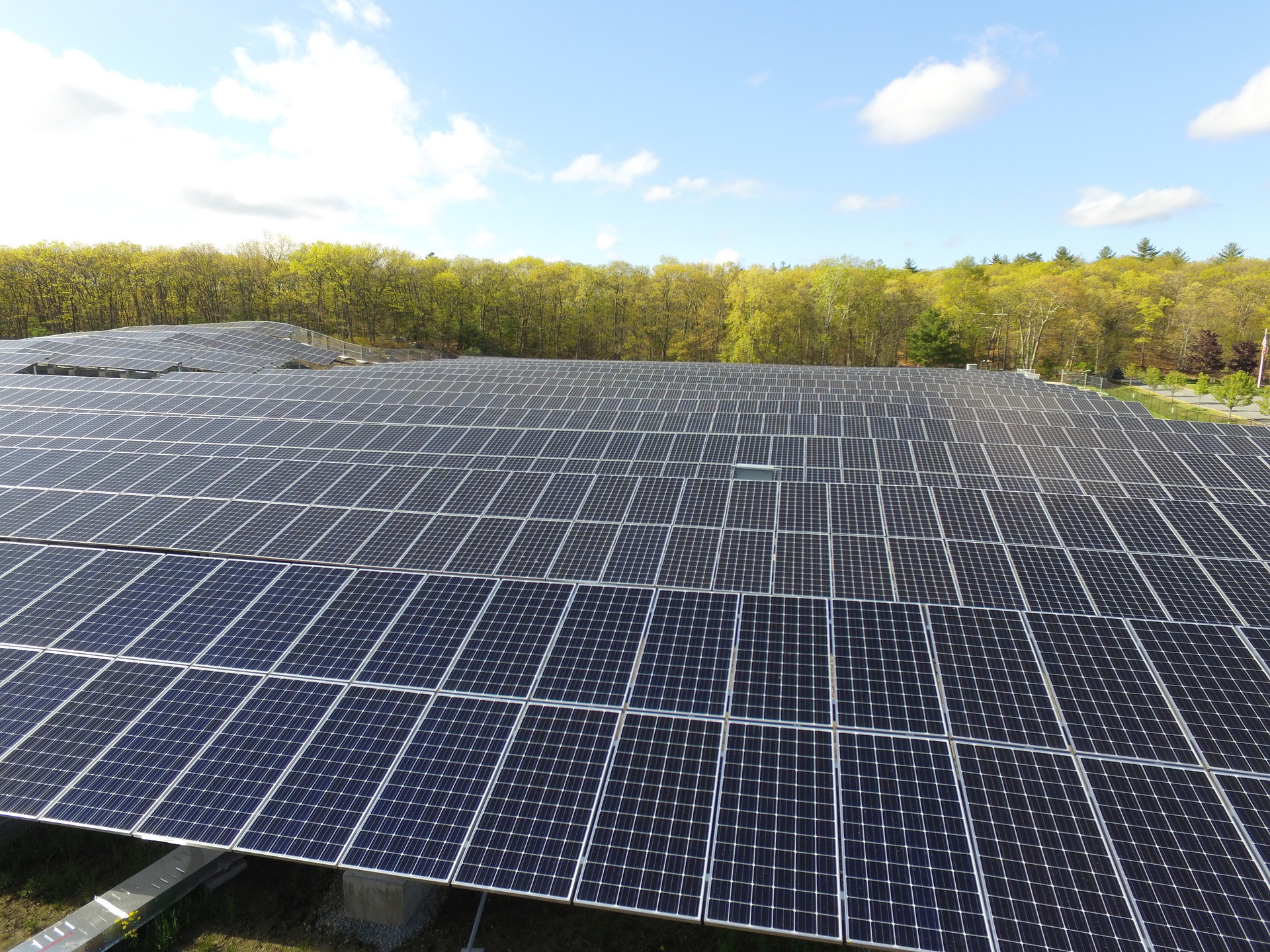
A new white paper published by Los Angeles-based research firm Sustainable Source Studios (S3) claims that the vast majority of decommissioned U.S. solar panels are not being recycled into clean secondary feedstock.
With the U.S. solar industry facing an estimated one million tons of retired photovoltaic (PV) modules by 2030 and roughly ten million tons by 2050, the report authored by circular supply chain analyst Isaac Nichelson argues that the prevailing domestic end-of-life management system relies on landfilling, material downcycling and overseas export.
“Almost none of what the United States calls ‘solar recycling’ is closed-loop recovery,” wrote Nichelson in the report. “Three practices dominate instead — landfilling, offshoring, and camouflaging (disposal disguised as recycling) — and all three are the same failure in different clothing: the material never becomes clean feedstock again, and a customer, an investor, or a regulator usually cannot tell any of them apart from the real thing.”
According to S3’s analysis of federal and state regulatory records, peer-reviewed environmental studies and corporate disclosures, roughly 90% of discarded U.S. panels are sent directly to landfills due to the stark cost differential between tipping fees and legitimate recycling.
For the remaining fraction that enters commercial recycling streams, the report alleges that the dominant pathway is a “shred-and-export” pipeline controlled by South Korea-based Korea Zinc through its U.S. subsidiaries, resulting in shipping shredded module materials across the Pacific for smelting rather than completing value recovery domestically.
The white paper emphasizes that true closed-loop, industrial-scale domestic recovery remains rare, and that the default industry pathway externalizes environmental, social and economic costs as it ships these recoverable materials away from U.S. shores.
S3 identifies Nevada-based Comstock Metals as the sole operating facility in North America currently meeting all of its criteria for certified, zero-landfill domestic processing.
A disclosure in the white paper’s footnotes reveals that S3 has provided strategy consulting to Comstock Inc, but adds, “the white paper’s findings rest solely on cited public records.” In a comment to pv magazine, Nichelson wrote “The paper’s findings rest solely on cited public records, and Comstock had no editorial role in the research.”
The press release announcing the white paper further states “No proprietary data, surveys, or interviews were used; every figure is footnoted to its source in the published paper. The research was self-commissioned and self-funded by S3; no third party commissioned, funded, or reviewed it prior to publication.”
Comstock, Inc. also provided comments to pv magazine USA, describing its business relationship with S3 in the following terms: “Sustainable Source Studios has provided sustainability consulting to Comstock across our multiple lines of businesses (real estate, power and energy development, fuels and metals).” While the company notes that it was aware of the report prior to publication, a company spokesperson wrote “Comstock did not provide any data or assistance, all research was independently handled by S3 – Sustainable Source Studios.”
In addition to Comstock, the analysis cites First Solar’s long-standing dedicated circular recycling operations for its proprietary thin-film cadmium-telluride (CdTe) modules as an exception to the industry trend.
The crux of the white paper’s argument relies on seven findings the S3 team made in the course of researching the topic (reproduces as they appear in the report):
- The U.S. shut down domestic primary smelting because it could not be done cleanly.
- A vertically integrated foreign smelter has built the dominant U.S. solar-end-of-life pathway.
- The structural arithmetic forces overseas feedstock acquisition.
- Shred-and-export is preprocessing for a foreign smelter, not closed-loop recycling.
- The export pathway has documented externalities at both the smelting endpoint and at U.S. preprocessing sites.
- Camouflaging: disposal disguised as recycling — the hardest failure to see.
- Certification has caught up with this problem, but most U.S. operators have not.
The paper discusses how tightening of standards under the EPA’s National Ambient Air Quality Standard for lead led to the closure of the last operating lead smelting facility in the U.S. in 2013.
In the intervening years, Korea Zinc and its subsidiaries PedalPoint Holdings and evTerra have set up a shred-and-export pipeline for all components in the solar modules it processes domestically, aside from the aluminum frames and glass. The paper says the Korean company now targets 120,000 tons per year of such materials in its Onsan solar panel processing facility in South Korea by 2030.
This volume represents more than 10 times the expected Korean domestic supply for such materials, indicating the bulk of the materials will come from the U.S. — a fact that the S3 team says will come to define “the underlying competitive dynamic of the dominant U.S. solar end-of-life pathway.” Indeed, the white paper says that at least two domestic recyclers, Solarcycle and Com2 Recycling, ship recovered metals from their U.S. processing facilities to Korea Zinc for downstream smelting and refining.
However, the paper also notes that Korea Zinc has acquired a shuttered smelting site in Tennessee, “signaling intent to bring some smelting capacity back into U.S. jurisdiction under its own ownership.”
The S3 paper also names several other U.S. solar recycling companies in its analysis, including currently-operating enterprises like Solar Panel Recycling, LLC (SPR) and Reiling and pre-scale companies OnePlanet Solar Recycling and early-stage European players Photorama, LuxChemtech. It categorizes these companies on a quadrant chart, with one axis that spans from pilot to full industrial scale and a second axis that spans from shredding and smelting to full closed-loop recycling.

On the chart, Comstock is the only company in the upper right quadrant, with the majority of companies being assigned a label of “hazardous downgraded waste.”
In response to a request for comments from pv magazine USA, Solarcycle said the following:
We disagree with the allegations but appreciate that the whitepaper is calling attention to different schools of thought within the industry. We believe that our process is the best method to simultaneously: achieve 100% landfill diversion, recover the highest possible value for these materials, provide the scale and economics necessary to meet the industry’s needs, and ensure end-to-end traceability of the materials after they leave our facility.
Our process varies per panel type, but for the majority of the panels we have recycled, more than 80% of the mass of the panel has stayed in the US once it is recycled at our facilities, and is then sold to offtakers domestically. The other <20% is sent abroad to our refining partners so that it can be sold back to the supply chain. This is because there are currently no refineries based in the U.S. at scale. We are thrilled that Korea Zinc has demonstrated a commitment to addressing this issue with their announcement to build a refinery in Tennessee, which will open in 2029, and provide a pathway to domesticate the entire process, at scale – a first for the industry.
We have found that this process allows us to offer customers 100% landfill diversion and the highest value recovery rate in the industry at 97% value recovery. We calculate this by combining current metal and material market prices with average panel composition data. We then account for recovery efficiencies throughout the entire process, as well as the quality level at which we sell our outputs (i.e., whether a material is downcycled into a less-valuable material), to get to the % of the maximum that we truly realize. The polymers are burned off in the smelter’s furnace, plus any small portions of % of metals that aren’t recovered (e.g., 0.15% of silver), end up in a clean slag which the smelter puts through a cleaning process and then sells as a concrete input. This helps ensure that 0% of the solar panel is sent to the landfill. By working directly with the smelter, we are able to track the precious metals and other materials all the way through to new inputs into the supply chain and have full end-to-end traceability.
We agree that smelting can be high risk and should be evaluated with intense scrutiny. We have carefully vetted our refining partners, including auditing smelting operations in person, and have found them to meet rigorous environmental and human safety requirements.
It is our belief that recyclers claiming that they are completing everything on US soil haven’t had to implement their process at scale. For example, the whitepaper refers to Comstock’s rated design capacity (100,000 tons/year) as if it were current throughput. As of Comstock’s own most recent disclosure (Aug 11, 2026), the facility has not yet begun commercial production, so this is all simply theoretical. In addition, there is no mention of what Comstock or others will do for the final metals refining step, except that the paper contradicts itself by stating specifically that “Recovering the metals in a solar panel — silver, copper, lead, and, in thin-film modules, cadmium and tellurium — ultimately requires smelting, and the United States no longer performs that step domestically.” This implies that companies such as Comstock will also need to use a smelter for their recycling process, but they have not yet begun any meaningful operations to do so.
We encourage the industry, including our peers, to continue researching and piloting onshore solutions for material recovery. Our goal is to provide scalable, safe recycling solutions to the market in order to meet fast-growing demand for solar panel recycling and we encourage our competition to do the same.
pv magazine USA has also reached out to other companies for comment on their inclusion in this category.
S3’s recommendations for solar operators
The crux of S3’s argument is that domestic recycling should ideally be a U.S.-permitted, third-party-audited closed loop that recovers the material and economic value of the processed outputs.
The paper contains numerous recommendations for how regulators and investors can support such a circular marketplace. But S3 places the majority of the onus on developers, asset owners and their procurement teams, saying these parties must “make certification and documented chain-of-custody a procurement specification rather than a preference.”
To make that easier to do, the paper contains a table judging major recycling market players on 14 criteria, including scale and operating status, domestic material disposition and supply chain and regulatory record.

One of the key recommendations is for recyclers to obtain third-party certifications for responsible recycling and circularity. One such certification comes from the Recycling Industry Operating Standard (RIOS) for compliance with the ISO 9001, 14001 and 45001 standards.
Significantly, although both Solarcycle and SPR highlight their adherence to the ISO 9001, 14001 and 45001 standards in public-facing materials, S3’s criterion regarding those standards upholds the recycling industry-specific certification from RIOS that integrates the three ISO standards into a single, integrated audit.
A second certification falls under R2v3, the latest version of the Responsible Recycling (R2) standard, managed by the U.S.-based nonprofit Sustainable Electronics Recycling International (SERI). In 2024, SERI established Appendix G, an audited standard tailored specifically to photovoltaic modules that requires zero-landfill downstream traceability and strict material purity tracking. Appendix G becomes mandatory for all R2-certified facilities handling PV modules by January 31, 2027.
When asked about their plans with regard to the R2 certification, Solarcycle provided this statement:
SOLARCYCLE evaluated R2 closely and decided not to pursue it at this time, given its lack of guidance on material tracking and its redundancy with other certifications that are more relevant. SOLARCYCLE holds certifications to the internationally recognized ISO standards for Quality Management Systems (9001), Environmental Management Systems (14001), and Health and Safety Management Systems (45001) which are the base of the R2 standard. We continue to closely monitor and evaluate R2 as it develops. Linked here is an article sharing more on our outlook on industry certifications.
When it comes to recommendations for living up to the ideals his paper professes, Nichelson stresses that his push for responsible recycling is not an anti-solar argument.
“Solar has always been one of the most logical and elegant forms of energy production, and its efficiency keeps improving,” Nichelson said in a statement. “That is exactly why the industry cannot afford an end-of-life chain that, as the cited record shows, leaches lead into groundwater and sends toxic material to overseas communities under the label of recycling. We expect the next six months to define the leaders in solar’s end-of-life segment — and we believe the polluter-pays principle should apply here as it does everywhere else.”
This content is protected by copyright and may not be reused. If you want to cooperate with us and would like to reuse some of our content, please contact: [email protected].

Please login to comment