New temperature model improves floating PV performance predictions

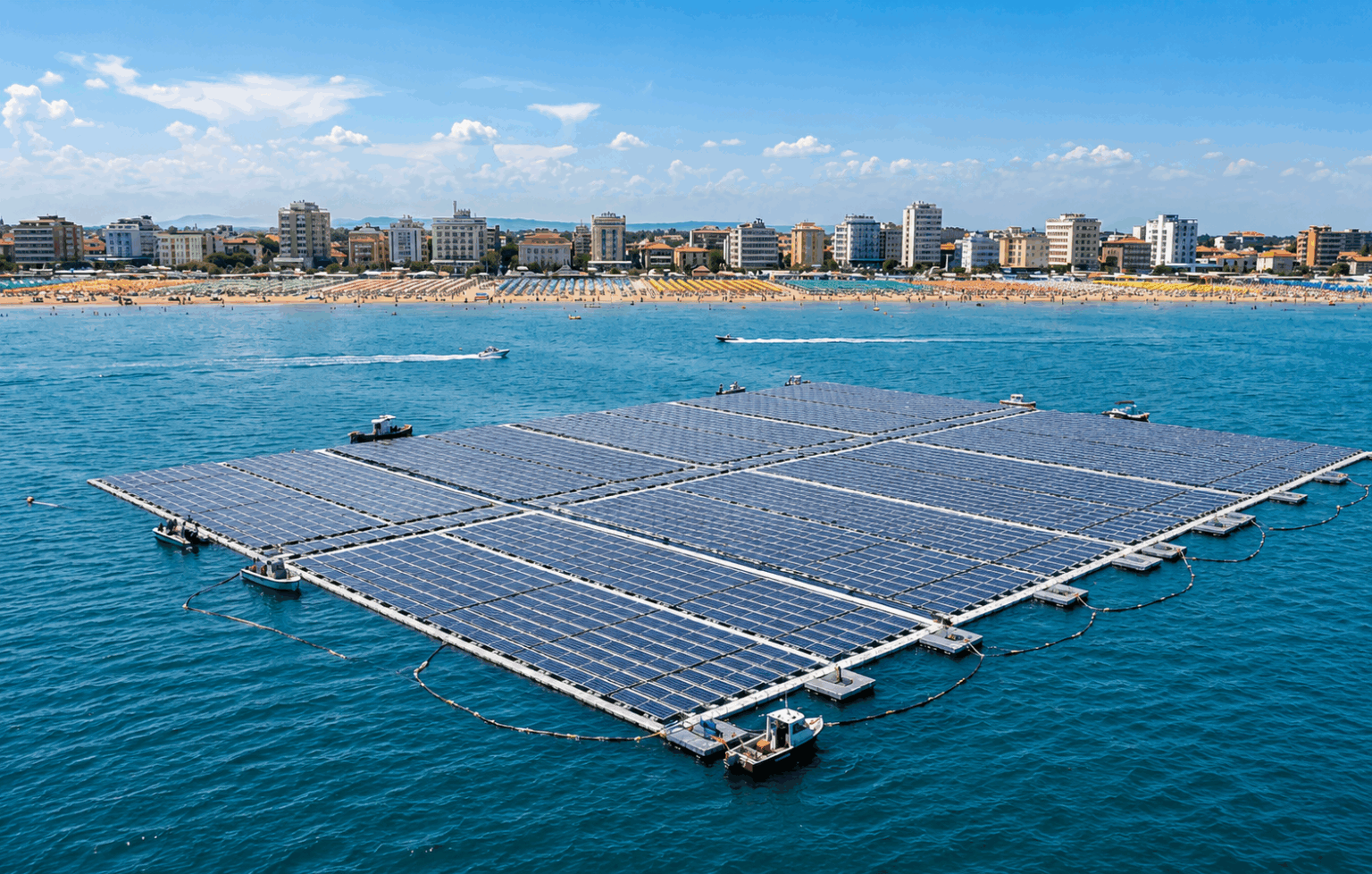
A research team from Malaysia’s Curtin University has developed a simplified operating cell temperature model for floating PV (FPV) systems. The new model is compatible with the existing nominal operating cell temperature (NOCT) model and can therefore be integrated into existing solar PV software.
“The new FPV-NOCT model extends the existing standard NOCT PV model by incorporating water temperature to estimate solar cell temperature floating over a water body,” corresponding author Ramanan Chidambaram Jayaraj told pv magazine. “A key advantage is that it remains compatible with existing PV temperature models, requires only water temperature as an additional input, and preserves the simplicity of the original NOCT framework.”
Jayaraj said he is currently working to refine the model to improve its predictive accuracy. “I am also planning to extend the development of cell temperature models to emerging solar cell technologies,” he added.
The researchers combined field measurements, computational fluid dynamics (CFD), statistical analysis and theoretical modeling. They first collected one-minute data from two custom-built FPV systems in Malaysia, using 100 W modules positioned 250 mm and 800 mm above the water surface. They used the measurements to derive an experimental regression model and validate a two-dimensional CFD model developed in Ansys Fluent.
The team then used Taguchi statistical analysis to generate 10-factor and seven-factor CFD regression models and assess the influence of environmental and design variables. Based on the results, the researchers developed an FPV-specific NOCT model incorporating the ambient water temperature difference, as well as a version featuring a wind-correction factor.
The researchers compared five models – the experimental regression model, the 10-factor and seven-factor CFD-Taguchi regression models, the FPV-NOCT model, and the FPV-NOCT model with a wind-correction factor – against the experimental data. They then validated the strongest candidates, particularly the FPV-NOCT models, using independent FPV datasets from Passaúna Lake in Brazil and Windsor and Oakville in California. The basic FPV-NOCT model delivered the strongest overall performance.
“When the FPV-NOCT model was tested against floating PV data from Passaúna Lake, it successfully predicted the observed cell temperatures for 11 of the 12 months, and for all 12 months when the wind correction factor was included,” said Jayaraj. “A similar pattern was observed in Windsor and Oakville, where the FPV-NOCT model achieved a prediction accuracy of 92.3% in one instance. What is particularly interesting is that the proposed model performed better than the standard NOCT PV cell temperature model for PV systems floating over a water body.”
The researchers presented their findings in “Water cooling effect in solar cell temperature estimation for floating photovoltaics modeling,” published in Solar Energy.
This content is protected by copyright and may not be reused. If you want to cooperate with us and would like to reuse some of our content, please contact: [email protected].

Please login to comment