Agrivoltaics improve grapevine growth, biodiversity in hot Mediterranean climates

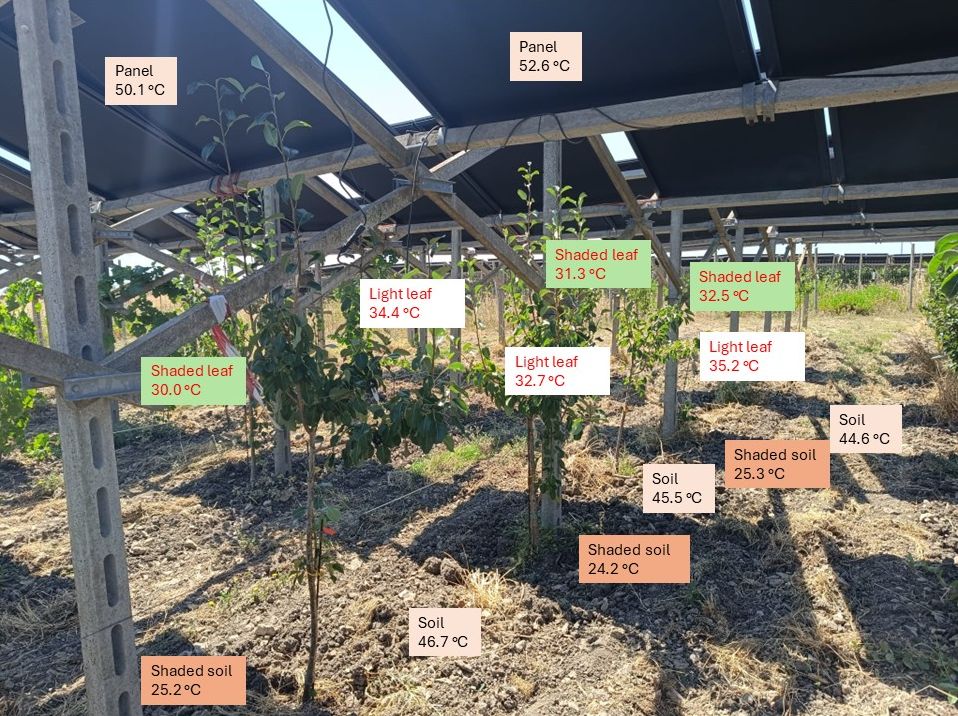
A research team in Italy has investigated the effects of agrivoltaic shading on grapevine physiology, yield, fruit composition and biodiversity under the hot, dry conditions of southern Italy.
Giuseppe Ferrara, a professor at the University of Bari’s Department of Soil, Plant and Food Sciences, told pv magazine that the results point to potentially significant benefits from PV shading in hot and water-limited agricultural environments, but should not be automatically extrapolated to other climates or crops.
The researchers compared grapevines grown under different levels of agrivoltaic shading with vines grown in full sun. They found a marked difference in shoot development. Average shoot length stood at 115.8 cm under full-sun conditions, compared with 268 cm to 274 cm under low- and high-shading conditions. Shading also promoted leaf-area development.
“Certainly, this applies to grapevines, particularly in a hot, dry climate such as Puglia in summer,” Ferrara said. “We believe similar results can also be expected for other species under comparable climatic conditions, while always considering the shade tolerance of the species being studied.”
Ferrara said the balance may change considerably in cooler and wetter regions. The largest potential agronomic benefits are likely to occur where crops experience high temperatures, limited summer rainfall and water stress. In these environments, PV modules can effectively provide a protective function by reducing plants’ exposure to excessive solar radiation.
The study also found substantial differences in grape bunch weight. Bunches under the higher-shading treatment reached an average 164.9 g, compared with 65.4 g under full sun.
According to Ferrara, the vines beneath the modules experienced less environmental stress, while lower temperatures allowed photosynthesis to operate more efficiently, contributing to stronger shoot and bunch development. The vineyard is rainfed, apart from limited emergency irrigation, making protection from extreme heat particularly relevant.
However, the researchers stress that this result cannot be generalized to wetter regions. Ferrara pointed to earlier experimental work in the Valpolicella wine-growing region of northern Italy, where production was higher outside the PV-covered area. Agrivoltaic performance therefore depends on the interaction between crop physiology and local climatic and soil conditions.
Shading also affected grape composition. The researchers measured a decrease in berry sugar concentration from 25.8 °Bx under full sun to 22.9 °Bx under high shading, while acidity parameters showed comparatively small variations.
“Shading delays sugar accumulation, while lower temperatures reduce the degradation of organic acids,” Ferrara explained. “Because berries under the panels also contain more water, there is a dilution effect on sugar concentration.”
The magnitude of these differences can vary from year to year. Ferrara noted that lower solar radiation and cooler conditions can, in some climates, reduce crop productivity beneath PV panels compared with full-sun cultivation, as other agrivoltaic studies have also shown.
Beyond vine physiology and yield, the researchers observed a statistically significant increase in spontaneous plant species richness beneath the agrivoltaic modules. Species recorded included clover, common sowthistle, plantain, tassel hyacinth and several types of alfalfa.
Greater plant diversity could have wider ecological implications for agrivoltaic sites. More diverse vegetation may support pollinators and beneficial insects, including natural enemies of crop pests. Ground vegetation can also help limit erosion, improve soil structure and organic matter content, and potentially support microbial activity.
The researchers have not yet specifically assessed soil biodiversity, including bacterial communities and soil fauna, but Ferrara said investigations covering these aspects are planned.
The PV array also altered the vineyard microclimate. Agrivoltaic shading reduced air temperatures by approximately 0.5 C to 1.0 C and increased relative humidity by between 2% and 14%.
These apparently modest temperature changes can become important during extreme summer heat. High temperatures can cause grapevine stomata to close, restricting photosynthesis. Plants may also increase transpiration as they attempt to reduce leaf temperature, potentially exacerbating water stress where water availability is already limited.
“A more favorable microclimate, resulting from lower temperatures, allows the plant to function better and more efficiently, particularly during extremely hot summers,” Ferrara said. “High temperatures cause stomatal closure and therefore stop photosynthesis, while the plant transpires primarily to lower leaf temperature.”
The findings suggest that rising temperatures could increase interest in agrivoltaics as a climate-adaptation measure in Mediterranean agriculture. In addition to electricity production, appropriately designed systems could shield crops from excessive radiation and potentially make it possible to bring some abandoned or marginal agricultural land back into production.
Ferrara nevertheless cautioned against treating agrivoltaics as a universal solution. System design needs to account for crop physiology, shade tolerance, water availability, soil characteristics and local climate.
“In areas facing increasingly difficult summer conditions, agrivoltaics could be a solution to protect plants from excessive radiation, bring abandoned areas back into cultivation and produce green energy,” he said. “It is not the only solution, but it is one possible route to protect agriculture and farmers’ incomes while addressing rising energy costs.”
The researchers conclude that agrivoltaic installations should therefore be assessed on a site-by-site basis, with PV system configuration adapted to the physiological requirements of the crop and the specific pedoclimatic conditions of each location.
The research findings are presented in the paper “Agrivoltaics in Mediterranean viticulture: Impacts on physiology, yield and biodiversity,” recently published in Scientia Horticulturae. The research was conducted at the Vigna Agrivoltaica di Comunità, an agrivoltaic vineyard in the Laterza area of Puglia, southern Italy.
This content is protected by copyright and may not be reused. If you want to cooperate with us and would like to reuse some of our content, please contact: [email protected].

Please login to comment