Fork to the future – 09-2021

Already a subscriber?
Login
Excerpt from the magazine

Reduced risk for resi PV
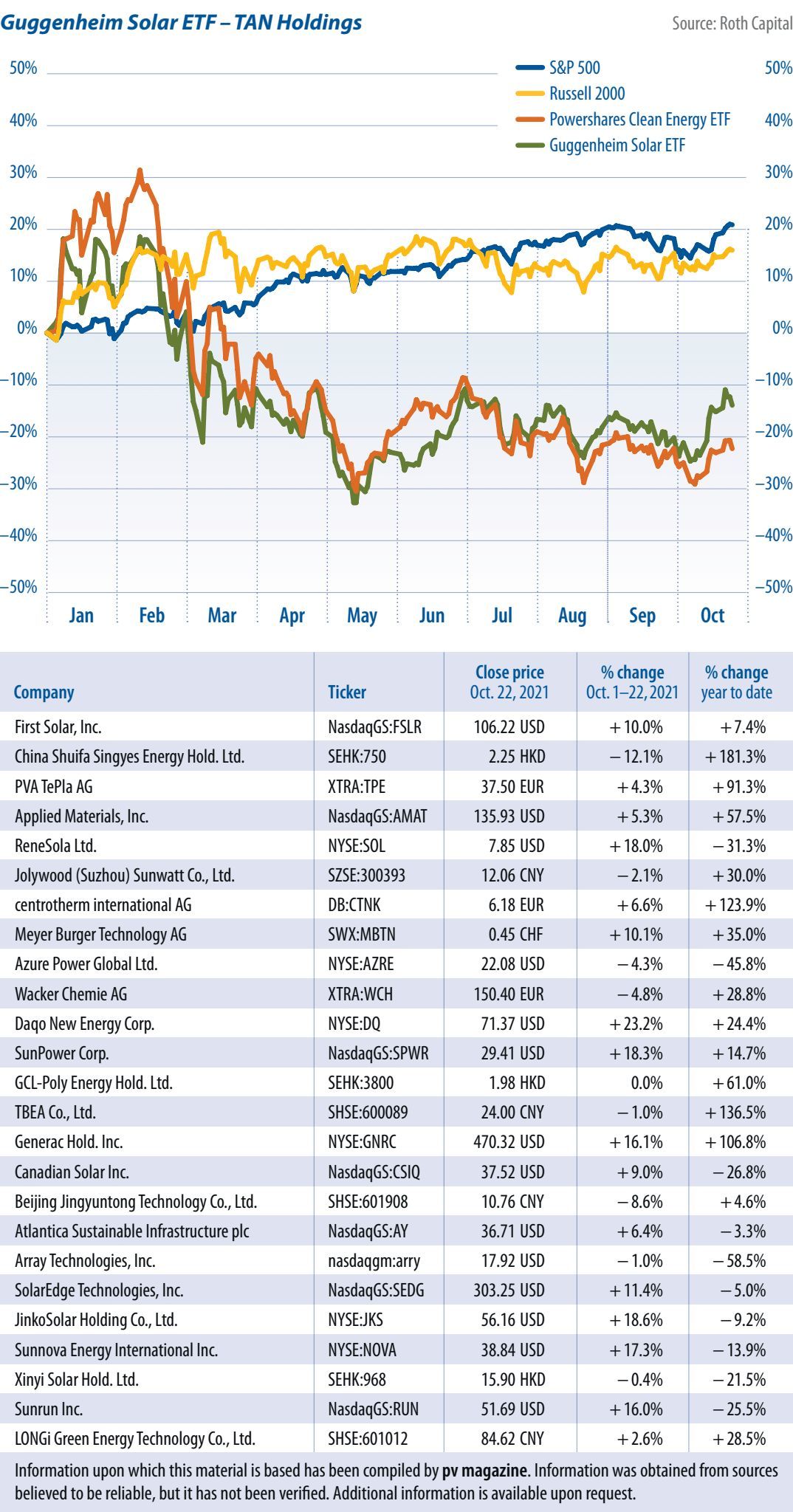
The Invesco Solar ETF, an exchange-traded fund that tracks the MAC Global Solar Energy Index, witnessed a slight downturn in September, while performing marginally better relative to the S&P 500 and Dow Jones Industrial Average, writes Jesse Pichel of ROTH Capital Partners.
Oct 05, 2021


Price cannibalization threatens PV growth
As solar deployment increases, concerns about price cannibalization continue to be more and more relevant. Large-scale solar generation during midday hours may result in curtailment or unprofitable wholesale power prices. As supply increases, the economic viability of solar PV projects could fall into question.
Sep 07, 2021
Subscribe now for instant access to this issue and every published issue since 2016.
Subscribe

The untapped potential of hybrid EVs
The electric vehicle conversation is dominated by all-electric options, and sales figures back up the shift from the age of the Prius to the age of Tesla. However, the timeline for the Global South is very different and hybrid EVs are better than ever. Hybrid EVs shouldn’t be considered a legacy technology, and may be greatly significant for their role in the path to decarbonization, explains Gautham Ram, assistant professor at TU Delft.
Sep 07, 2021

pv magazine test: July 2021 results
We are pleased to present the latest batch of energy yield results from the outdoor test field in Xi’an, China. In this issue, we look at the July results, alongside additional analysis from George Touloupas, director of technology and quality at CEA.
Sep 07, 2021

Urban solar
Buildings are considered to be a major driver of emissions. In addition to the predicted billions of square meters of space that will be built across the world over the next decade, most developments standing today will still be around in 2050. Thus, retrofitting existing structures is seen as a key sustainability target. In the fourth quarter of 2021, pv magazine’s UP Initiative will focus on the role that solar and energy storage can play in greening the world’s urban spaces.
Sep 07, 2021

Corporate acceleration
With solar declared the cheapest form of power in history, and wind prices following a similar trajectory, corporate energy users are buying renewable power and investing in new capacity at scale. But more companies need to step up. Governments around the world must remove policy barriers and open new markets to competition from renewables if we are to reach the scale of investment needed to achieve a 1.5-degree world, according to Sam Kimmins, the head of RE100.
Sep 07, 2021
Different shades of green
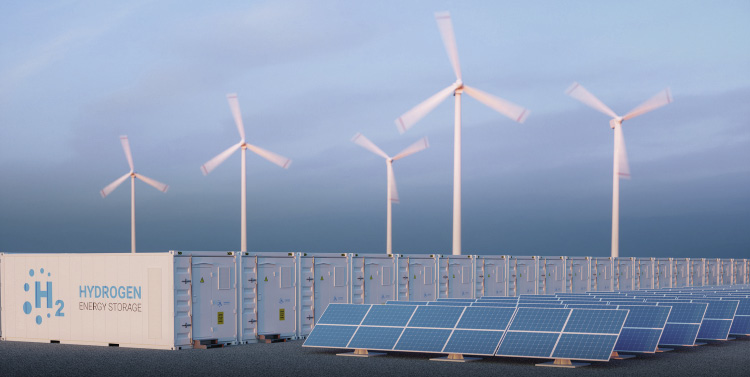
Most long-term power delivery contracts with renewable energy systems involve the delivery of electricity through the public grid via off-site power purchase agreements. This leads to a key question: “How do I as a customer know when and if I am really using renewable electricity, and how can I prove that?” Simon Göß and Michael Claußner from Energy Brainpool GmbH & Co. KG, a European market research firm focused on energy trading, address these questions. They note how the development of green hydrogen is an opportunity to create more flexible power markets by fostering the adoption of renewables.
Sep 07, 2021
Trends in sustainable debt
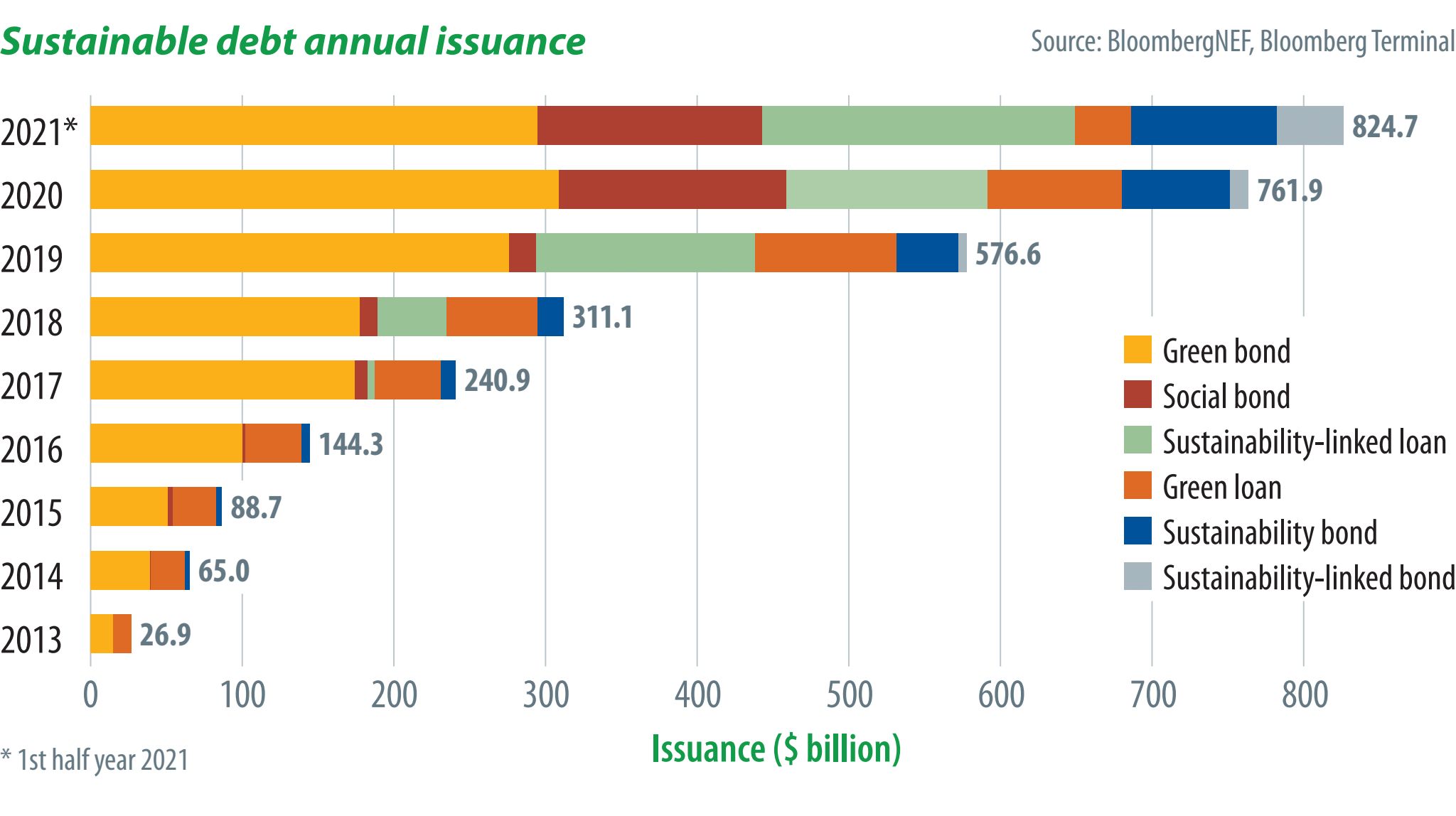
While sustainable debt issuance has historically been dominated by the Europe, Middle East and Africa region and mostly driven by green bonds from the energy and financial sectors, it has diversified in recent years and is now a global market with a huge range of issuers, thanks to the variety of instruments that have been created since 2007. As part of pv magazine’s UP Initiative quarterly theme on sustainable electricity and corporates’ critical solar role, Maia Godemer, BloombergNEF (BNEF) research associate, discusses this growth and its implications.
Sep 07, 2021

Current affairs
The PV manufacturing industry’s switch to larger wafer formats is already having impacts all the way down the supply chain – some of which are still emerging today. For junction boxes that house bypass diodes and other components that keep the power flowing out of a module, handling the higher currents produced by these larger products has been a challenge requiring a quick response. Meanwhile, a notable number of failures and quality issues with junction boxes new and old suggest that the design and processing of this vital component could be in need of renewed attention.
Sep 07, 2021
Both sides for C&I
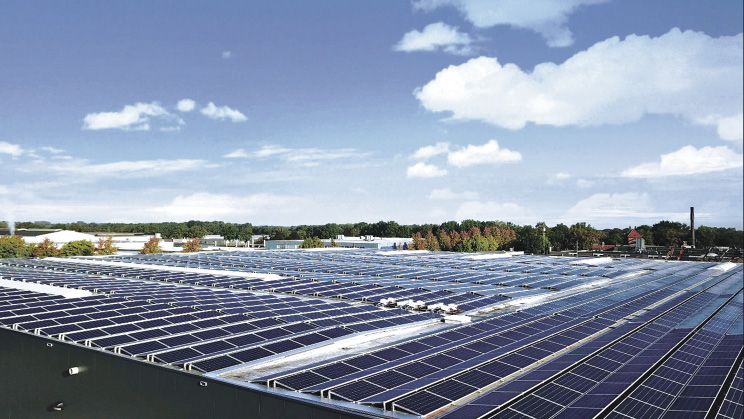
The commercial and industrial sector has been called the underdog of the U.S. solar market, as it usually plays second fiddle to its larger, more visible residential and utility segment siblings. But C&I’s ultimate multi-gigawatt potential has never been in dispute. Aaron Thurlow, general manager at Longi Solar, makes the case for bifacial technology in the C&I segment.
Sep 07, 2021

First Solar goes to India
First Solar has announced plans to establish a new 3.3 GW manufacturing facility in India. Representing an investment of $684 million, the move demonstrates the thin-film PV manufacturer’s confidence in India’s solar growth and the increasingly favorable policy environment for domestic solar PV production.
Sep 07, 2021


Rethinking solar sustainability
There’s more to solar sustainability than recycling, energy intensity, and materials, argues Jan Mastny, a PV industry veteran and the head of global sales, wind and solar, for Studer Cables AG. He argues for the notion of sustainability within PV to be radically expanded.
Sep 07, 2021
PV for biodiversity
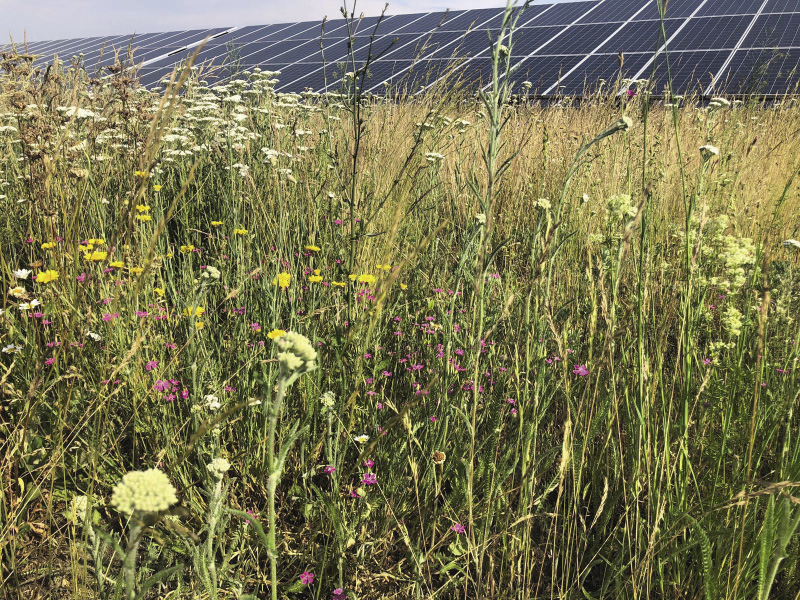
PV’s contribution to a cleaner future can go well beyond generating emissions-free energy, but maximizing the opportunity is not always straightforward. Ragna Schmidt-Haupt, partner at Everoze and a board member at Skyray, argues that investors and lenders have to start making decisions today to fulfill the required disclosure regulations and make sure their fleet has a positive impact on biodiversity. The key challenge is to weigh the techno-economic-ecological risks, opportunities, costs and revenues.
Sep 07, 2021

US states get smart on smart inverters
As residential smart inverters and their grid services continue to offer more capabilities to the grid, U.S. states are going about regulating their installations with the best intentions. But delays in ensuring that smart inverters are active and operating to a common standard will be costly.
Sep 07, 2021

Bringing costs down to earth
Rising efficiencies and the plummeting cost of solar modules over the past few years, recent months notwithstanding, are leading innovators toward ideas that may look unusual in the current tracker-dominated world of large-scale solar parks. Advocates of the new approaches argue that they leave traditional models looking decidedly flat by comparison.
Sep 07, 2021

Revamping complexity
Revamping, or plant modernization, is starting to come into vogue in some mature PV markets, and asset managers are beginning to rethink their operational strategies. Asier Ukar of PI Berlin details the strategic considerations, benefits, and risks of investing to extend the life and boost the returns of a solar asset.
Sep 07, 2021

Game of drones
Drones have already established themselves in industries as disparate as warfare, wedding photography, and burrito delivery, and increasingly the solar sector is taking the high road, too. Combined with thermal imaging, drones have the potential to obviate expensive maintenance costs for large-scale solar plants, as well as C&I and growing niches like floating PV. But how useful are they, and what role does AI play in making the most of a bird’s eye view?
Sep 07, 2021

Enhanced standard for monitoring
An update to the IEC 61724-1 standard for PV monitoring systems has been published. Bifacial performance ratios now fall under scrutiny with these maturing standards, writes Christopher West, who heads the central solar and storage engineering team at Norwegian state-owned utility Statkraft.
Sep 07, 2021


Hail cracks
Solar parks face a real threat from hail damage, both to installed hardware and bottom lines, as the risks have become uninsurable. Tim Sylvia of pv magazine USA explains how hardware tests show that certification is falling behind, and looks at the technologies that are being used to reduce damage.
Sep 07, 2021

Just add more mettle
The resilience of a solar installation significantly depends on its ability to withstand the effects of wind. John Fitzgerald Weaver, a regular contributor to pv magazine USA and a solar installer based in Massachusetts, presents 13 options with cost considerations for storm-hardening PV systems.
Sep 07, 2021

Mexico’s big green chill
Although Mexico is a country bathed in sunshine, the administration of President Andrés Manuel López Obrador and his Morena Party have unequivocally pivoted from the pro-renewables, private investment-friendly policies of their predecessors in the space of just two and a half years. As a result, renewable energy investment has frozen, particularly for projects that involve private capital, argues attorney and project developer Patrick C. Jordan.
Sep 07, 2021

Distributed generation powers Mexican PV
Distributed solar generation continues to be the sole growth factor for renewable energy in the Mexican market. Despite some large project announcements in recent weeks, other segments have slowed down under new regulatory conditions, with the administration of President Andrés Manuel López Obrador continuing to favor fossil fuels.
Sep 07, 2021
‘Nervous but calm’ – Chile’s crucial election looms
Chile continues to lead the energy transition in Latin America, but international investors are nervous. The pandemic is subsiding, thanks to a vaccination rate close to 80%, and energy demand is showing signs of recovery. However, the political landscape still has investors on edge, reports Luisa Cabello.
Sep 07, 2021

Will Lebanon’s solar rise?
A year after a sudden explosion in Beirut killed more than 200 people, destroying solar installations in the port and sending the country into a complete downfall, a question emerges: Can Lebanon use this experience to set its economy on a new sustainable pathway, supported by a viable energy sector? Solar energy offers some lessons.
Sep 07, 2021
Policy driving expansion
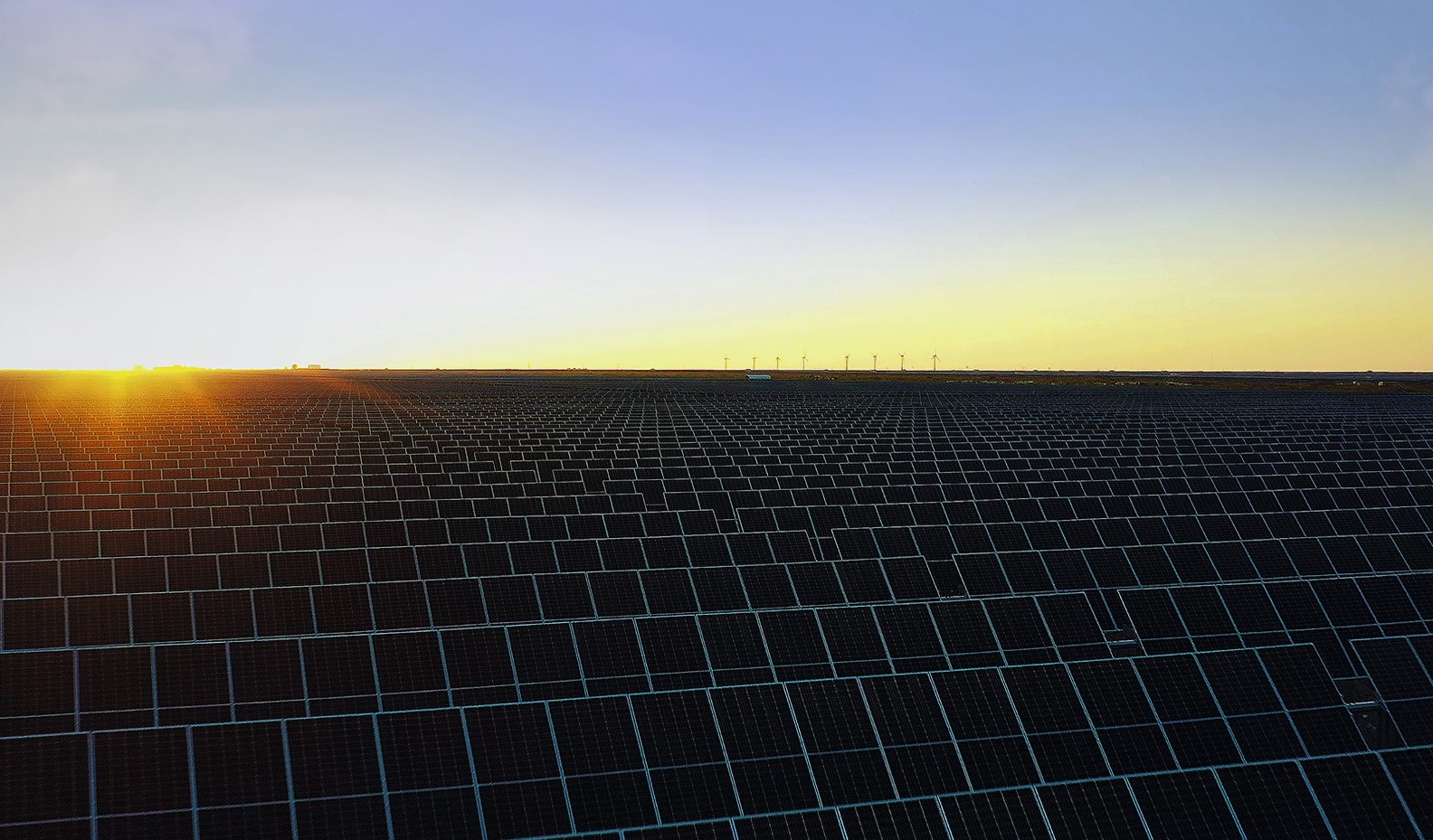
The U.S. renewable energy market is on a tear. According to the International Renewable Energy Agency, the United States added 29 GW of renewable energy capacity in 2020 – almost 80% more than the year before. But high growth rates are needed to meet the Biden administration’s goal of a carbon-free electricity grid by 2035. Policymakers are now discussing a slew of measures in Washington to accelerate the clean energy transition, reports pv magazine publisher Eckhart K. Gouras.
Sep 07, 2021
Trolley car conundrum
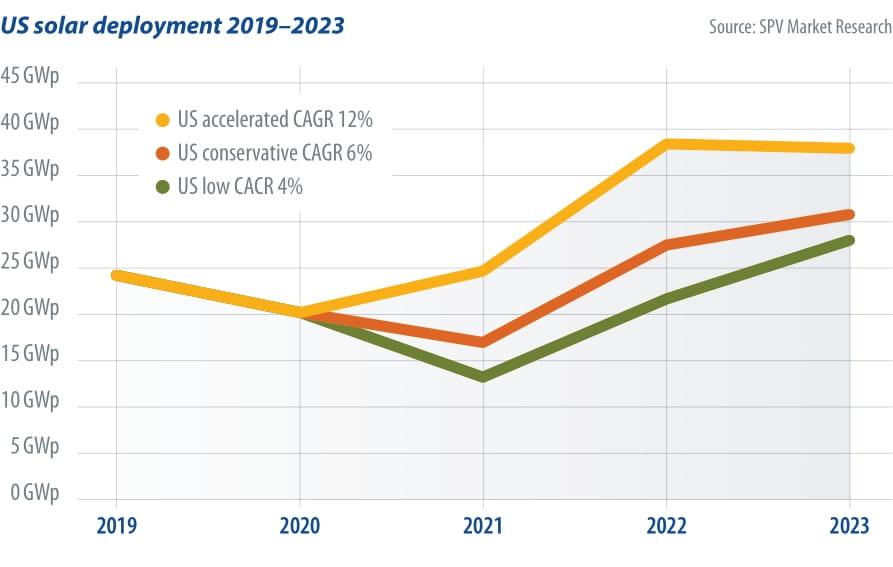
The U.S. solar industry faces a moral dilemma, writes Paula Mints of SPV Market Research. Either continue to deploy projects and set aside concerns about forced labor in China’s Xinjiang region, or source PV cells and modules from elsewhere, while bearing higher costs, in the pursuit of urgent action against climate change.
Sep 07, 2021
Polysilicon amid international trade disputes
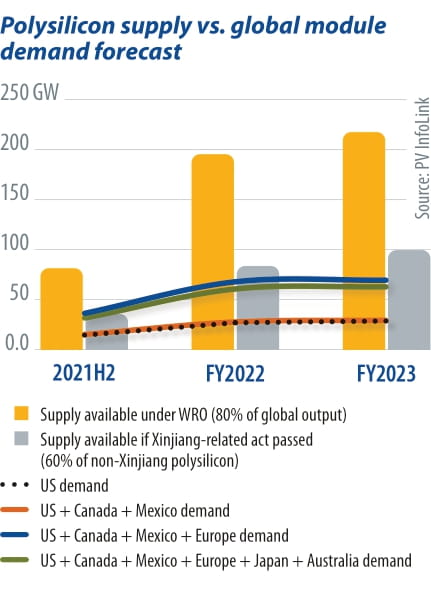
Polysilicon capacity is unable to catch up with rapid capacity expansion in the mid and downstream segments, writes Corrine Lin, chief analyst for PV InfoLink. New polysilicon capacity requires big capex investment and a lead time of more than two years to complete construction and reach full operation. With unbalanced capacity between the upstream and downstream segments, polysilicon prices have been rising since the second half of 2020, with prices for mono-grade polysilicon surpassing CNY 200/kg ($27.40) in June 2021, up more than 250% year on year.
Sep 07, 2021
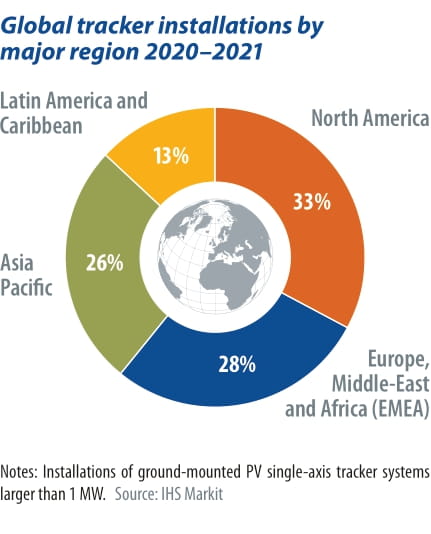
Global tracker shipments reached 45 GW in 2020
The global single-axis tracker market increased shipment volume by 40% year on year to reach 45 GW in 2020. This was despite significant pandemic-related supply chain turbulence that resulted in longer lead times for the delivery of components, the idling of steelmaking capacity in some key markets, container shipping dislocation, and widespread restrictions, particularly at ports. Most notably, this caused the cost of some commodities, such as steel, to more than double between 2020 and 2021. Jason Sheridan, a senior research analyst for IHS Markit, runs through some of the key developments in the tracker market.
Sep 07, 2021
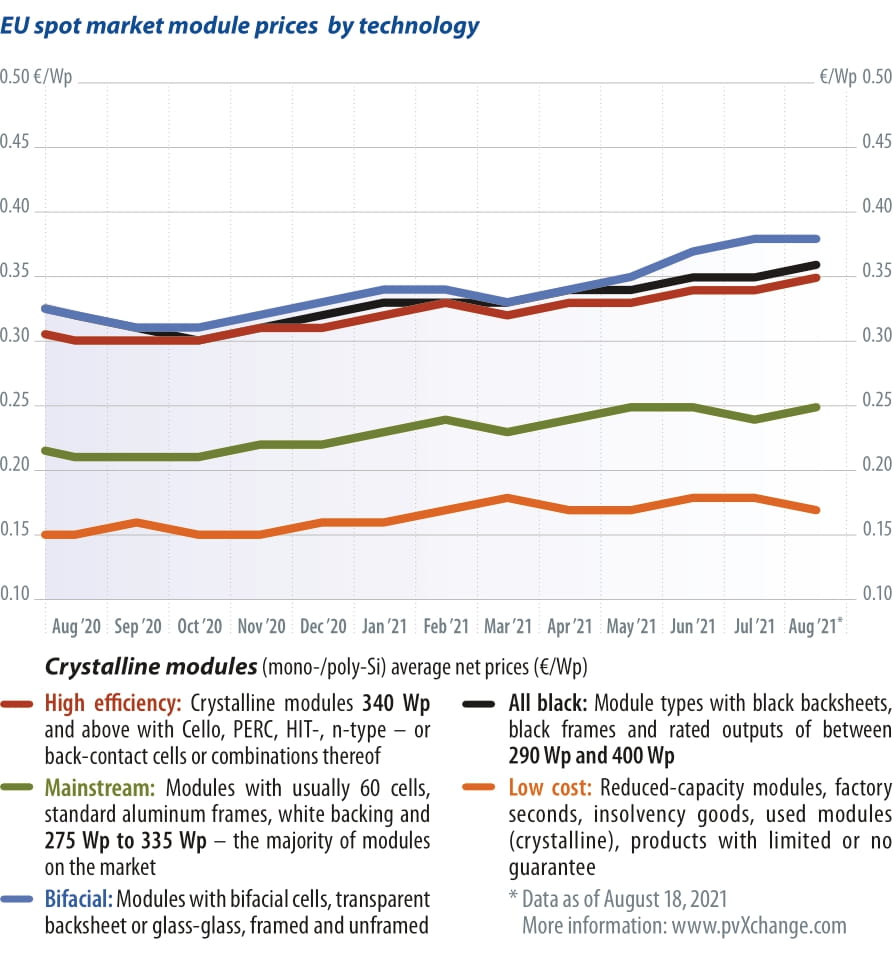
PV prices: High today, higher tomorrow
Some time ago, when I lived in the center of Berlin, I was a regular at the farmers’ market to buy fresh fruit and vegetables. One greengrocer advertised his wares with the words “cheap today, expensive tomorrow.” It would almost be desirable if we PV wholesalers could offer our modules with a similar slogan. Unfortunately, no one in the industry can currently claim that solar modules are cheap – quite the opposite. Following a brief respite, prices have climbed again in recent weeks. Since the previous low in September 2020, prices for new, grade-A goods have already risen by an average of 20% to a level not seen since April 2019.
Sep 07, 2021
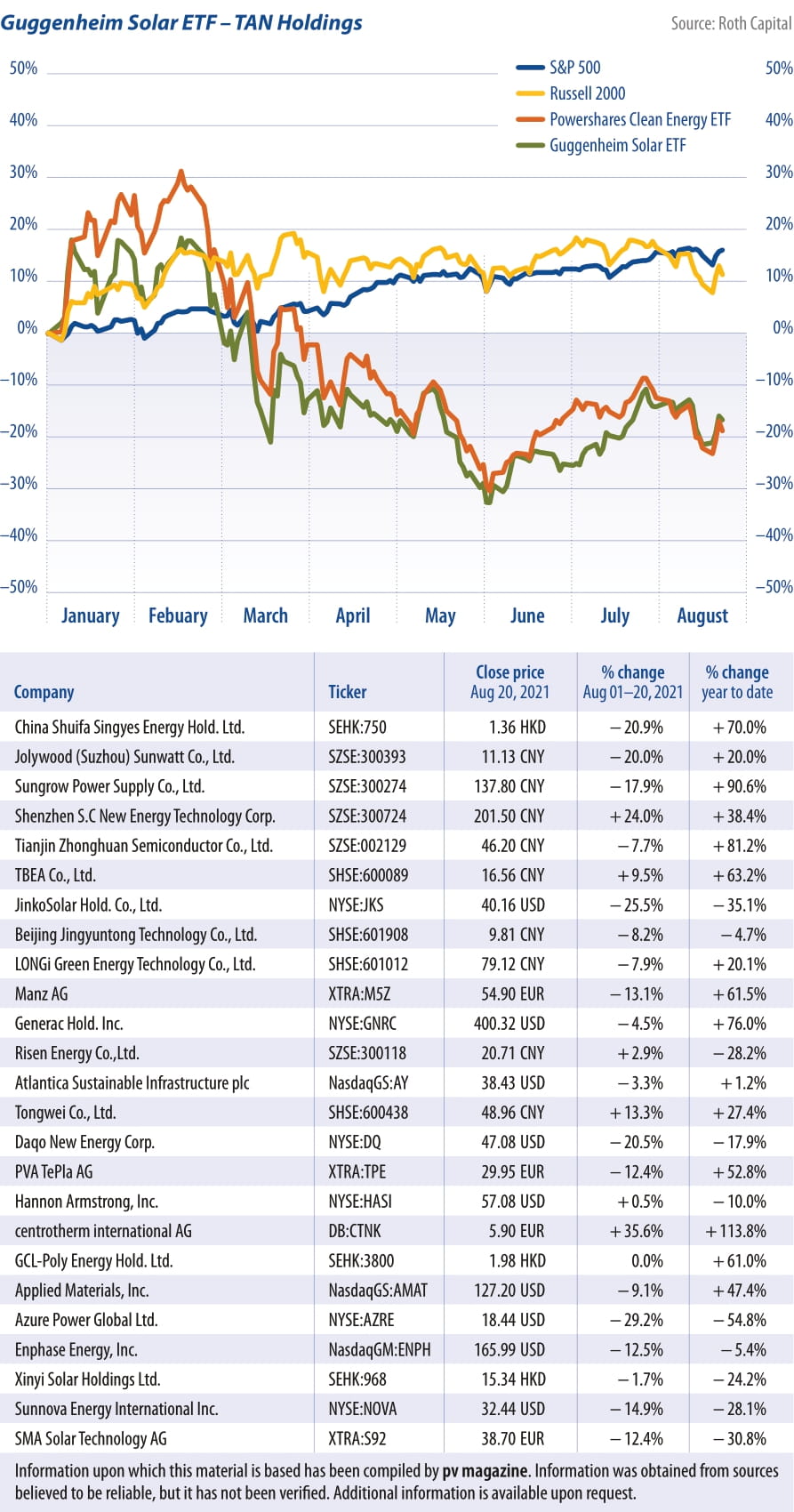
Supply chain shake-up
Solar stocks have underperformed in the broader market in August, writes Jesse Pichel of ROTH Capital Partners. Project delays could be on the horizon as more module imports are held up at customs, and the supply chain will start to see impacts as suppliers look for options to source polysilicon outside of China.
Sep 07, 2021

At a crossroads
The rapid growth currently underway in the U.S. solar market is impressive to behold. More than 40% year-on-year growth is nothing short of stellar. Looking at the market segments, the residential rooftop business appears to be becoming more streamlined and shedding some of the overheads that had maintained relatively high prices. Innovations are being adopted in the commercial and industrial rooftop solar sector (pp. 78-80). And at the utility scale, a mix of state-level policies like Renewable Portfolio Standards, an ongoing appetite for PPAs, and the continued support of the Investment Tax Credit (pp. 20-23) look to have provided fertile turf for solar developers.
Sep 07, 2021

